


The Vietnamese flag, officially adopted in 1976 after national reunification, features a bold red background with a prominent yellow five-pointed star at its center. The red represents revolution and sacrifice, while the yellow star symbolizes the unity of Vietnam’s workers, peasants, soldiers, intellectuals, and youth. Moreover, the flag reflects the country’s enduring spirit and national pride, making it a powerful emblem of Vietnamese identity and resilience.
The Flag of Vietnam
The Vietnamese flag has a distinctive rectangular shape, with the width measuring two-thirds of its length. At the center of the bold red background sits a bright five-pointed golden star, which represents the unity and spirit of the Vietnamese people. This powerful symbol embodies the strength and solidarity of Vietnam’s diverse citizens, including workers, farmers, soldiers, and entrepreneurs.
The meaning
The Vietnam flag, featuring a striking red background and an iconic yellow star, tells a powerful story of struggle, resilience, and unity. Flying proudly across the country, this flag carries deep significance, with each color and symbol representing a rich historical narrative. The red background stands for the revolution and bloodshed, while the yellow star symbolizes the unity of the Vietnamese people, regardless of their class or occupation.
- Check out best Vietnam tours
What is the history of the Vietnamese Flag
The history of the Vietnamese flag spans centuries of evolution, influenced by the region’s ruling empires and dynasties. Early flag designs represented various kingdoms, but the current Vietnamese flag emerged during Vietnam’s independence movement, symbolizing courage, sacrifice, and resilience. Officially adopted in 1976 after Vietnam’s reunification, the flag’s red background represents the nation’s struggles and revolutionary spirit. Meanwhile, the yellow five-pointed star embodies the unity and hardworking spirit of the Vietnamese people, encompassing all social classes, from farmers to workers.
What Does the Vietnam Flag Look Like?
The flag features a bold red background with a striking yellow five-pointed star at its center. The red background symbolizes revolution, sacrifice, and the struggles of the Vietnamese people, while the yellow star represents unity and the strength of the nation’s citizens. If you’re asking, “What does the Vietnam flag look like?”—it’s a simple, yet powerful design that embodies the spirit and identity of Vietnam, representing its resilience and collective strength.
The evolution: From early Designs to Modern Symbolism
The flag, a powerful symbol of independence and national unity, first appeared on November 23, 1940, in South Vietnam during the resistance against French colonial rule. Designed by Nguyen Huu Tien, a revolutionary leader, the flag featured a bold red background with a yellow star representing national solidarity.
In 1941, the Viet Minh, led by Ho Chi Minh, adopted the Vietnam flag as their official emblem during a pivotal conference. On August 16, 1945, in Tan Trao Village, the flag was declared the official flag of Vietnam. Following Vietnam’s independence declaration on September 2, 1945, in Ba Dinh Square, Hanoi, the flag became the symbol of North Vietnam.
After the reunification of North and South Vietnam in 1976, the Vietnam flag was officially recognized nationwide. Today, the iconic red flag with a yellow star continues to proudly represent the enduring spirit and unity of the Vietnamese people.
What’s the Red Background and Yellow Star Mean?
The Vietnam flag carries deep meaning, reflecting the nation’s rich history and unity. Designed by Nguyen Huu Tien, the flag’s red background symbolizes the bloodshed and sacrifices of Vietnamese soldiers and civilians in their fight for independence. The yellow star represents the unity of all Vietnamese people, including farmers, workers, soldiers, intellectuals, and businessmen, working together toward a common goal.
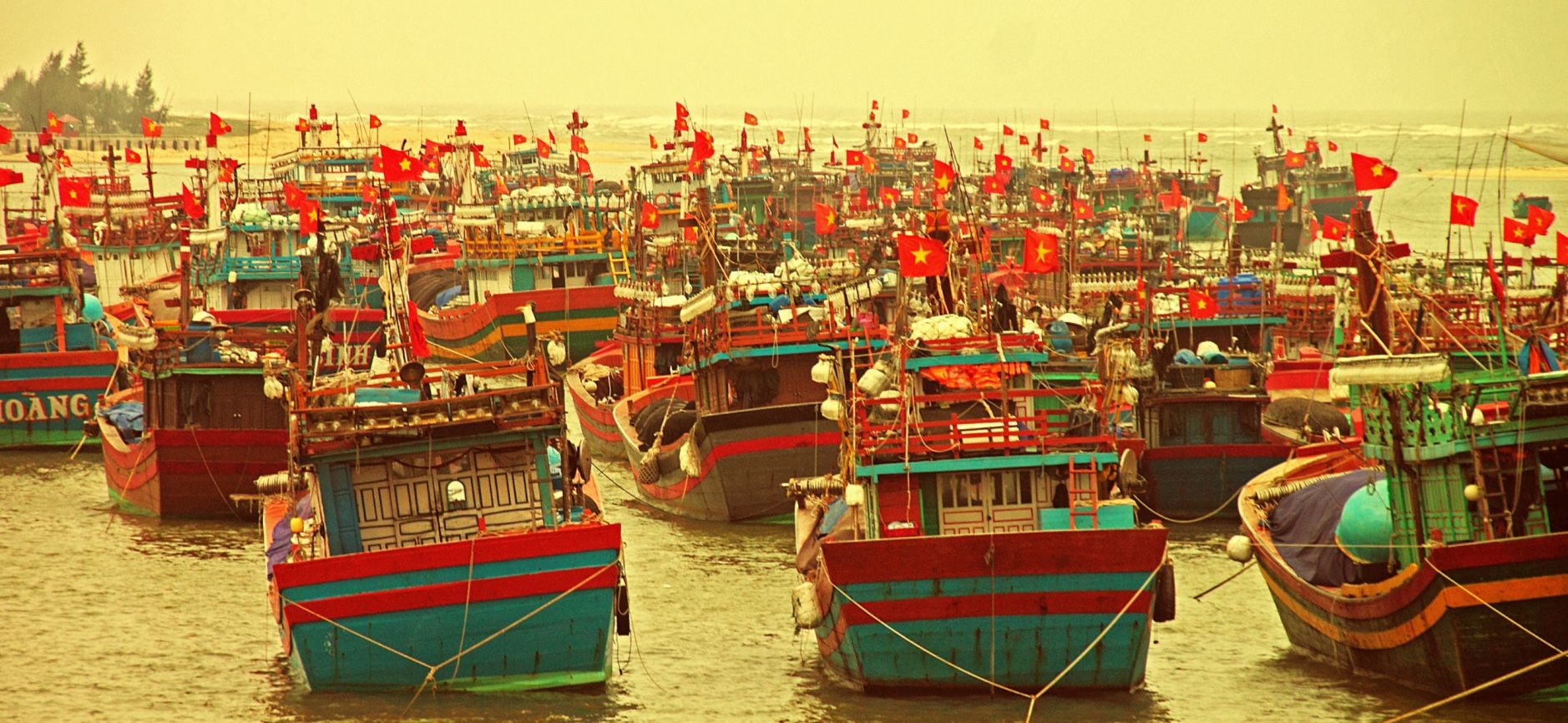
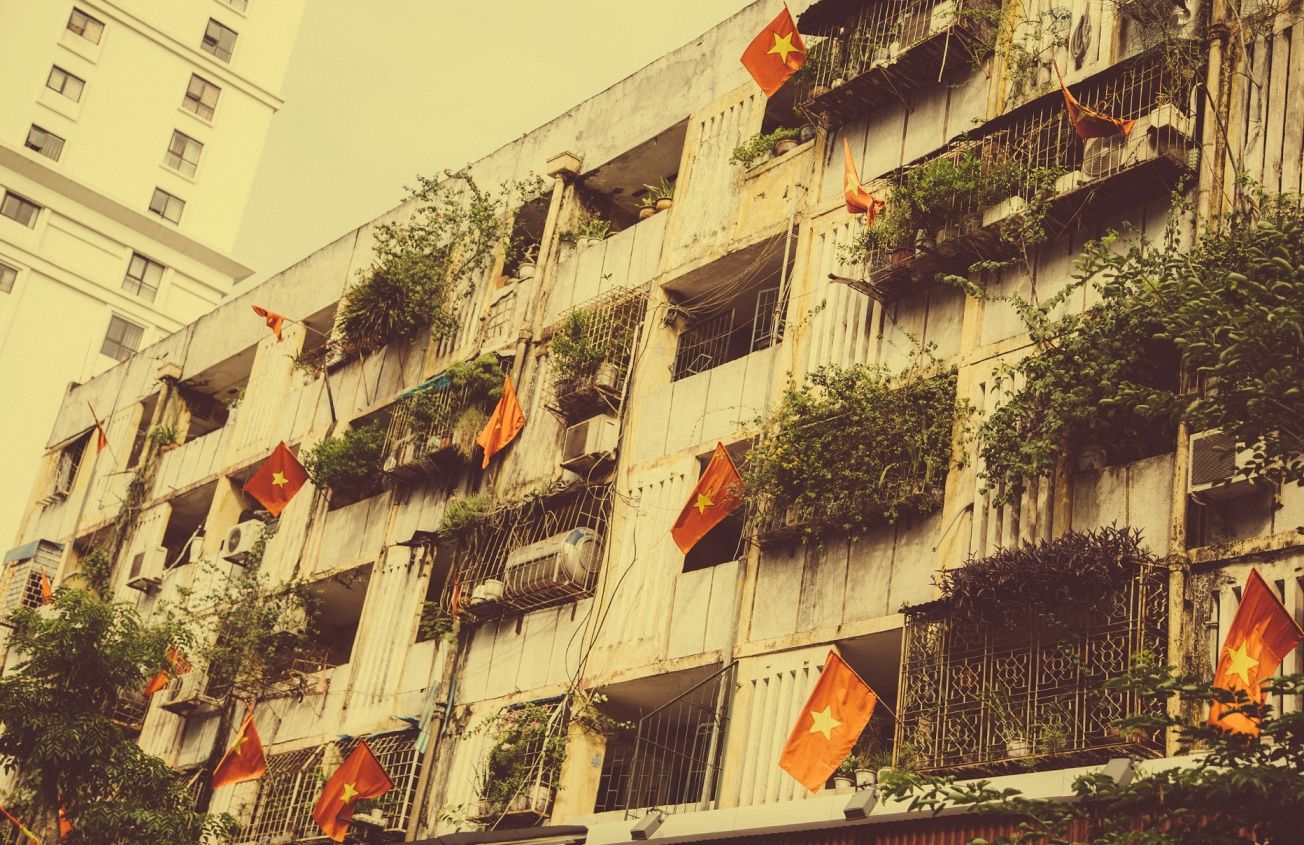
On significant national holidays like Tết (Lunar New Year), Reunification Day, and National Day, Vietnamese people proudly display the flag outside their homes and across streets. The flag is also a popular motif on T-shirts, souvenirs, and other cultural items, symbolizing the national pride and deep cultural significance the flag holds in Vietnam.
What Does the Vietnam Flag Symbolize?
The Vietnamese flag is a powerful symbol of national pride, unity, and resilience, featuring bold colors and meaningful symbols. At the center of the flag, the five-pointed yellow star represents the unity and harmony of Vietnam’s social classes, including workers, farmers, soldiers, intellectuals, and business people. The star also signifies the Vietnamese communist revolution and the nation’s core ideals.
The flag’s red background symbolizes the struggles for independence, freedom, and solidarity, reflecting the long history of Vietnam’s fight for liberation. This iconic flag stands as a testament to the pride, resilience, and strength of the Vietnamese people.
The Vietnamese flag is prominently displayed during official ceremonies, national events, and in everyday settings, offering citizens a way to express their loyalty and love for their homeland.
Vietnam Flag During the Declaration of Independence
The Vietnam flag during the Independence War became a powerful symbol of resistance, unity, and the relentless fight for freedom. Proudly displayed by the Vietnamese army, it represented the nation’s unwavering determination in their struggle against colonial forces. The flag not only symbolized national unity but also inspired global liberation movements and garnered international support for Vietnam’s cause.
Frequently seen in historical photos from the battlefields and the war era, the Vietnam flag became an icon of hope, rallying the people and fueling their resolve to continue the fight for independence and sovereignty.

The Vietnamese Flag in Official Use and Protocol
The Vietnamese flag is prominently displayed during official occasions, ceremonies, national holidays, political events, and major celebrations, just like in any other country. It flies on government buildings, schools, embassies, and during military ceremonies, as well as at the funerals of soldiers and national leaders. Strict protocols govern the Vietnamese flag’s usage to maintain respect and dignity.
The flag is raised at dawn and lowered at dusk, often accompanied by the national anthem during formal ceremonies. Beyond its presence at national events, the Vietnamese flag also symbolizes the country’s pride and sovereignty at diplomatic events, showcasing Vietnam’s strength to the international community.
What Not to Do with the Flag
- Using any variation of the Vietnam flag than the official one
- Writing offensive messages on the flag
- Tearing the flag
- Flag desecration
The national flag of Vietnam in popular events
The Vietnam national flag is a central symbol in the country’s culture, prominently displayed at major events such as sports, music, and public celebrations. It represents national pride and unity, often seen during rallies, football matches in stadiums, and public gatherings to convey important social messages.
The Vietnam flag also plays a significant role in artistic expression, reflecting the nation’s cultural heritage and the collective spirit of its people. Whether at sports events or cultural celebrations, the Vietnam flag inspires a sense of pride, resilience, and the enduring strength of the nation.
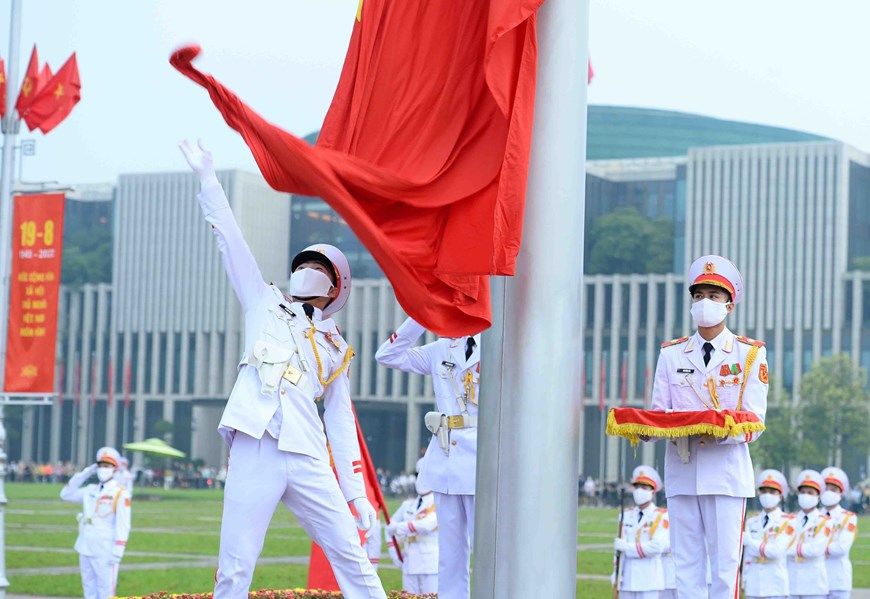
Watch the Flag Raising Ceremony at Ba Dinh Square, Hanoi
Experience Vietnam’s national pride by attending the flag raising and lowering ceremonies at Ba Dinh Square, Hanoi. Held daily in front of the Ho Chi Minh Mausoleum, these ceremonies are among the most culturally significant attractions in Hanoi.
What to Expect at the Flag Raising Ceremony
The flag raising ceremony at Ba Dinh Square typically takes place around 6:00 AM, while the flag lowering ceremony occurs in the evening. These patriotic rituals are performed by an honor guard unit and draw both locals and tourists, offering a unique glimpse into Vietnam’s national identity and reverence for its history.
Why Visit Ba Dinh Square?
Ba Dinh Square is one of the top historical landmarks in Hanoi, deeply tied to Vietnam’s modern history. The square is named after the Ba Dinh Uprising, a key event in the country’s resistance against colonial rule. It is also home to the Ho Chi Minh Mausoleum, where Vietnam’s revered leader Ho Chi Minh rests.
Visiting the square during these ceremonies adds depth to your understanding of Vietnamese culture and patriotism. The setting — with the national flag solemnly raised or lowered in front of the mausoleum — creates a moving and respectful atmosphere.
Tips for Visitors
- Arrive early in the morning (around 5:30 AM) to secure a good viewing spot.
- Check ceremony times in advance, as schedules may occasionally change.
- This site is often included in Hanoi’s top tourist attractions, so consider pairing your visit with a tour of the Ho Chi Minh Mausoleum Complex.
The flag raising and lowering ceremonies at Ba Dinh Square in Hanoi are a must-see experience for anyone interested in Vietnamese history, culture, and national pride. Whether you’re a history buff or a curious traveler, witnessing this daily tradition will leave a lasting impression of Vietnam’s enduring spirit.