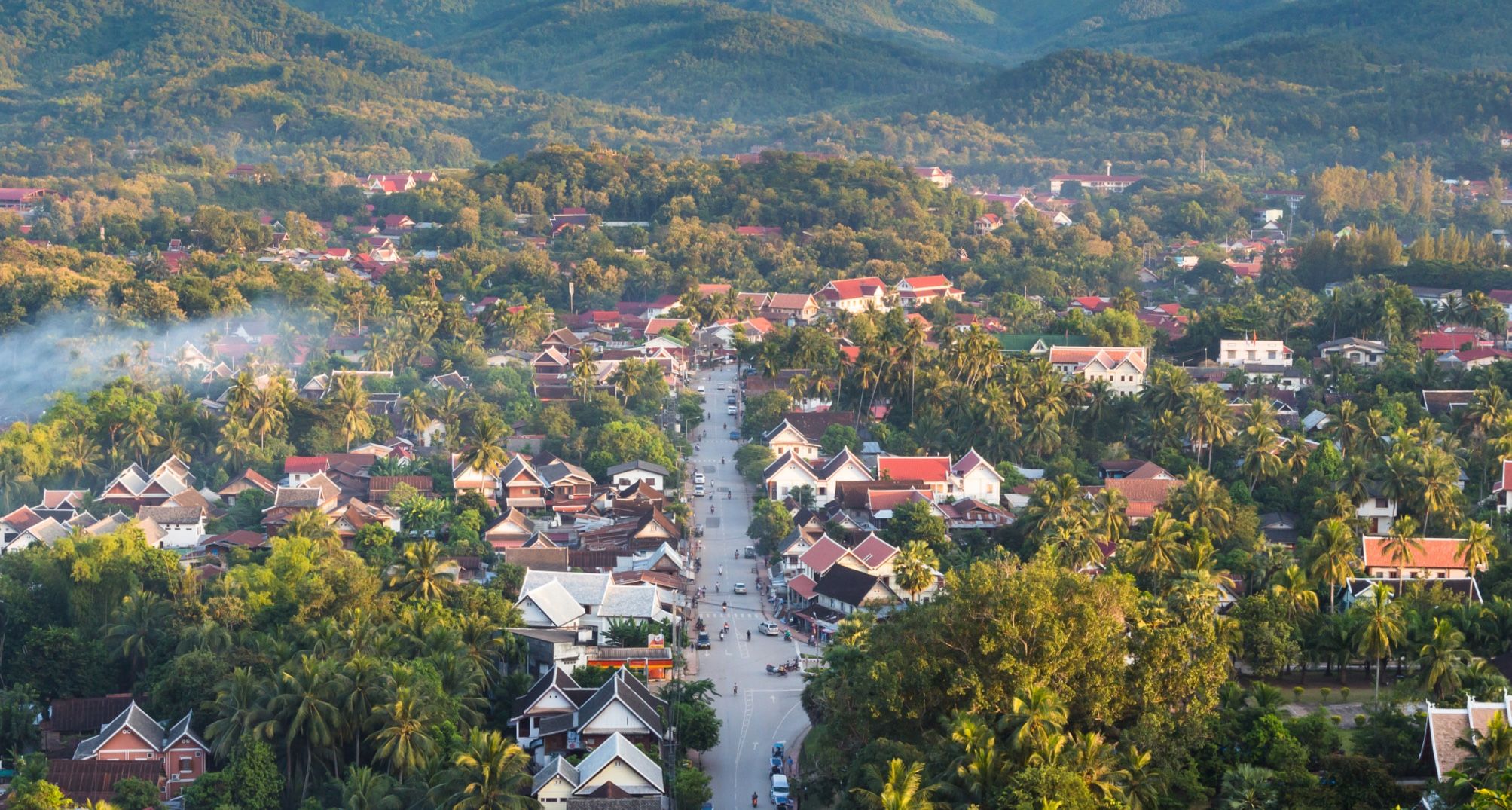




In this post I will be sharing about Vietnamese bizarre foods, the most strange foods you can eat here in Vietnam. When most people think of Vietnamese food, they picture noodle and or probably banh mi. But beyond these beloved classics lies a world of strange and adventurous dishes that surprise every tourist. From fertilized duck eggs to wriggling coconut worms, Vietnam offers a bold journey into exotic textures and unexpected flavors. These unusual foods aren’t just for show — they reflect local traditions, regional identity, and a deep-rooted food culture that embraces every part of the animal and plant. If you’re craving a true taste of Vietnam, don’t skip the strange.
Why Do Vietnamese People Eat These Unusla Foods?
During war times and earlier periods of hardship, people developed unusual eating habits out of necessity. They couldn’t afford to waste anything, so they used every part of an animal and treated every edible creature as a resource. Over time, these survival habits evolved into culinary traditions. What outsiders might find bizarre—like blood pudding or insects—locals often value for their nutrition, medicinal properties, or as prized delicacies.
- Check out Fast foods in Vietnam
The weirdest Foods in Vietnam You May Not Believe Exist
Many of these strange local foos are especially common in rural areas where people still live close to nature and maintain traditional diets. Okay, here are the list;
1. Balut (Trứng vịt lộn)
One of the most bizarre foods, balut is a fertilized duck egg with a partially developed embryo inside. It’s typically boiled and eaten with salt, pepper, lime juice, and fresh herbs like Vietnamese coriander (rau răm). This dish has its roots in both rural and urban Vietnam and is believed to be nutritious and good for the blood.
Though the appearance might be unsettling for foreigners, the taste is rich and savory. The broth-like liquid inside is warm and comforting, the yolk creamy, and the embryo slightly chewy. Locals often enjoy it as a late-night street snack or breakfast dish.

2. Coconut Worms (Đuông dừa)
Popular and widely available around the Mekong Delta, coconut worms are considered a true exotic food in southern Vietnam. These plump white larvae grow inside coconut tree trunks and are usually eaten alive, dipped in fish sauce with sliced chili. For a tamer experience, they can be deep-fried until golden and crunchy.
Their flavor is surprisingly buttery, with a soft, fatty texture when raw and a crispy shell when fried. Despite their wriggly appearance, many locals view them as a delicacy and even a status symbol during festive meals.
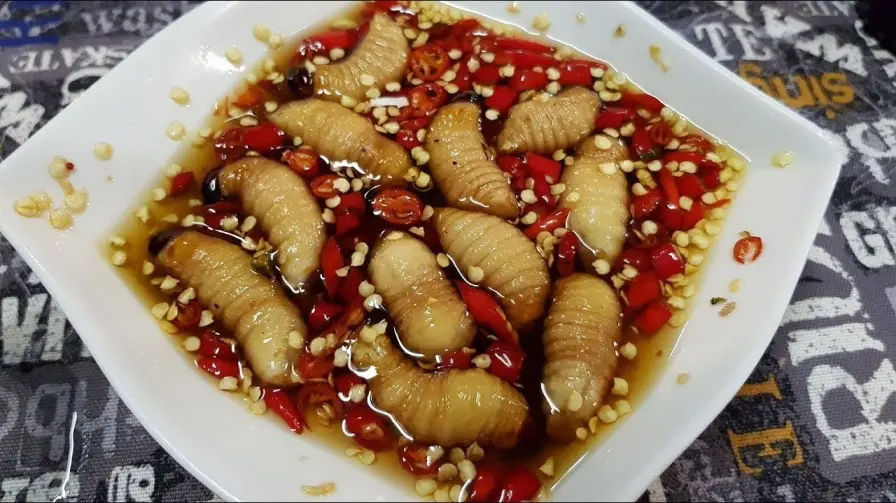
3. Silkworm Pupae (Nhộng tằm)
Originally part of traditional meals in northern villages, silkworm pupae are now a common sight at street markets and beer stalls. These small, brown insects are often stir-fried with lemongrass, garlic, and green onions.
High in protein and cheap to produce, they became popular during times of food shortage. The flavor is earthy and nutty, with a slight crunch outside and a soft interior – definitely one of the weirdest in Vietnam.
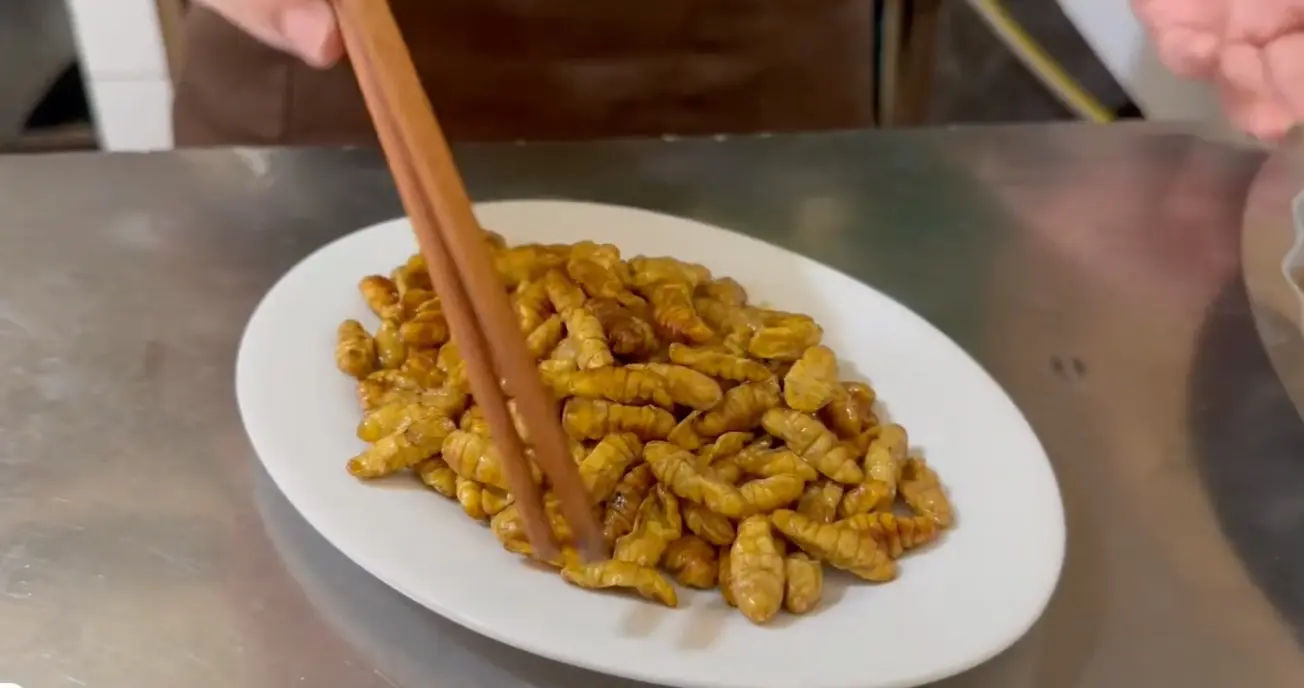
4. Pig’s Blood Pudding (Tiết canh)
This raw dish is made from fresh pig’s blood, mixed with fish sauce, and left to coagulate before being topped with peanuts, herbs, and cooked offal. A traditional dish in the north, tiết canh is now less common due to food safety concerns, but is still eaten during countryside gatherings and ancestral feasts.
It has a cold, gelatinous texture and a metallic aftertaste – certainly one of the weirdest foods in Vietnam for those unfamiliar with raw animal products. For locals, it’s not just a dish but a ritual, prepared with great care and often consumed as a group.
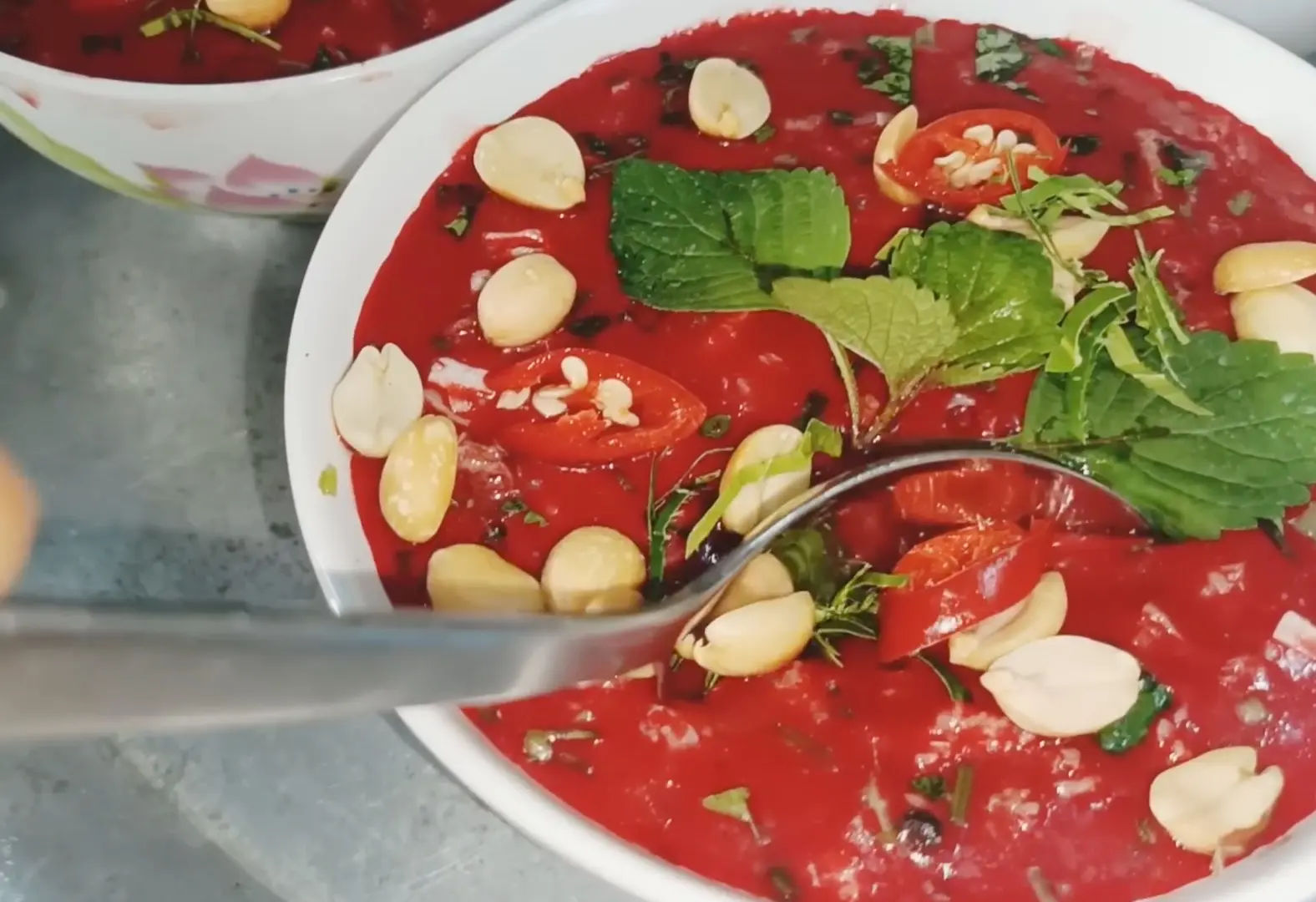
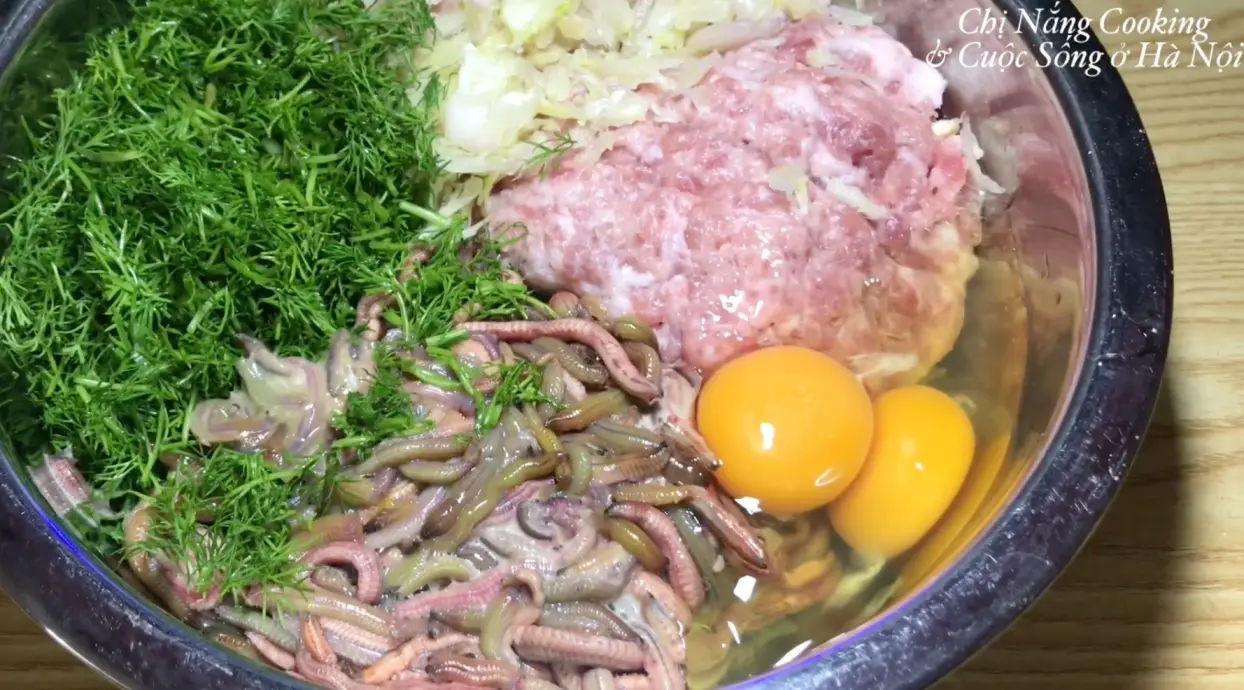
5. Sand worm omelet (Chả rươi)
A rare seasonal specialty from northern Vietnam, especially Hanoi, cha ruoi is made with tiny sandworms harvested just a few weeks each year. The worms are mixed with minced pork, egg, herbs, and a hint of tangerine peel, then pan-fried into golden, crispy-edged patties.
Served hot with rice or noodles, the omelet is soft, fragrant, and slightly sweet. Despite its strange main ingredient, this bizarre Vietnamese dish is deeply loved – a fleeting autumn delicacy locals look forward to every year.
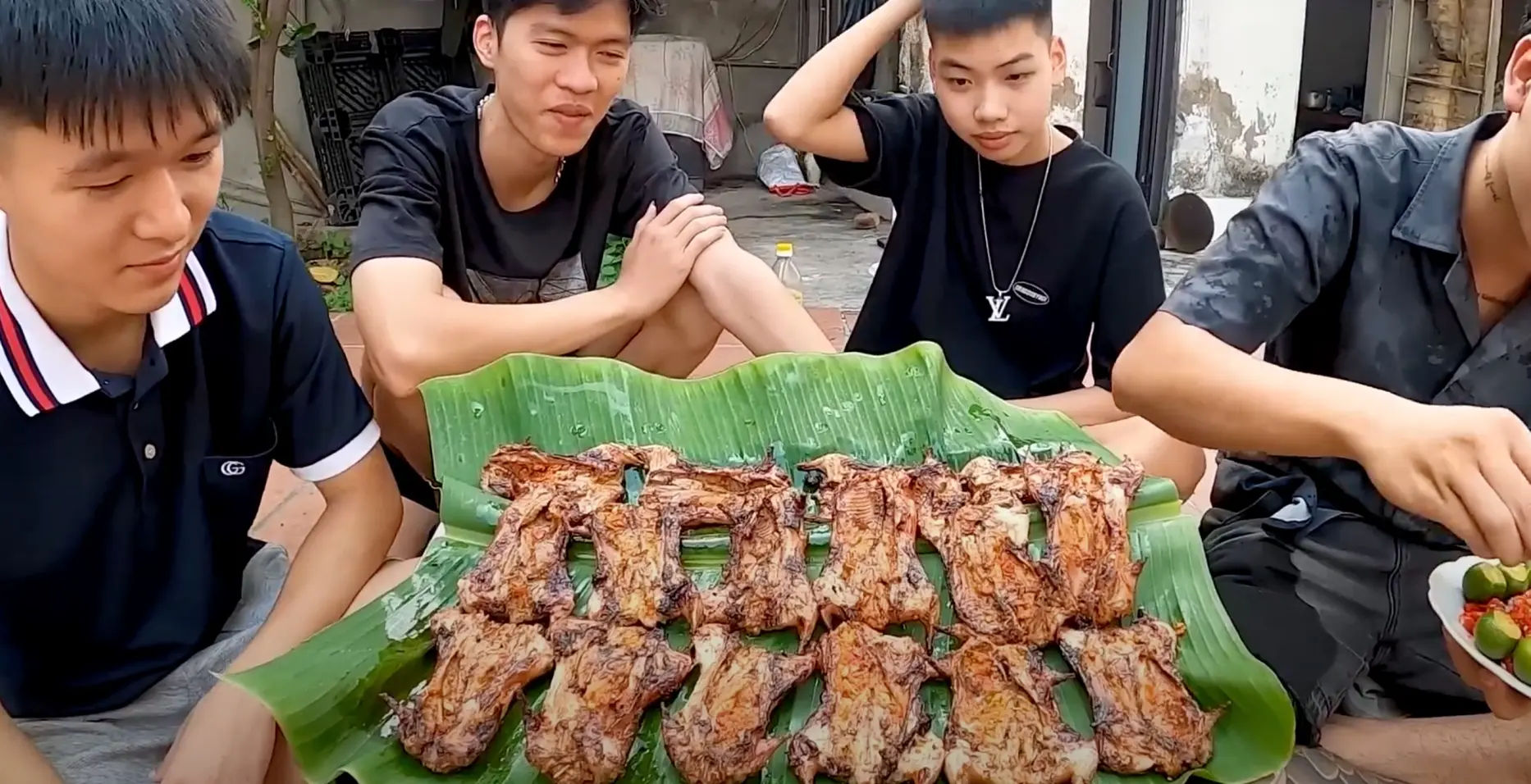
6. The Rat meat (Thịt chuột)
While it may sound horrifying, rice field rats are actually clean animals that feed on grain, not garbage. Popular in the Mekong Delta during harvest season, the meat is often grilled, stir-fried, or braised with lemongrass and chili.
The texture is similar to chicken, with a slightly sweeter flavor. Served with beer and laughter, thịt chuột is one of Vietnam’s lesser-known bizarre dishes, eaten more for its taste than its shock value.
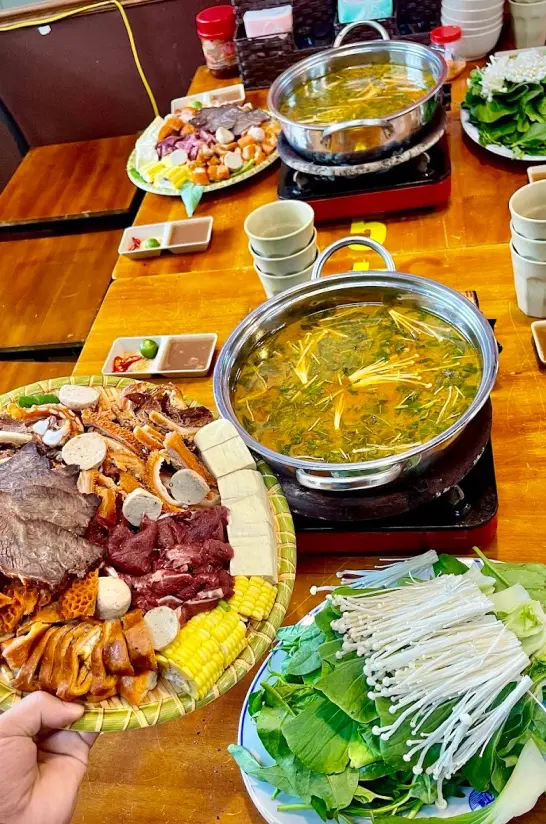
7. Vietnamese organ Hotpot (Phá lấu)
Chinese influence introduced Pha Lau, a street food that has become a staple in Ho Chi Minh City. Vendors make it from pork or beef organs—such as stomach, intestines, and lungs—then slowly stew them in a rich coconut milk broth flavored with five-spice, garlic, and fish sauce.
Served with a crispy baguette or noodles, the dish has a mix of textures from chewy to tender. Its flavor is sweet, savory, and slightly funky – a bold combination that places it firmly among Vietnam’s weirdest foods, especially for those unfamiliar with eating organ meat.
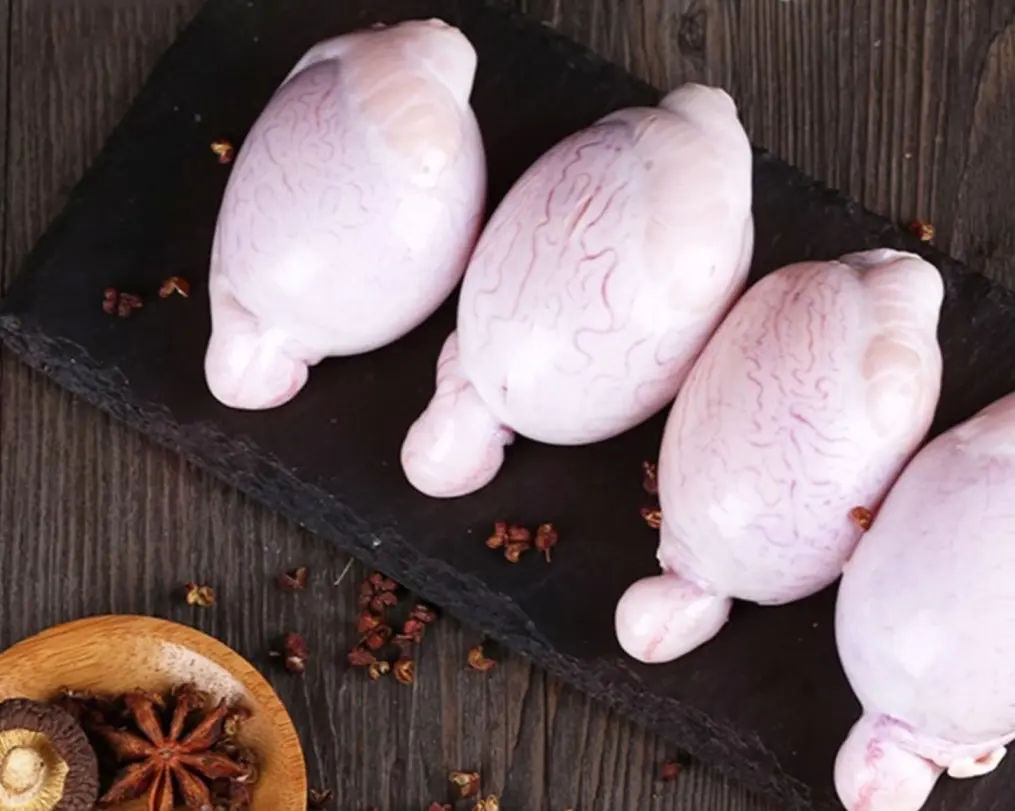
8. Goat Testicles (Tinh hoàn dê)
Specialty goat restaurants in Ninh Binh and Hanoi often serve this dish. Cooks usually slice the meat and stir-fry it with garlic or stew it in herbal broth. Many people believe it enhances male strength and fertility.
Though it sounds extreme, the texture is tender and smooth, and the flavor is mild when well-prepared. Among all exotic foods in Vietnam, this one is often tried more out of curiosity than hunger.
9. Dog Meat (Thịt chó)
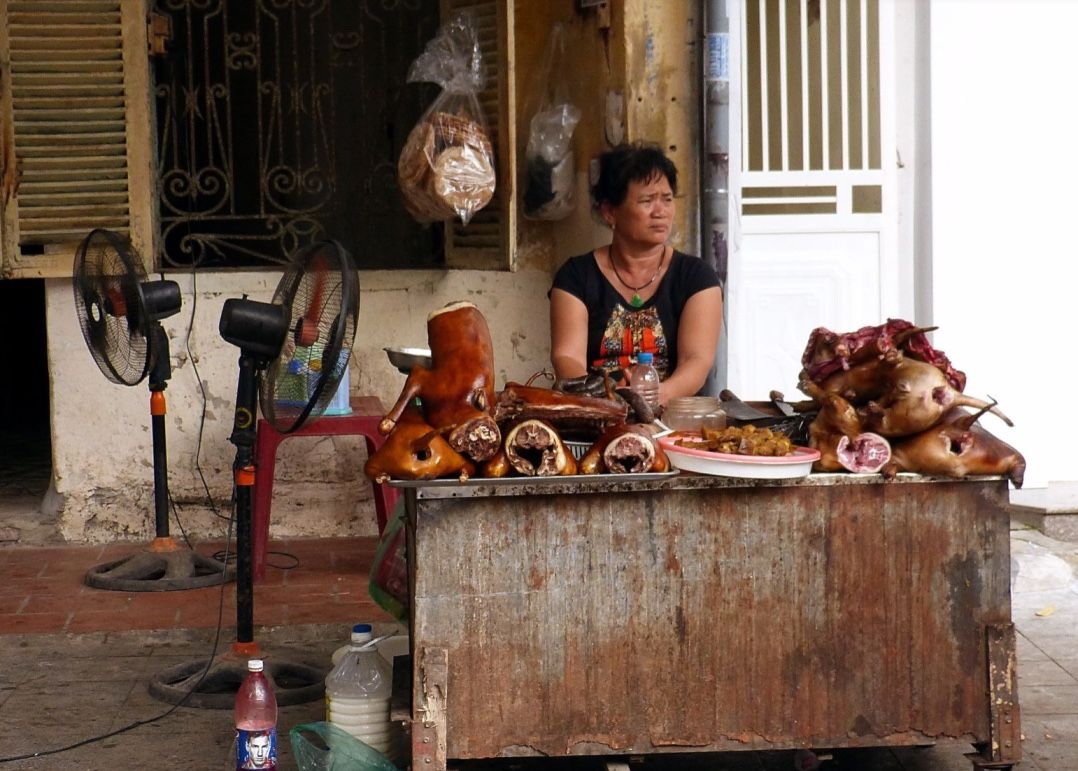
Some people in northern Vietnam, especially in the countryside, still eat dog meat, often grilling it or stewing it with galangal and fermented shrimp paste. Traditionally eaten at the end of the lunar month to “get rid of bad luck,” this dish remains controversial.
Its taste resembles rich, fatty beef, and it’s typically served with rice wine. Although it’s increasingly rare in urban areas, dog meat remains one of the most emotionally charged and strange local dishes for foreign travelers.
- Check out eating dog and cats in Vietnam
10. Fried pig penis (Ngọc trư)
Some drinking spots and roadside eateries across Vietnam serve this weird dish. Cooks clean the pig penis, slice it, marinate it with garlic and chili, then deep-fry it until golden and slightly crispy.
Many people serve it as a beer snack, offering a chewy, savory, and slightly fatty bite. While locals often enjoy it casually, many visitors order it more for shock value than for taste.
11. Bamboo Worms (Sâu tre)
Harvesters collect bamboo worms from bamboo stalks in the mountainous regions of northern Vietnam, then deep-fry them with salt and chili. Many families serve them as a bar snack or side dish during meals.
These worms deliver a crispy outside and a slightly buttery inside, offering a mild taste that many find surprisingly addictive. Although few places serve them, they represent one of the lesser-known but truly an exotic foods.
12. Water Bug (Cà cuống)
Many cooks in Hanoi often steam this large insect and use its essence to flavor dipping sauces. Just a single drop of its oil can transform a dish’s flavor profile.
The taste is floral, almost fruity, and hard to describe. While some fear the look of this insect, others find it an essential part of Vietnam’s culinary mystery – a subtle but unmistakable, bizarre Vietnamese ingredient.
13. Snake meat (Thit rắn)
Considered a traditional dish in northern Vietnam, especially around Le Mat village near Hanoi. Cooks typically make this dish from grass snakes or cobras, deboning the meat and preparing it in various styles such as grilling, stir-frying, deep-frying, or simmering it in porridge. Many people believe this exotic food boosts circulation, reduces joint pain, and enhances male strength, which explains its strong association with masculinity and bravery. Some diners even drink a shot of snake blood or bile mixed with rice wine as part of the experience.
The meat itself is lean, slightly rubbery, and tastes like firm chicken, with a rich, earthy aftertaste. Though it may not look shocking on the plate, snake meat remains one of the strangest local dishes in Vietnam, especially for travelers unfamiliar with its cultural meaning.
14. Frog (Thit ech)
Frog is especially popular in rural Vietnam, where people value it for its affordability and nutritional benefits. Traditionally, locals caught frogs in rice fields after the rain, making them an easy source of clean, natural protein. Many people believe frog meat helps cool the body and support digestion, especially during hot weather.
Most people use the legs, often stir-frying them with lemongrass and chili or deep-frying them until golden. The flavor tastes mild, and the texture feels tender—like a mix between chicken and fish. While thit ech doesn’t top the list of shocking dishes, many visitors still find it exotic because they rarely see frogs on the menu.
15. Red Ant Egg Salad (Gỏi trứng kiến)
People in northern mountainous provinces like Cao Bang and Bac Kan prepare this salad using red ant eggs, young leaves, and herbs. It’s slightly sour, nutty, and crunchy, offering a taste unlike anything else.
Prepared mainly by ethnic minorities, this dish is a true example of how deeply regional and diverse Vietnamese food culture can be. Among all bizarre Vietnamese dishes, it’s one of the most surprising – and one of the most prized.
Where to find some of these weirds & unusual local dishes in Vietnam
In Hanoi
Start in the capital, where tradition and adventure go hand in hand. In the Old Quarter, street stalls serve tiet canh (pig blood pudding) early in the morning, while local diners in Le Mat Village are famous for their snake dishes. From snake hotpot to shots of fresh snake blood, this is the place to test your limits – or at least watch others try. Don’t miss cha ruoi (sand worm omelet), a seasonal specialty with a surprisingly delicate flavor.
In the Northern Highlands
For something truly rare, venture into the mountains. In provinces like Cao Bang, Dien Bien, or Bac Kan, ethnic minority communities offer dishes you won’t find elsewhere: crunchy red ant eggs, nutty and slightly sour, or bamboo worms roasted over open flames. These ingredients are seasonal and deeply tied to the forest and farming traditions of Vietnam’s uplands.
In Ho Chi Minh City
Head south to bustling Saigon, and you’ll find your next challenge tucked into the alleys of District 5. This area, rich in Chinese-Vietnamese heritage, is where you’ll encounter offal-based dishes like organ stew, boiled intestines, or stir-fried kidney with herbs. It might sound intense, but for many locals, these are comfort foods – flavorful, hearty, and full of nostalgia.
In the Mekong Delta
Life here flows with the river, and so does the food. Rural markets and riverside eateries serve up countryside delicacies like grilled field rats (yes, really) and coconut worms – often eaten alive with fish sauce. These dishes are more than shock value – they’re part of a resourceful, deep-rooted food culture where nothing goes to waste and every bite has a story.
Some local tips before trying strange dishes in Vietnam
Follow the crowds
Eat where locals eat. Busy stalls usually mean fresh ingredients and high turnover, which reduces the risk of foodborne illness, especially important with raw or fermented dishes.
Ask what’s in the dish
Some of these bizarre dishes may look familiar but include unexpected ingredients. Don’t be afraid to ask – or point to what others are having and say “giong nhu vay” (same as that).
Go with a local (or a tour)
You won’t often find tours that include these foods by default, but some guides will take you if you ask. Restaurants serving them rarely list them on tourist menus. To try these dishes safely, join a food tour or go with a local friend who knows where to find trusted spots.
Know your limits
It’s okay to say no. You don’t have to finish a plate of coconut worms or snake meat or anything to appreciate Vietnamese culture. One respectful bite is more than enough.
Bonus Tip: How to order like a local
Say “cho toi mot dia…” (give me one plate of…) or simply point, smile, and say “ngon khong?” (Is it tasty?). Most street vendors will happily guide you, and often offer a sample before you commit.
For curious travelers: Would You Dare To Try The Weirdest Foods In Vietnam?
Strange foods aren’t just dishes – they’re windows into local culture, history, and local pride, they may not be very common or practical these days, but still favored by many locals. From balut to coconut worms, these weirdest local dishes challenge your comfort zone but reward your curiosity. You don’t have to love them – just trying them is a story worth telling.