

Vietnam has many beautiful Buddhist temples, known for their peaceful atmosphere and deep history. These temples play an important role in Vietnamese culture and spiritual life. Moreover, their unique architecture, ancient statues, and quiet surroundings give visitors a chance to connect with the country’s traditions. Visiting these temples is a must for anyone exploring Vietnam.
Exploring the Best Temples in Vietnam
Vietnam is a land where ancient beliefs still shape daily life. Temples, hallowed places where history, architecture, and spirituality coexist harmoniously, are among the most potent examples of this. Buddhist temples in Vietnam, ranging from serene mountainside shrines to enormous pagoda complexes, are crucial to comprehending the essence of the country and the richness of Vietnamese culture.
- Check out Vietnam Tours & Trips
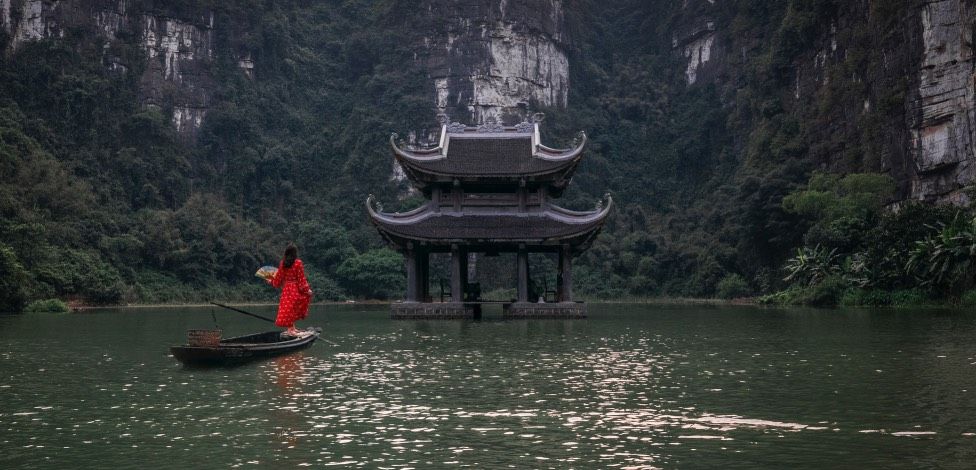
Temples and Pagodas in Vietnamese Culture
Vietnamese religion is a rich blend of Buddhism, Taoism, Confucianism, ancestor worship, and folk beliefs. These traditions are interwoven rather than distinct, forming a spiritual life that is profoundly communal and intimately personal. In Vietnam, faith is subtle yet pervasive and can be seen in daily routines, temple courtyards, and family shrines.
- Lets learn about religions in Vietnam
Temples you’ll visit in Vietnam come in many forms, each reflecting a different facet of the country’s spiritual and cultural life. Pagodas (chùa) are places where people go to pray, contemplate, and find tranquility. Temples (đền) are places of worship and sacrifice devoted to local spirits, national heroes, or gods. The communal houses (đình) are where people gather not only to worship but also for celebrations, and decision-making.
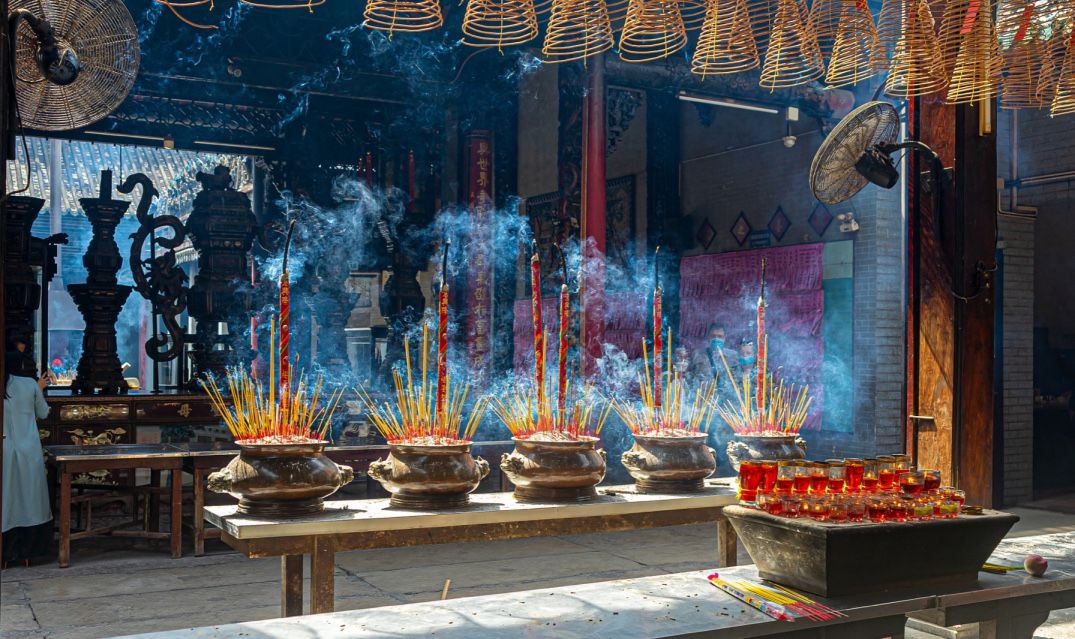
However, temples here are more than just famous buildings or places of worship. They are a part of daily existence. Before significant occasions, people come here to ignite incense, offer prayers for good fortune during test season, or take part in lively festivals that unite entire villages. In Vietnam, temples are not just places of worship; they are also places where everyday life and spirituality coexist.
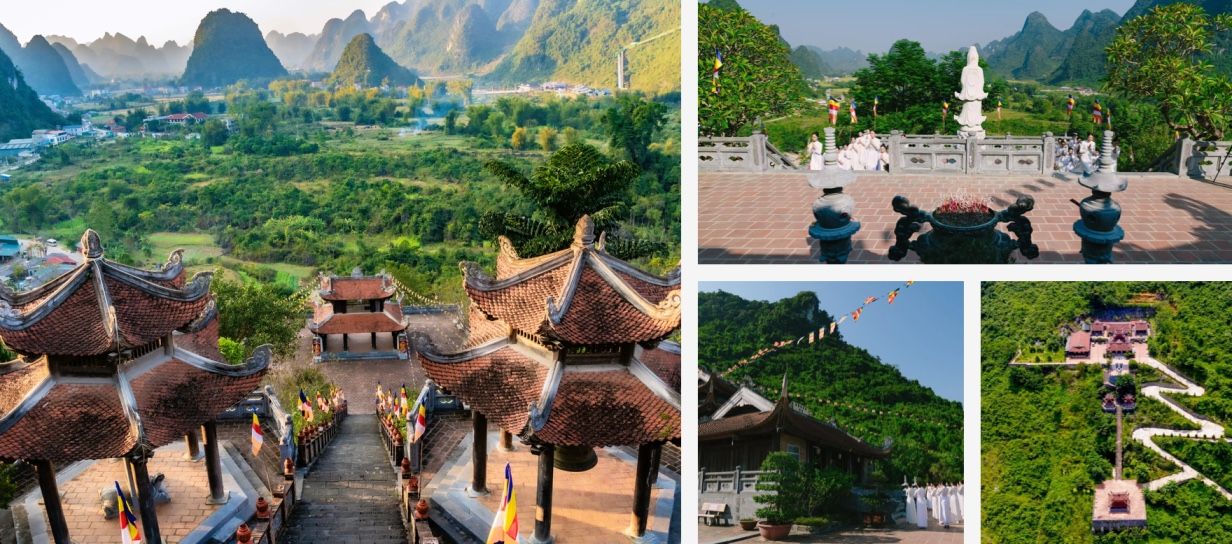
What Makes Vietnamese Temples Unique
- A blend of spiritual traditions: Vietnamese temples combine Buddhism, Confucianism, Taoism, and folk beliefs, creating sacred spaces where many layers of faith coexist.
- Symbolic architecture: Curved tiled roofs, dragon carvings, wooden altars, and lotus ponds reflect harmony between heaven, earth, and humanity.
- Cultural rituals and practices: From incense offerings to full moon ceremonies and Tet rituals, temples are always alive with quiet devotion.
- Living tradition: More than historical sites, temples are places where monks chant, locals pray, and time seems to gently slow down.
14 of the Must-Visit Temples & Pagodas In Vietnam
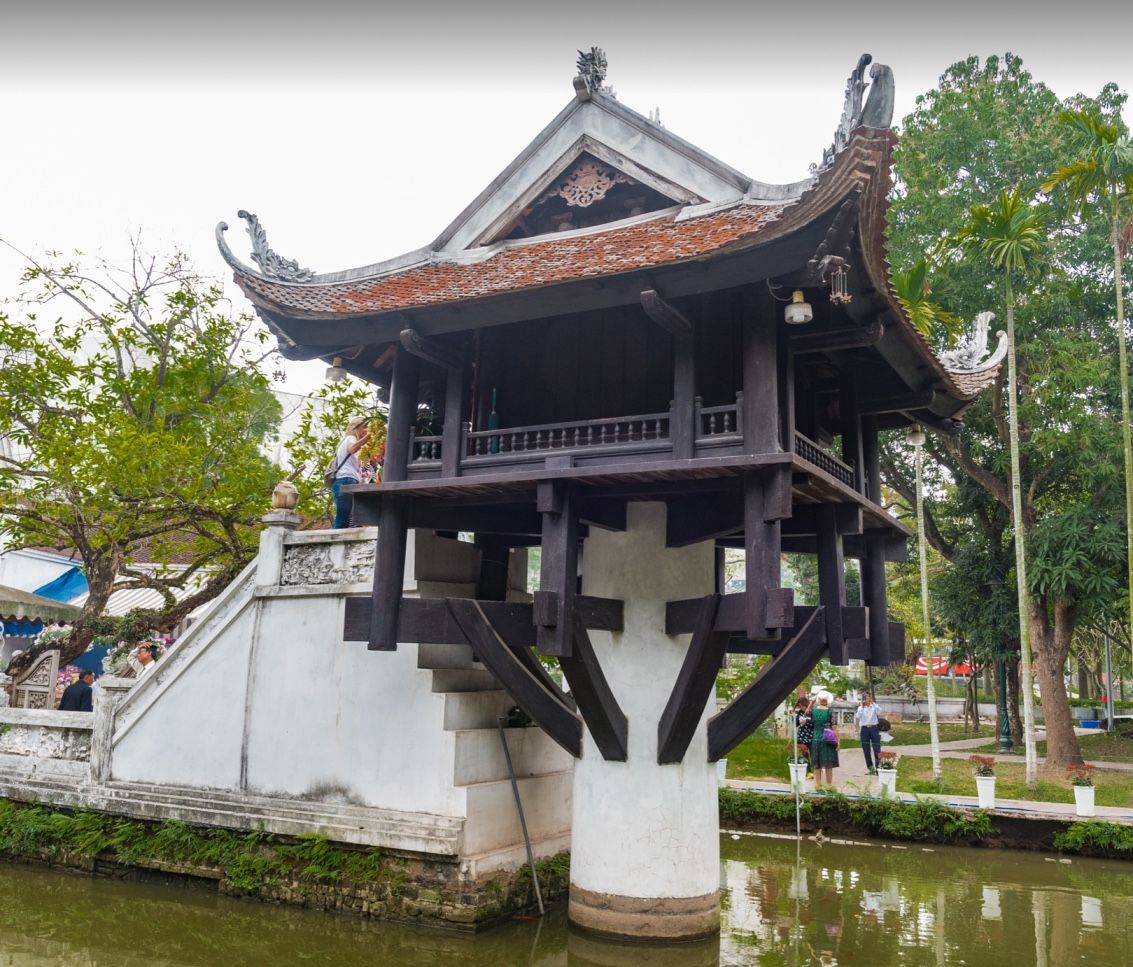
1. One Pillar Pagoda
One Pillar Pagoda is located in the heart of Hanoi, is one of the most iconic Buddhist temples. Built in 1049 under the Ly Dynasty, the structure was designed to resemble a lotus blossom rising from a pond – a symbol of purity in Buddhist philosophy. Despite its small size, the temple holds deep historical and spiritual significance. It is especially popular with students and travelers seeking blessings for luck and peace.
- Opening hours: 08:00 AM – 05:00 PM.
2. Temple of Literature
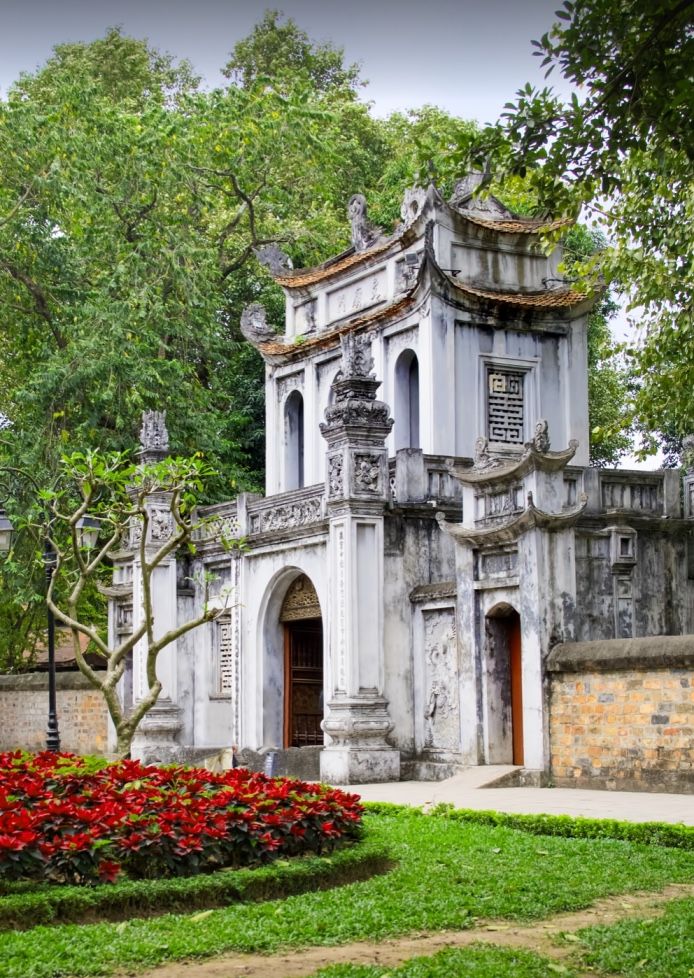
This temple is also in Hanoi, and is not a Buddhist site but a Confucian temple built in 1070 to honor scholars and Vietnam’s first national university. With five courtyards, ancient stelae engraved with the names of royal exam laureates, and classical Vietnamese architecture, the temple reflects the country’s deep respect for education, tradition, and cultural pride.
- Opening hours: 07:30 AM – 05:30 PM.
3. Tran Quoc Pagoda
This Pagoda is located on a small island in Hanoi’s West Lake, is the oldest Buddhist temple in the city – originally constructed in the 6th century. Its striking red stupa, sacred Bodhi tree (a gift from India), and peaceful lake surroundings make it one of the most photogenic and serene spots in the capital. Despite the modern bustle, the temple remains a quiet refuge for prayer and reflection.
- Opening hours: 07:30 AM – 06:00 PM.
4. Tam Chuc Pagoda
Tam Chuc Pagoda in Ha Nam Province, just south of Hanoi, is one of the newest and largest Buddhist temple complexes in Vietnam. Surrounded by limestone peaks and a mirror-like lake, the modern pagoda features giant Buddha statues, intricately carved stone walls, and massive prayer halls. Though newly built, it has quickly become a major pilgrimage and tourism destination.
- Opening hours: 06:00 AM – 06:00 PM.
5. Yen Tu Pagoda
Located in Quang Ninh Province, is considered the birthplace of Vietnamese Zen Buddhism. The complex includes temples, stupas, and meditation halls scattered along a forested mountain trail, culminating at Dong Pagoda on the misty summit. Pilgrims come to make the spiritual climb, often in silence, through clouds and pine trees.
- Opening hours: 07:00 AM – 06:00 PM.
6. Bai Dinh Pagoda
Bai Dinh Pagoda is situated in Ninh Binh Province, is part of Vietnam’s largest Buddhist temple complex. The site combines ancient pagodas with grand modern constructions, including a 100-ton bronze Buddha, 500 Arhat statues, and a 13-story stupa offering panoramic views. It’s a place of devotion, record-breaking scale, and
stunning natural scenery.
- Opening hours: 06:00 AM – 06:00 PM.
7. Perfume Pagoda
Perfume Pagoda lies deep in the limestone mountains of My Duc District, Hanoi. To reach it, visitors glide by boat along the Yen River and then hike or take a cable car up to Huong Tich Cave, a sacred grotto filled with altars, incense, and stalactites believed to bring luck and fertility. Especially crowded during the spring festival season, the journey itself is part of the pilgrimage experience.
- Opening hours: 06:00 AM – 05:00 PM.
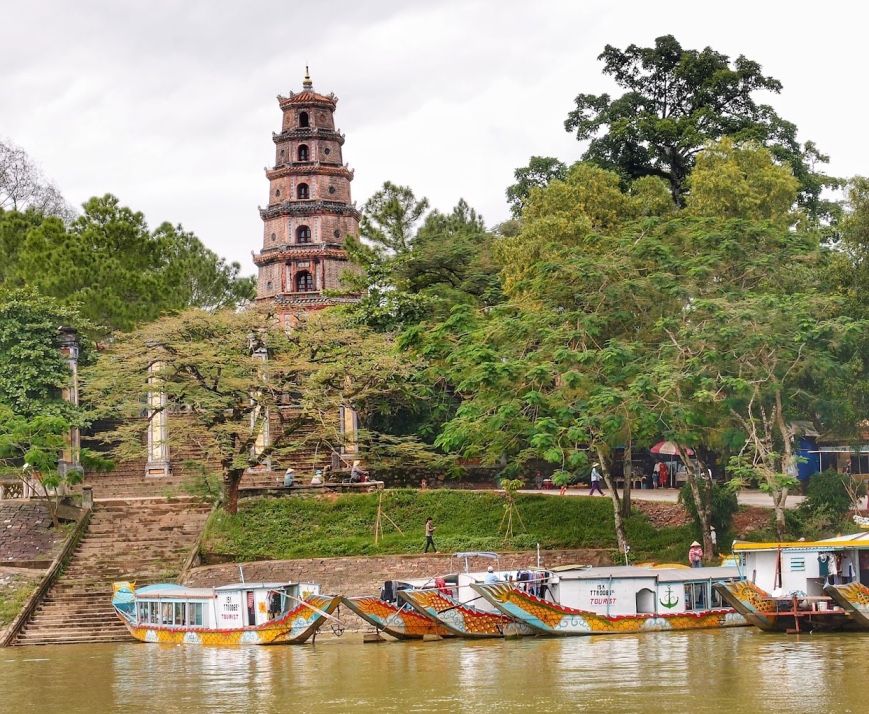
8. Thien Mu Pagoda
It was built along the banks of the Perfume River in Hue, is one of Vietnam’s oldest and most poetic pagodas. Its iconic seven-tiered Phuoc Duyen Tower has become a symbol of Hue and its spiritual heritage. The pagoda grounds include quiet gardens, ancient bells, and historical artifacts from the Nguyen Dynasty.
- Check out Thien My Pagoda Travel Information
- Opening hours: 08:00 AM – 06:00 PM.
9. My Son Sanctuary
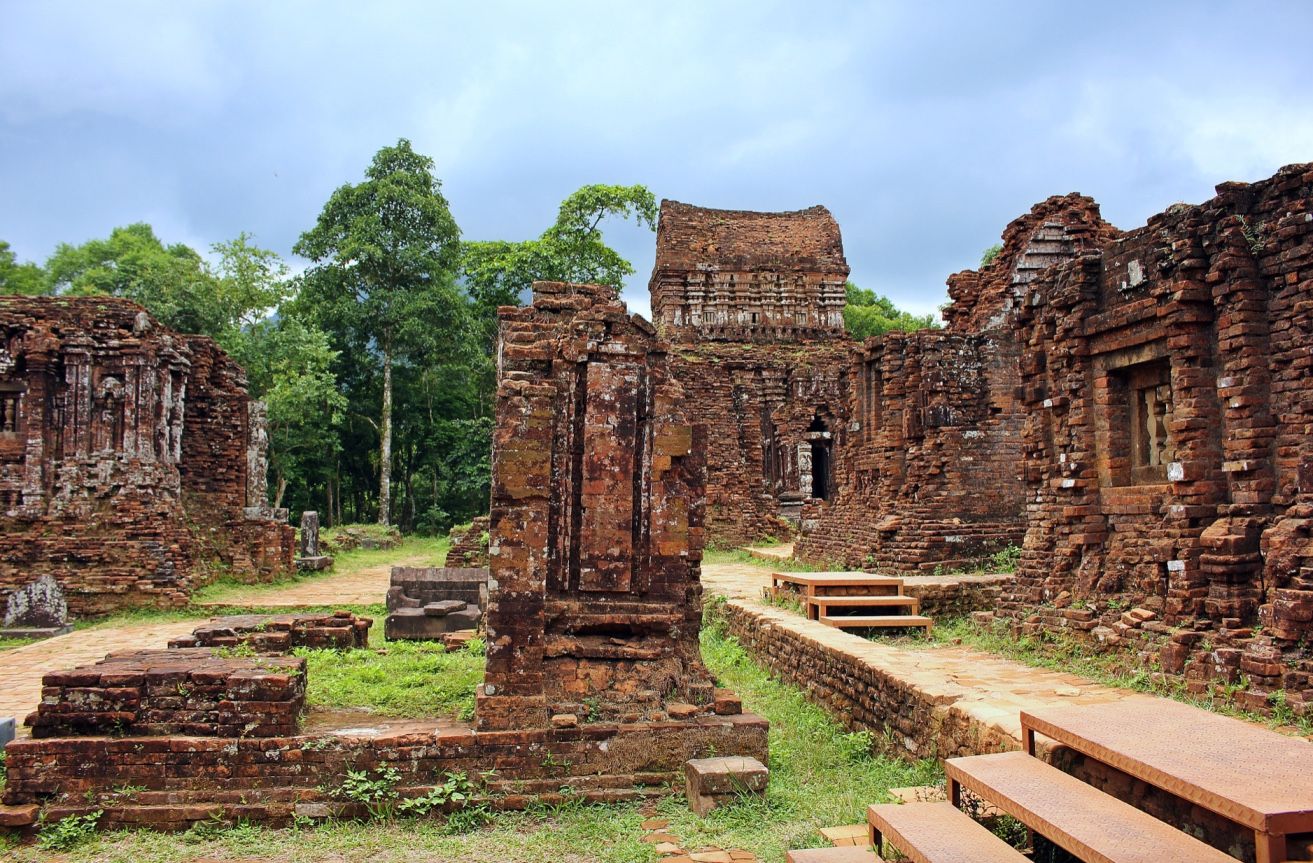
My Son is in Quang Nam Province near Hoi An, which is a cluster of ruined Hindu temples built by the Champa Kingdom between the 4th and 14th centuries. Though not Buddhist, it’s one of Vietnam’s most important spiritual and archaeological sites, with moss-covered brick towers nestled in a lush jungle valley. Visiting My Son is like stepping into a forgotten world of ancient devotion.
- Check out My Son Sanctuary
- Opening hours: 06:00 AM – 05:00 PM.
10. Truc Lam Zen Monastery
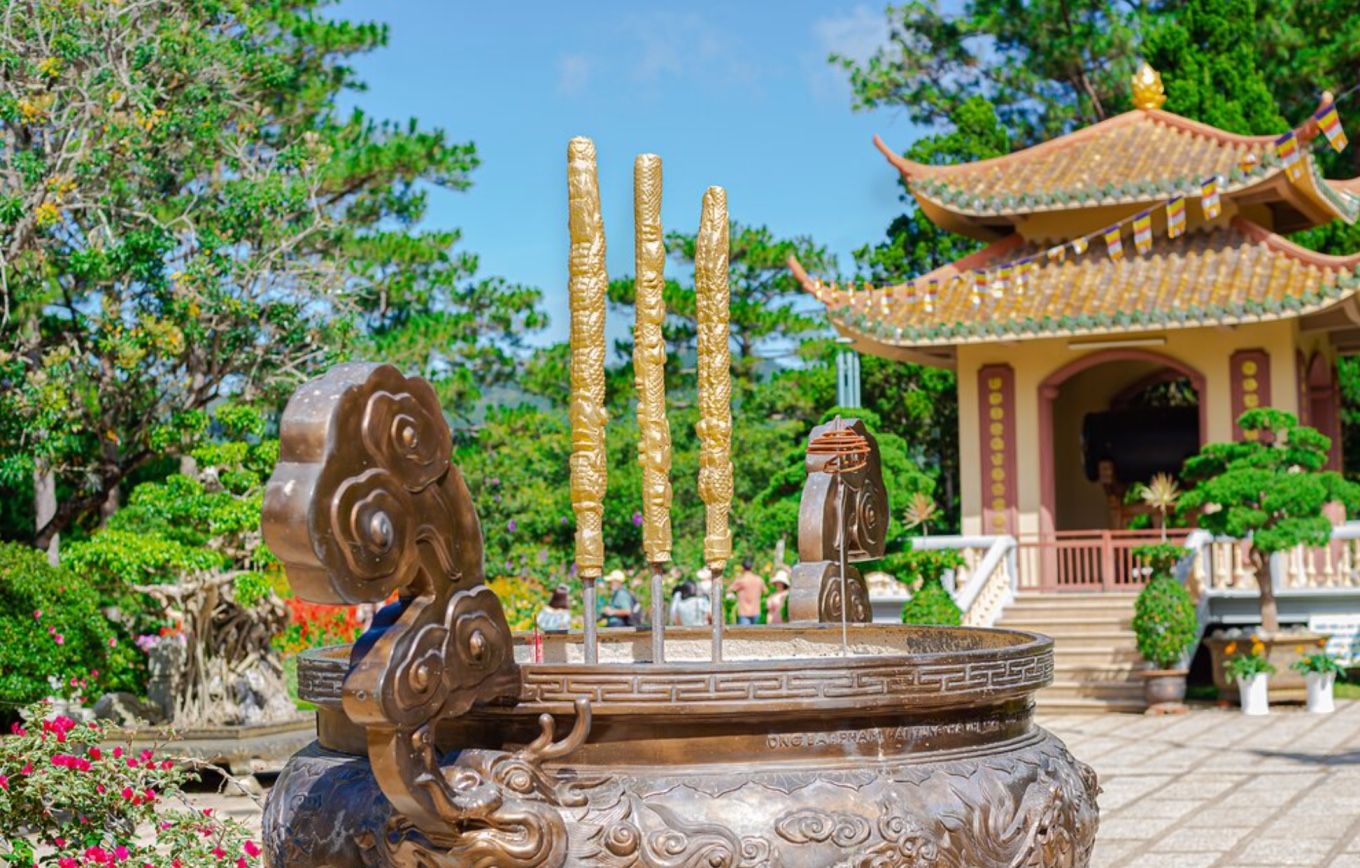
This is a modern Buddhist monastery located in city of Dalat, offering one of Vietnam’s most peaceful spiritual experiences. Overlooking the Tuyen Lam Lake and surrounded by pine forests, the monastery was built in the 1990s but follows ancient Zen traditions. Visitors can explore its tranquil gardens and meditation halls, or simply sit in silence, breathing in the mountain air.
- Opening hours: 07:00 AM – 05:00 PM.
- Check out things to do in Dalat, Vietnam
11. Van Thuy Tu Temple
Van Thuy Tu Temple, located in Phan Thiet, is a unique coastal temple dedicated to the Whale God, a protective sea deity among fishermen. Built in 1762, it houses the largest whale skeleton in Vietnam, measuring 22 meters long. With its maritime legends, sea-themed altars, and strong folk roots, the temple is a fascinating blend of belief, culture, and coastal heritage.
- Opening hours: 07:00 AM – 05:00 PM.
12. Cao Dai Temple
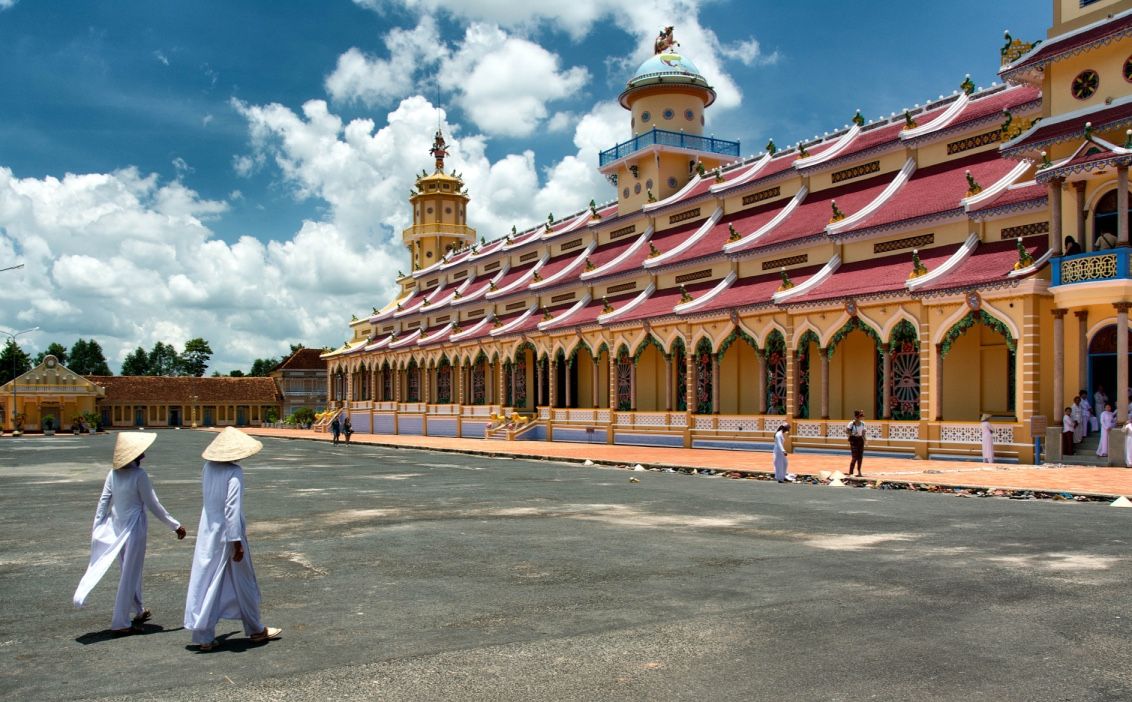
This world known temple in Tay Ninh Province near Ho Chi Minh City is the spiritual center of the Cao Dai religion – an eclectic faith that combines Buddhism, Christianity, Confucianism, and Taoism. The temple’s architecture is flamboyant and symbolic, with dragon pillars, celestial murals, and an all-seeing divine eye above the altar. Visitors can attend prayer services and witness the religion’s rich rituals firsthand.
- Opening hours: 06:00 AM – 05:00 PM
13. Jade Emperor Pagoda
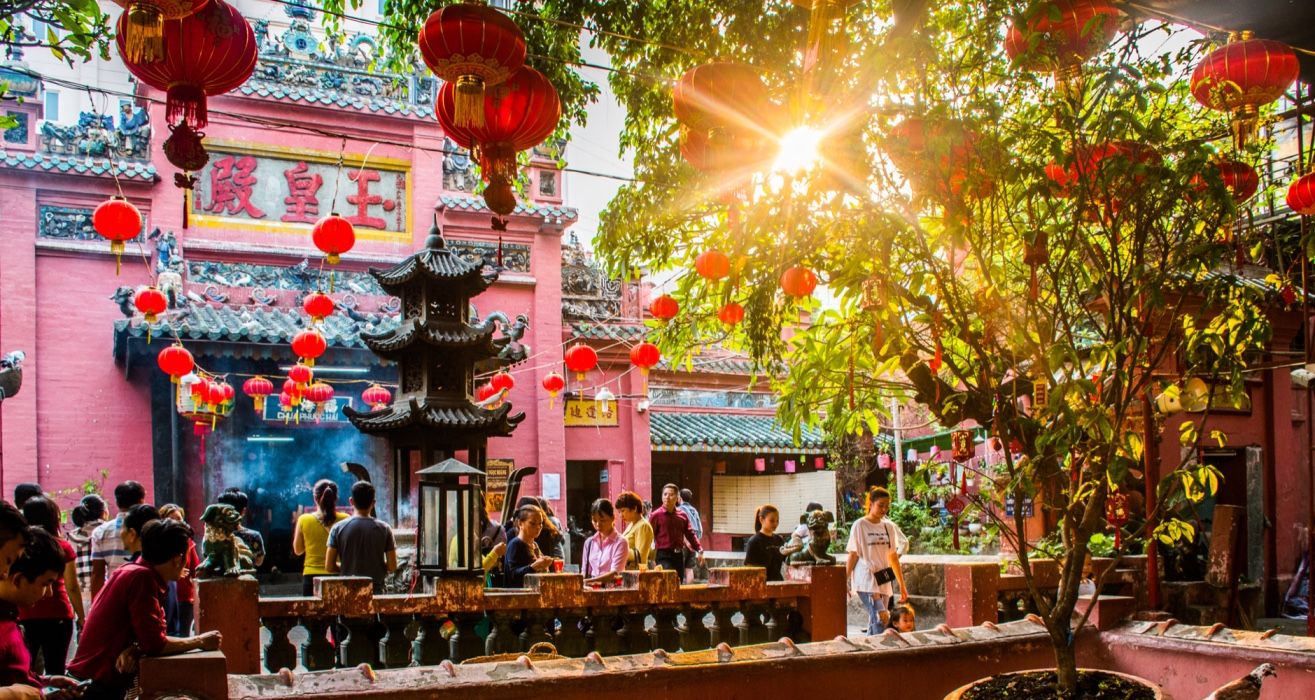
Jade Emperor Pagoda in Ho Chi Minh City is a Taoist temple filled with dramatic wood carvings, dense incense smoke, and altars devoted to gods and goddesses of heaven. Dedicated to the Jade Emperor, the ruler of the heavens, the temple attracts both devout worshippers and curious visitors, who marvel at its spiritual energy and dark, mystical interiors.
- Check out things to do in Ho Chi Minh City
- Opening hours: 07:00 AM – 06:00 PM.
14. Vinh Trang Temple
Vinh Trang Temple is located in My Tho, in the heart of the Mekong Delta, is a vibrant Buddhist temple known for its mix of Vietnamese, Khmer, and French colonial architecture. The temple grounds feature massive statues of standing, reclining, and laughing Buddhas surrounded by lush gardens and quiet courtyards. It’s a place where southern hospitality and spiritual beauty meet.
- Opening hours: 07:00 AM – 06:00 PM.
Essential Tips for Visiting Temples & Pagodas in Vietnam
- Dress modestly when entering any temple or pagoda. Wear clothing that covers your shoulders and knees – long pants or a skirt with a sleeved top is best. A light scarf is useful if you need to cover up more in certain areas
- Remove your shoes before stepping into prayer halls or sacred rooms. You’ll usually find rows of footwear at the entrance – follow the local custom and walk inside barefoot or in clean socks.
- Keep quiet and respectful while exploring the temple grounds. These are places of worship and reflection, so avoid loud conversations, laughter, or phone use. Switch your devices to silent mode.
- Don’t touch or point at sacred objects. Buddha statues, altars, and relics are spiritually important – never touch them or pose too closely for photos. If you need to gesture, use an open hand with the palm facing downward.
- Take photos respectfully. In most temples, photography is allowed outdoors but restricted indoors. Never use flash, and avoid photographing people during worship unless you’ve been given permission.
- Visit early in the day for a quieter and more spiritual experience. Mornings offer cooler weather, soft light for photos, and a chance to observe monks or locals during peaceful rituals.
Bottom line on temples & pagodas in Vietnam
It’s important to slow down, observe with reverence, and open yourself to the local spirit when visiting temples and pagodas in Vietnam. It’s not only about the architecture or taking pictures. Every experience provides a window into something more profound than travel, whether you’re pouring incense in a peaceful hamlet pagoda or staring up at a massive Buddha statue. You are invited to listen in these hallowed places, not only to bells or chanting, but also to your inner peace. And Vietnam’s soul is revealed in that silent moment.