



Vietnamese calligraphy, or “Thư Pháp” (書法), showcases the elegant art of writing in Vietnamese using both chữ Hán (classical Chinese characters) and chữ Quốc Ngữ (the Latin-based Vietnamese script). Blending East Asian calligraphic tradition with the Vietnamese writing system, this art form reflects cultural heritage through its graceful strokes and diverse stylistic expressions.
An overview of the Vietnamese calligraphy?
Vietnamese calligraphy has deep roots in the nation’s history and culture, reflecting the artistic and intellectual evolution of the Vietnamese people. Emerging alongside the introduction of Chinese characters, it has developed its own unique style over centuries. This art form, passed down through generations, embodies the writer’s personality, education, and worldview.
To locals, calligraphy is a beautiful and essential custom that brings luck, health, and peace to the family. If you’re a curious nerd wanting to learn more about Vietnamese Traditional Calligraphy, this post will share valuable insight into this unique art form.
Immerse yourself in the best experiences Vietnam has to offer with our thoughtfully designed packages that caters to the needs of most discerning travelers, check out Vietnam tours

What is Vietnamese Traditional Calligraphy called?
Vietnamese calligraphy, or Thu Phap, is a traditional art deeply rooted in local culture. It blends harmony, philosophy, and creativity through brushstrokes using bamboo pens and black ink on rice paper.
Artists express Vietnamese aesthetics through ideograms, folk proverbs, and poems—written in Chinese characters or chữ Nôm, the ancient Vietnamese script.
Calligraphy appears in three forms: casual street art, formal lacquered boards at temples and cultural sites, and modern exhibition pieces as Vietnam connects with the global art scene.
- Popular street-based form
- Horizontal lacquered boards with parallel sentences
- New exhibition form
Origins of Thu Phap: From Chinese Influence to Vietnamese Identity
Thu Phap, or Vietnamese calligraphy, traces its roots to Chinese scripts, introduced as early as the 1st century AD. Over time, however, these characters failed to fully express the nuances of the Vietnamese language.
After Vietnam gained independence from China in 939, scholars developed chữ Nôm, a unique writing system based on Chinese characters but adapted with Vietnamese meanings and sounds. As a result, Thu Phap evolved into a distinctly Vietnamese art form, blending cultural heritage with linguistic identity.
The evolution of Hán & Nôm scripts
Han-Nom script played a vital role in Vietnamese history, appearing in the nation’s first Declaration of Independence. It blended Hán tự (Chinese-style script) and chữ Nôm (Vietnamese demotic script), each serving distinct audiences. While Hán tự reflected elite philosophies and followed strict writing standards, Nôm appealed to the common people, expressing values like virtue, beauty, and cultural identity.
For centuries, Han-Nom was Vietnam’s official writing system. However, during the 17th century, European missionaries introduced Quốc Ngữ in Hoi An. Eventually, French colonization in the 20th century cemented its use, replacing Han-Nom as the national script.
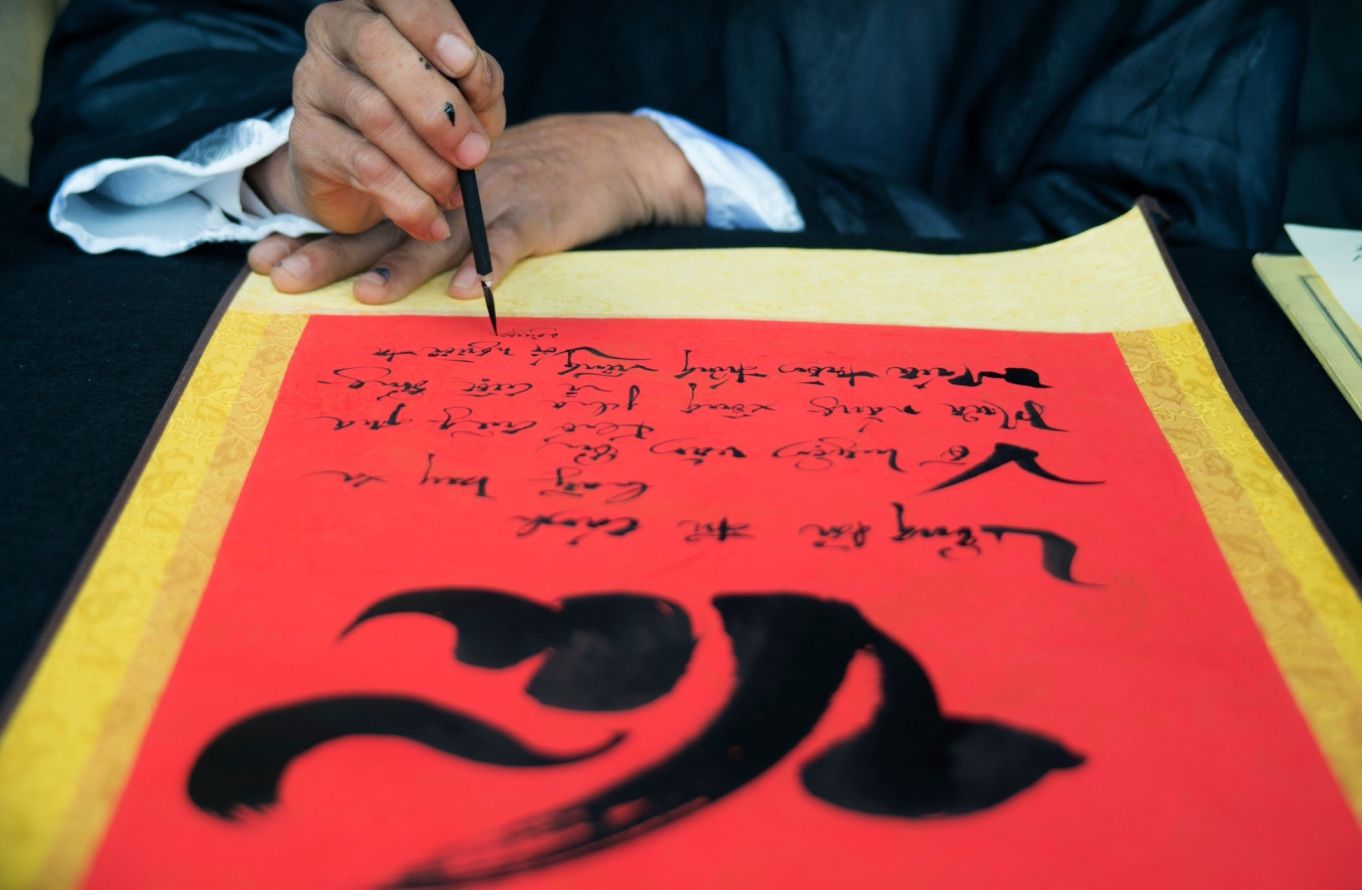
Vietnamese Calligraphy During Tet (New yEAR)
During Tet, locals in Hanoi’s Hoan Kiem visit calligraphy masters to request meaningful characters that symbolize luck, prosperity, and wisdom for the new year. Popular words include Phúc (Happiness), Lộc (Wealth), Thọ (Longevity), Đức (Virtue), Trí (Knowledge), and Tài (Talent). Many combine Phúc and Đức into Phúc Đức, representing happiness earned through kindness.
Recently, Vietnamese calligraphy has grown in popularity, featured on Tet greeting cards, calendars, and holiday decor. Meanwhile, more students enroll in calligraphy classes, drawn by its cultural value and usefulness for reading old documents. Experts like Nguyen Thanh Tung emphasize that calligraphy reflects one’s soul, intellect, and understanding of Vietnamese heritage.
Calligraphy in the spiritual life of Vietnamese
Traditional Vietnamese calligraphy plays a vital role in the country’s spiritual and cultural identity. Many homes proudly display parallel sentences, laudatory phrases, and horizontal lacquered boards, all celebrating Vietnam’s rich heritage. According to poet Phan Ngoc, the script deeply reflects Vietnamese values and has become part of the national soul. During Tet (Lunar New Year), visitors often visit Hanoi calligraphy masters to choose meaningful words that bring luck, peace, or prosperity for the year ahead.
Why Did Vietnam Adopt The Latin Alphabet?
Vietnamese use Roman letters today thanks to 17th-century Catholic missionaries, particularly Alexandre de Rhodes, who arrived in Hoi An. To spread Christianity more effectively, they transcribed Vietnamese sounds using the Roman alphabet, eventually creating Quốc Ngữ, the modern Vietnamese script still in use today.
Where to learn Vietnamese Calligraphy?((Thư Pháp))
Joining a Thư Pháp class offers a meaningful way to connect with Vietnamese culture. Through hands-on learning, you explore the art’s unique characters and symbolism. Moreover, a framed calligraphy piece makes a thoughtful souvenir or gift. However, consider choosing a travel-friendly size to make carrying it easier.
Recommended courses in Hanoi
- Backstreet Academy: #26 Hang Voi, Hoan Kiem District. Here to learn the basics of Thu Phap with a local instructor in Hanoi, learn calligrapphy in Hanoi through the master of art.
Recommended Calligraphy Courses in Saigon
- The Craft House Flagship – 53a Nguyen Du, District 1, Ho Chi Minh City classes to learn calligraphy.
Where to buy Calligraphy?
In Ho Chi Minh City (Saigon)
- Thư Pháp Chữ Việt gallery: Address: 68/13 Ut Tich, Ward 4, Tan Binh, Ho Chi Minh City
- Call: 0909 766 525 – Opening hours: 9:00 – 17:00. Price from 200,000VND (~USD9)
- Thư pháp Gia Nguyễn: Address: 98 Tran Ke Xuong, Ward 7, Phu Nhuan, Ho Chi Minh City
- Call: 0903 383 017 – Opening hours: 9:00 – 19:00 – Item price from 200,000VND (~USD9)
- Mỹ Nghệ Việt art showroom: Address: 212 Bui Ta Han, An Phu, Thu Duc, Ho Chi Minh City / Saigon
- Call: 0903 309 989 – Opening hours: 8:00 – 19:00 – Price from 300,000VND (~12USD)
In Hanoi
- Viet Art Gallery: Address: N4D Trung Hoa Building, Nhan Chinh, Thanh Xuan, Hanoi
- Call: 0977 773822 – Opening hours till 20:00 – Price from 350,000VND (~13USD)
- Thư Pháp Ngọc Đình: Address: No. 5 Alley 97/31 Hoa Tham Street, Hoai Duc, Hanoi
- Call: 0915 86 99 66 – Opening hours till 21:00 – Price from 400,000VND (~17USD)
FAQ: Calligraphy in Vietnam
What is the Vietnamese writing style?
The Vietnamese writing style, or the modern writing alphabet for the Vietnamese language, known as “Script of the National Language”, uses the latin alphabet with intonation marks. This script, based on Romance languages, was originally developed by Francisco de Pina (1585–1625), a Portuguese missionary.
Is Vietnamese alphabet the same as Chinese?
No, Vietnamese uses Latin alphabet with tone marks while Chinese alphabet uses Chinese characters. In traditional calligraphy in Vietnam, uses chữ Nôm, which is a logographic writing system of the Vietnamese language based on the Chinese writing system.
What is Vietnamese calligraphy used for?
Vietnamese calligraphy is a versatile art form used for various purposes, such as writing poems, creating festive banners, and designing signage, the calligraphy however, is written by masters and scholars.