

Located peacefully on the northern bank of the Perfume River, Thien Mu Pagoda (also known as Linh Mu) is one of the oldest and most revered religious monuments in Vietnam. It is not only a must-visit destination for travelers to Hue but also a spiritual symbol deeply ingrained in Vietnamese culture and history. With its majestic architecture, poetic scenery, and centuries-old stories, Thien Mu Pagoda holds a special place in the heart of the former imperial capital.
Thien Mu Pagoda: A Must-Visit in Hue, Vietnam
As part of the Complex of Hue Monuments, a UNESCO World Heritage Site, the pagoda attracts both domestic and international tourists year-round. Whether you are a history enthusiast, a photography lover, or someone seeking peace and reflection, Thien Mu Pagoda offers a timeless experience.
Location of Thien Mu Pagoda
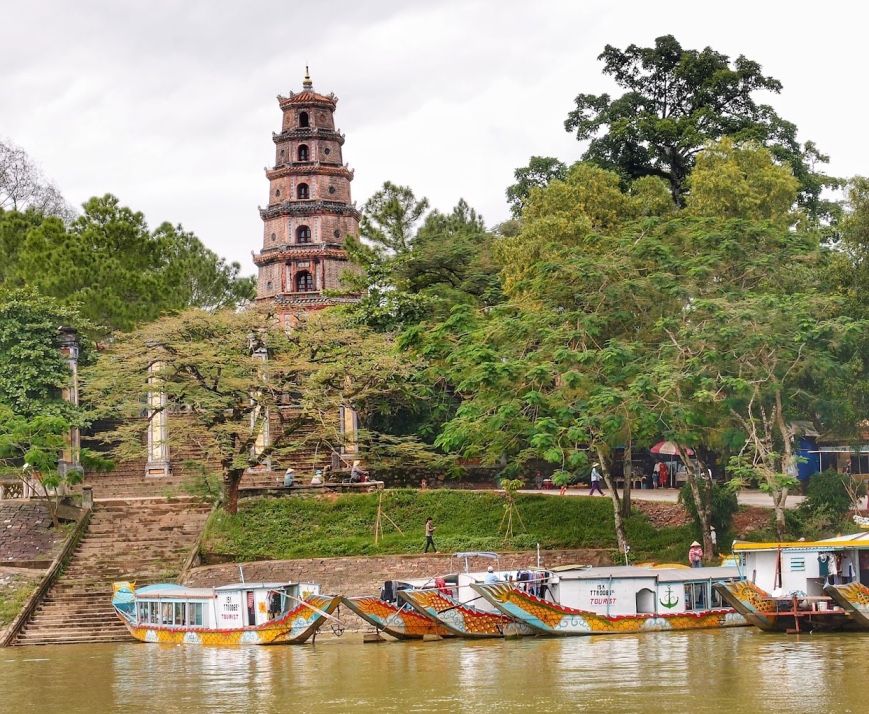
The iconic Pagoda is perched on Hà Khê Hill, overlooking the dreamy Perfume River (Sông Hương), just about 5 kilometers west of Hue Imperial City. The elevated location not only gives the pagoda an unmatched panoramic view of the surrounding landscape but also symbolizes spiritual elevation in Vietnamese beliefs.
The site is conveniently close to the heart of Hue, making it a perfect stop on a half-day or full-day exploration of the city’s historic and cultural highlights. To make planning easier, here is the exact location on Google Maps.
Thien Mu Pagoda Travel Information
In this part, I will be sharing more specific travel information. Thien Mu Pagoda is a historic temple overlooking the Perfume River in Hue, known for its iconic seven-story tower and peaceful atmosphere.
How to go to Thien Mu Pagoda
There are several ways to get to Thien Mu Pagoda that you can consider, including taxi, motorbike, dragon boat, bicycle, and cyclo. It’s only 5km from the center of Hue Imperial City.
One of the most scenic ways to arrive is by taking a dragon boat along the Perfume River from the city center. This option is especially popular in the morning or late afternoon when the riverside scenery is at its most enchanting.
For travelers who prefer land transportation, taxis and motorbike rentals are widely available in Hue. Riding a bicycle or cyclo is also a relaxing and eco-friendly choice, especially if you want to enjoy the quiet beauty of the old streets and riverside paths on your way to the pagoda.
What’s the entrance fee?
Best of all, entrance to Thien Mu Pagoda is free, making it one of the most accessible historical attractions in Hue. While there is no fee, small donations for temple maintenance are welcome and appreciated.
Opening hours
The pagoda is open daily from around 7:00 AM to 6:00 PM. Most visitors spend 1 to 2 hours exploring the complex, strolling through its gardens, and enjoying the river view from the rear terrace.
When is The Best Time to Visit?
The ideal time to visit Thien Mu Pagoda is from March to August, which is Hue’s dry season. During these months, the skies are clear, the weather is warm, and the gardens and surrounding nature are lush and green. These conditions are perfect for photography, sightseeing, and quiet contemplation.
Avoid visiting from October to December, as the region often experiences heavy rains and occasional flooding. If you’re interested in cultural immersion, plan your visit during Buddhist holidays like Vesak Day (Buddha’s birthday), when the temple comes alive with lanterns, offerings, and ceremonial chants.
To enjoy the tranquil atmosphere without the crowds, try to arrive early in the morning or just before sunset. At these times, the light is soft, the air is fresh, and the Perfume River shimmers with golden reflections.
- Check out the best time to visit Vietnam
Architecture Highlights of Thien Mu Pagoda
Thien Mu Pagoda is a masterful example of Vietnamese religious architecture, blending spiritual symbolism with natural harmony. Over the centuries, the temple complex has been expanded and restored, but it has always retained its unique character and charm.
Tam Quan Gate
The journey into Thien Mu Pagoda begins at the Tam Quan Gate, the three-arched gate that represents the Buddhist concept of liberation through body, speech, and mind. Passing through this gate, visitors symbolically leave the mundane world behind and enter a space of peace and mindfulness.
Dai Hung Palace
The main hall of the temple, Dai Hung Shrine, is where the principal worship activities take place. Inside, you’ll find beautifully preserved bronze statues of the Buddha and bodhisattvas, intricate wooden carvings, and ceremonial altars. The architecture is a harmonious blend of imperial and religious styles, showcasing traditional tiled roofs, carved beams, and golden lacquer details.
Phuoc Duyen Tower
Arguably the most famous structure of the complex, Phuoc Duyen Tower stands 21 meters tall with seven octagonal stories. Built in 1844 under Emperor Thieu Tri, each level is dedicated to a different Buddha. This iconic red-brick tower has become the defining symbol of Thien Mu Pagoda and is one of the most photographed landmarks in Hue.
Dia Tang Palace and Other Shrines
Behind the main hall are smaller but equally significant structures, such as Dia Tang Palace, which is dedicated to Ksitigarbha Bodhisattva, the guardian of the souls in the underworld. Other areas include monk quarters, the bell tower, and a peaceful garden with bonsai trees and lotus ponds.
Don’t miss the stone stele pavilion and the famous Austin car once used by Thích Quảng Đức, the monk who self-immolated in protest against religious persecution in 1963. This poignant artifact connects the pagoda to Vietnam’s modern political history.
Thien Mu Pagoda History
The historic pagoda was first established in 1601 by Lord Nguyen Hoang, the founding father of the Nguyen Lords who ruled southern Vietnam. According to legend, a mysterious old woman, believed to be a celestial being, appeared on the hill and prophesied the construction of a sacred pagoda that would bring prosperity to the land. Inspired by this vision, the lord ordered the construction of the temple and named it “Thien Mu,” which translates to “Heavenly Lady.”
Over the centuries, Thien Mu grew in both size and importance, especially during the Nguyen Dynasty (1802–1945). It served not only as a religious sanctuary but also as a center for Buddhist teaching, scholarship, and political activism. During the 20th century, it became a symbol of peaceful resistance and religious freedom in Vietnam.
Today, the pagoda continues to be an active place of worship and pilgrimage. Its rich history, combined with its stunning setting, makes it an essential stop on any journey through Hue.
A brief guide to visiting Thien Mu Pagoda
When visiting the pagoda, it’s important to follow local customs and etiquette. Visitors should wear modest clothing, covering shoulders and knees. Silence and respect are expected in worship areas, and photography should be done discreetly, especially around monks and worshippers.
There are no shops or restaurants inside the pagoda grounds, so plan ahead if you need water or snacks. A few local vendors sell souvenirs and refreshments outside the entrance.
Activities & nearby attractions
Dragon boat to go through Thien Mu Pagoda
One of the most captivating ways to visit Thien Mu is by taking a dragon boat cruise along the Perfume River. This traditional wooden boat, shaped like a mythical dragon and painted in vibrant colors, offers a peaceful and poetic journey through Hue’s cultural heart. Starting from the docks near Truong Tien Bridge or Toa Kham Wharf, the boat glides past lush riverbanks, colonial buildings, and local villages before arriving at the foot of Pagoda.
The ride itself is a cultural experience, offering panoramic views of the Hue countryside and a fresh perspective on the city’s historical landmarks. As you approach Thien Mu, the silhouette of Phuoc Duyen Tower slowly rises above the trees, an iconic image that marks your arrival at the ancient pagoda. Many dragon boat tours also include guided commentary or traditional music performances, turning the transfer into a meaningful part of your Hue journey.
Try Nhat Binh-Vietnamese costume to walk around the Imperial City
For travelers who wish to step into history, wearing the Nhat Binh costume, a traditional royal garment once worn by women of the Nguyen dynasty, is a unique and unforgettable experience. With its wide sleeves, vibrant embroidery, and square collar design, the Nhat Binh symbolizes elegance and nobility.
Several rental shops near the Imperial City of Hue offer full costume services, including accessories and hairstyling. You can stroll through the Citadel grounds dressed like a princess or noblewoman, posing for photos amid ancient palaces, moss-covered walls, and lotus ponds. For men, áo ngũ thân (five-panel áo dài) is available, offering an equally regal look from Vietnam’s imperial past.
Walking around in these traditional outfits not only creates stunning photographs but also deepens your understanding of Vietnamese culture and aesthetics. It’s an experience that blends heritage, fashion, and fun, perfect for families, couples, or solo adventurers.
Explore Hue’s Royal Tombs
Beyond the Imperial City and the Pagoda, Hue is renowned for its majestic royal tombs, each offering a glimpse into the philosophy, personality, and architectural vision of Vietnam’s Nguyen emperors. These tombs are not just burial sites; they are sprawling complexes of pavilions, temples, lakes, and gardens that were carefully designed to reflect the emperor’s life and spiritual beliefs.
Among the most famous are the Tomb of Tu Duc, known for its poetic setting and tranquil lotus-filled lake, and the Tomb of Khai Dinh, which combines traditional Vietnamese style with bold European influences and intricate mosaic artwork. Meanwhile, the Tomb of Minh Mang is celebrated for its symmetrical layout and Confucian aesthetics.
Each site offers a unique story and a peaceful atmosphere perfect for quiet exploration. Most tombs are located along the Perfume River, making them easily accessible by boat or motorbike. Exploring these sites gives travelers a deeper appreciation of Hue’s dynastic legacy and the cultural sophistication of Vietnam’s imperial past.
Take a walk toward the Vong Canh Hill
Vong Canh Hill is a peaceful spot near Thien Mu Pagoda and Hue’s royal tombs. It offers stunning views of the Perfume River, forested hills, and distant pagodas—especially magical at sunrise or sunset. Locals come here for picnics and quiet moments, away from large crowds. The short walk to the top reveals Hue’s poetic charm. Travelers often pair it with nearby sites like Hon Chen Temple or Tu Duc’s Tomb for a relaxing and scenic escape.
Final thought on visiting the Thien Mu Pagoda, Hue
Still wondering if you should visit? Yes, yes, and yes! Thien Mu Pagoda isn’t just old—it’s the heart of Hue’s spirit. From the tall tower to the sound of bells and the calm monks, everything here feels quiet and wise. It’s a peaceful place that stays with you even after you go. If you’re in central Vietnam, don’t miss it.