

French colonial architecture in Vietnam beautifully blends European elegance with local Vietnamese character, creating structures that still shape the identity of many cities today. In particular, cities like Hanoi and Saigon (Ho Chi Minh City) showcase iconic examples of Vietnam’s colonial architecture, from grand government buildings and charming post offices to the Hanoi Opera House and the Notre Dame Cathedral in Saigon. Moreover, these architectural gems not only highlight the country’s complex history but also draw travelers and history enthusiasts eager to explore the lasting legacy of French influence in Vietnam.
Colonial Architectures in Vietnam
Vietnam’s architecture is incredibly diverse, shaped by centuries of change. These architectural styles include modernism, colonial, imperial, vernacular, and contemporary. From thatched cottages in the Mekong Delta to stilt buildings in the mountains, vernacular architecture varies by area and ethnic group.
- Check out Vietnam tours & packages
One architectural style subtly sticks out among these layers of history, not because it is Vietnamese in appearance but rather because of how Vietnamese it has evolved into. That’s what French colonial architecture left behind. Originally brought in during the late 19th and early 20th centuries when France ruled, these structures represented strength and a foreign presence. However, they have aged, softened, and adapted to the daily life of Vietnamese cities. These days, they convey a more complex tale of cultural blending, survival, and subdued change than merely recalling a colonial history.
17 of the top French Colonial Architecture landmarks in Vietnam
In Hanoi
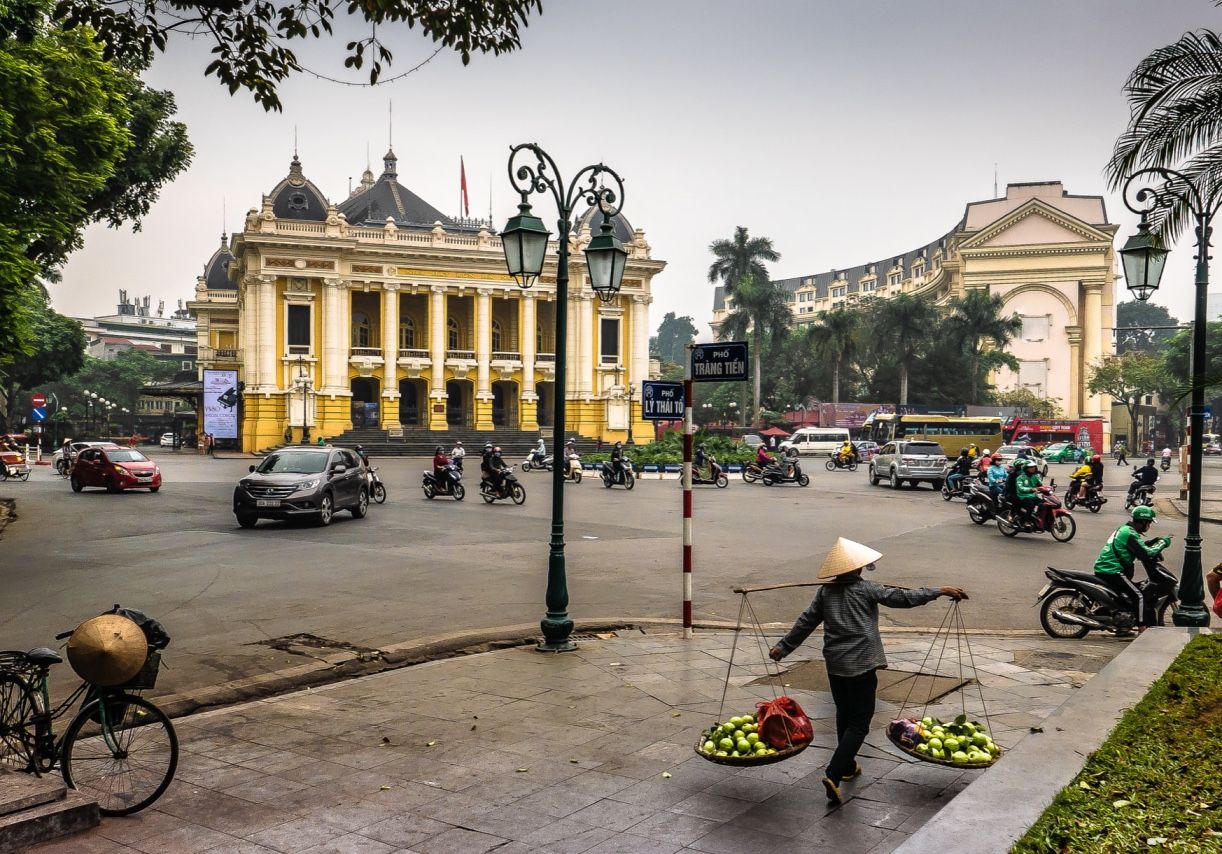
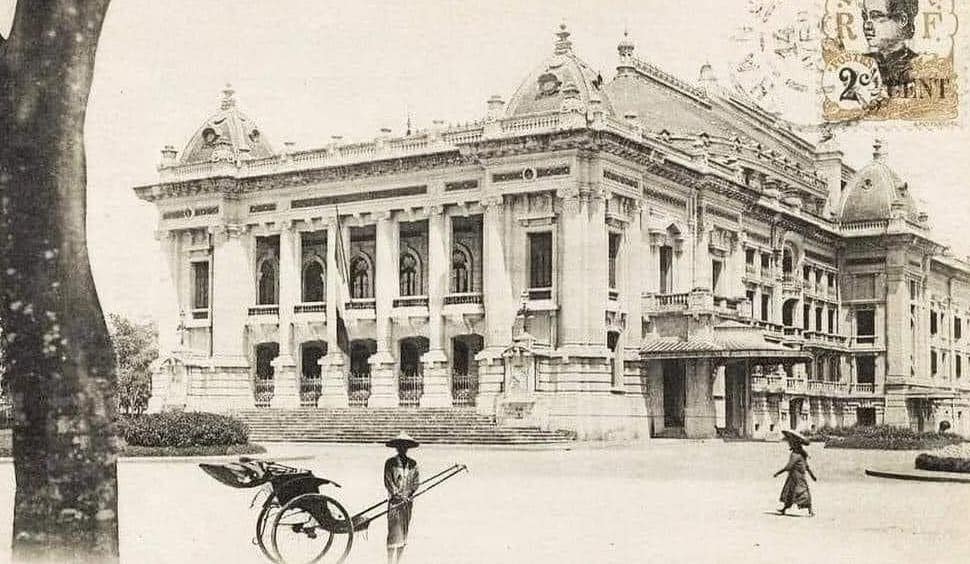
1. Hanoi Opera House
The Opera House, built between 1901 and 1911, is a standout example of French colonial architecture in Vietnam. Modeled after Paris’s Palais Garnier, it features a grand facade, ornate columns, and golden tones. Still active today, it hosts concerts and performances, offering a glimpse of colonial elegance and Hanoi’s vibrant cultural life.
- Check out Hanoi opera house
2. Sofitel Legend Metropole Hanoi
The Sofitel Legend Metropole Hotel, opened in 1901, is a timeless symbol of colonial luxury. Favored by celebrities, diplomats, and writers, the hotel blends French elegance with Vietnamese charm, featuring wrought iron balconies, green shutters, and vintage details throughout. More than just a place to stay, it offers a glimpse into Hanoi’s glamorous past right in the city’s vibrant center.
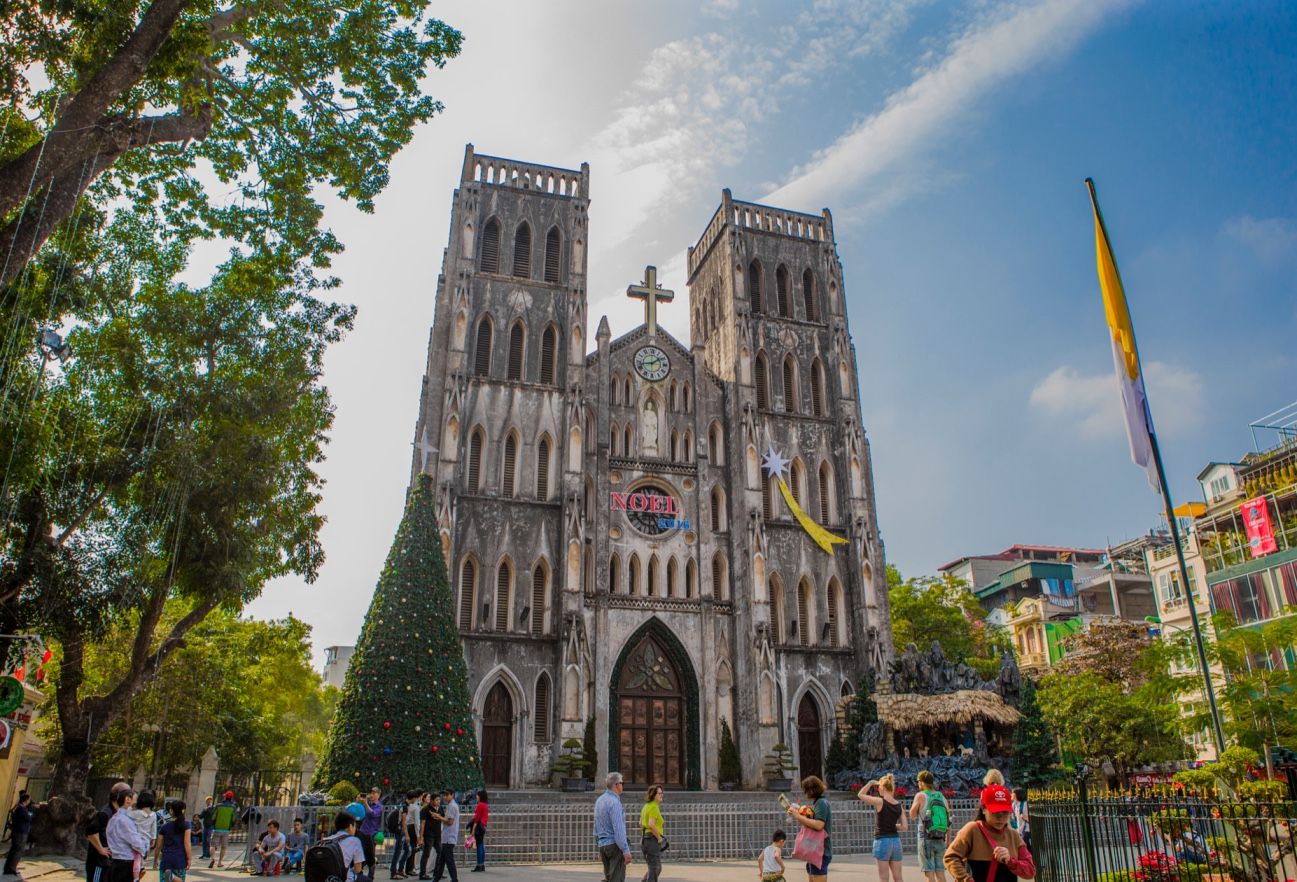
3. St. Joseph’s Cathedral
St. Joseph’s Cathedral, completed in 1886, is a striking Neo-Gothic landmark in the heart of Hanoi’s Old Quarter. Inspired by Notre-Dame de Paris, it features tall spires, arched windows, and intricate stained glass, creating a dramatic contrast to the bustling streets around it and offering a peaceful glimpse into the city’s colonial past.
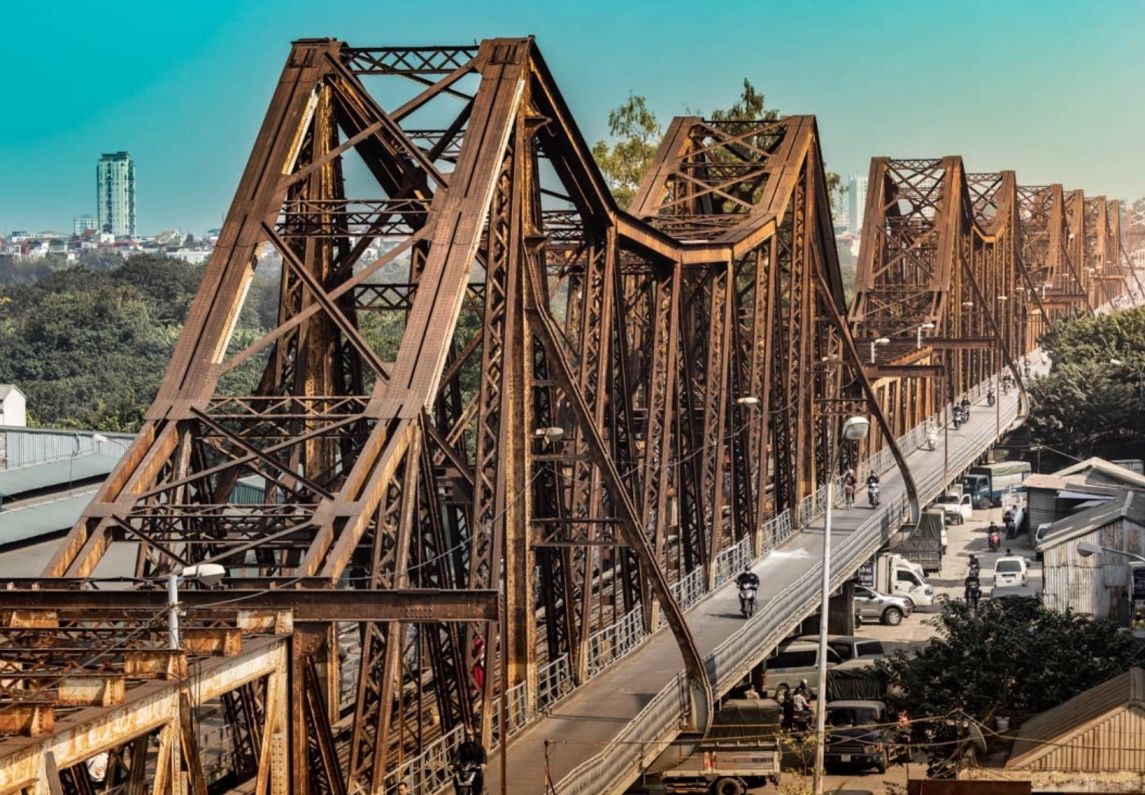
4. Long Bien Bridge
This iconic bridge was built between 1899 and 1902 and designed by Gustave Eiffel, is one of Hanoi’s most enduring colonial landmarks. Once the longest bridge in Asia, it spans the Red River with a weathered beauty that speaks of both resilience and history. Though rusted and worn, its iron arches and latticework remain a powerful symbol of French engineering – and a favorite spot for those seeking a quiet, poetic view of the city.
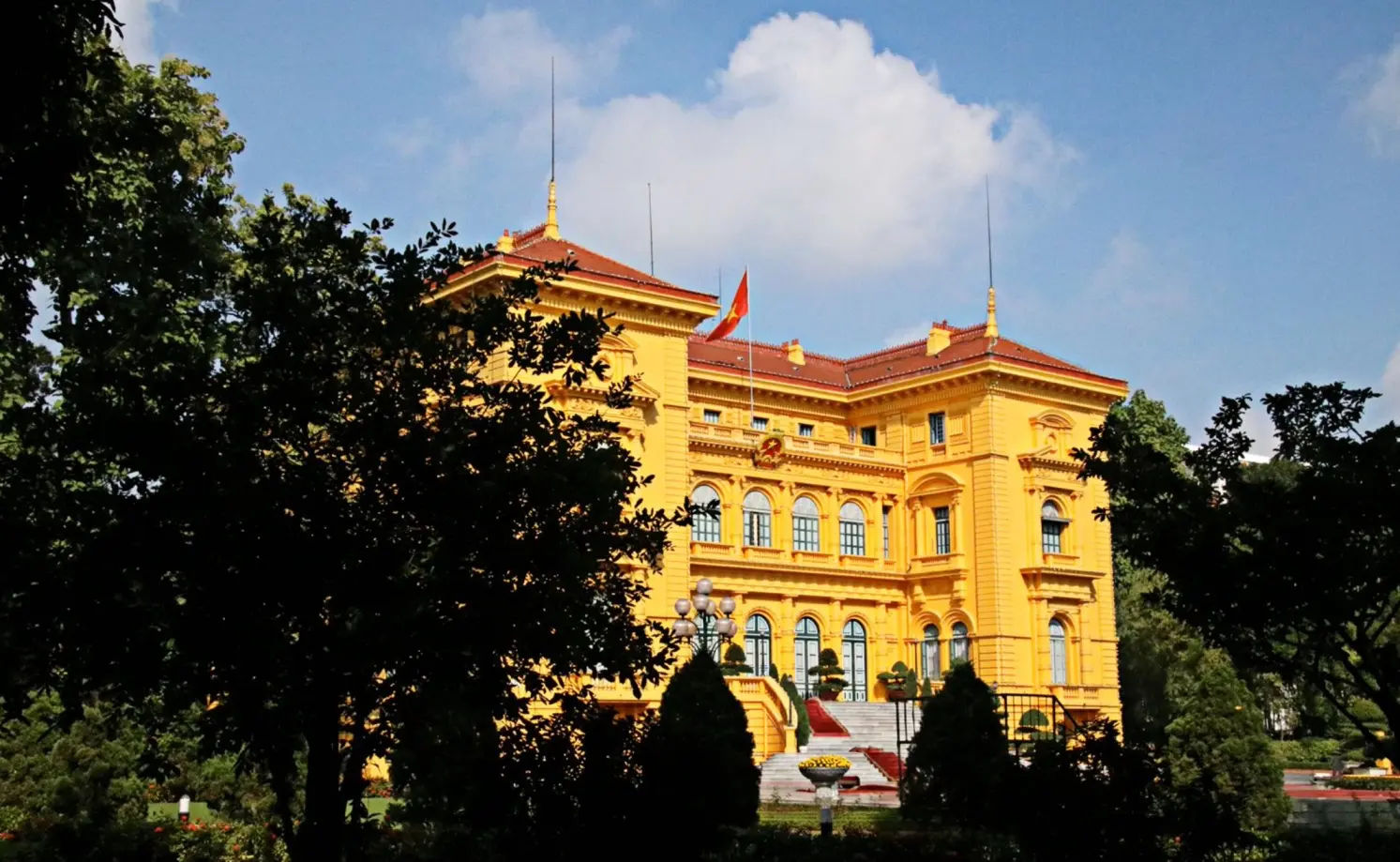
5. Presidential Palace
Built between 1900 and 1906, the Presidential Palace was once the residence of the French Governor-General of Indochina. With its bright yellow walls and peaceful, tree-shaded gardens, it remains a stately symbol of colonial rule – elegant, grand, yet quietly serene in the heart of Hanoi.
French colonial landmarks in Ho Chi Minh City (Saigon)
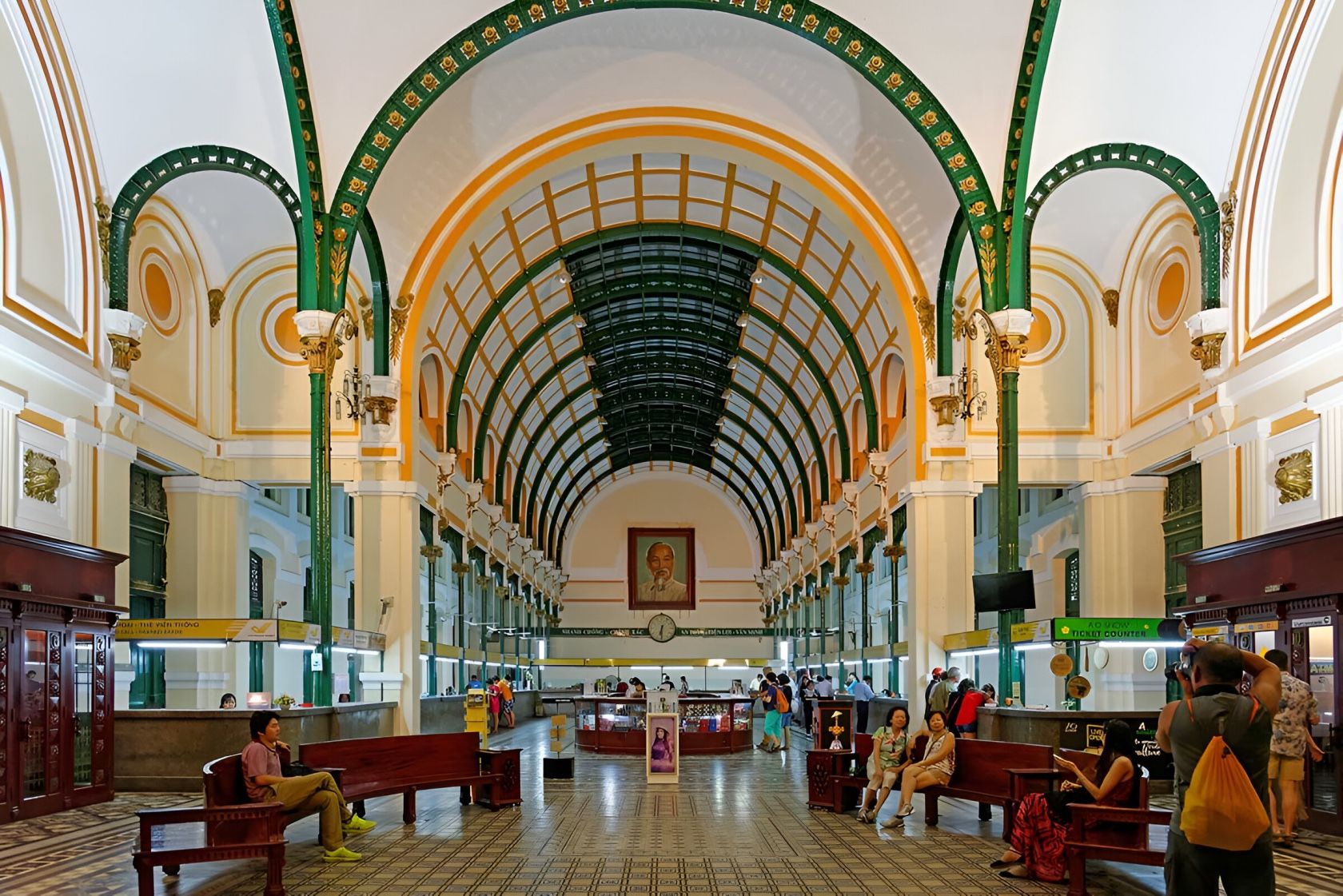
6. Saigon Central Post Office
Built between 1886 and 1891, the Saigon Central Post Office is one of Ho Chi Minh City’s most beloved landmarks. With its arched windows, decorative ironwork, and soaring vaulted ceiling, it’s both a functioning post office and a favorite photo spot, where colonial charm meets everyday life.
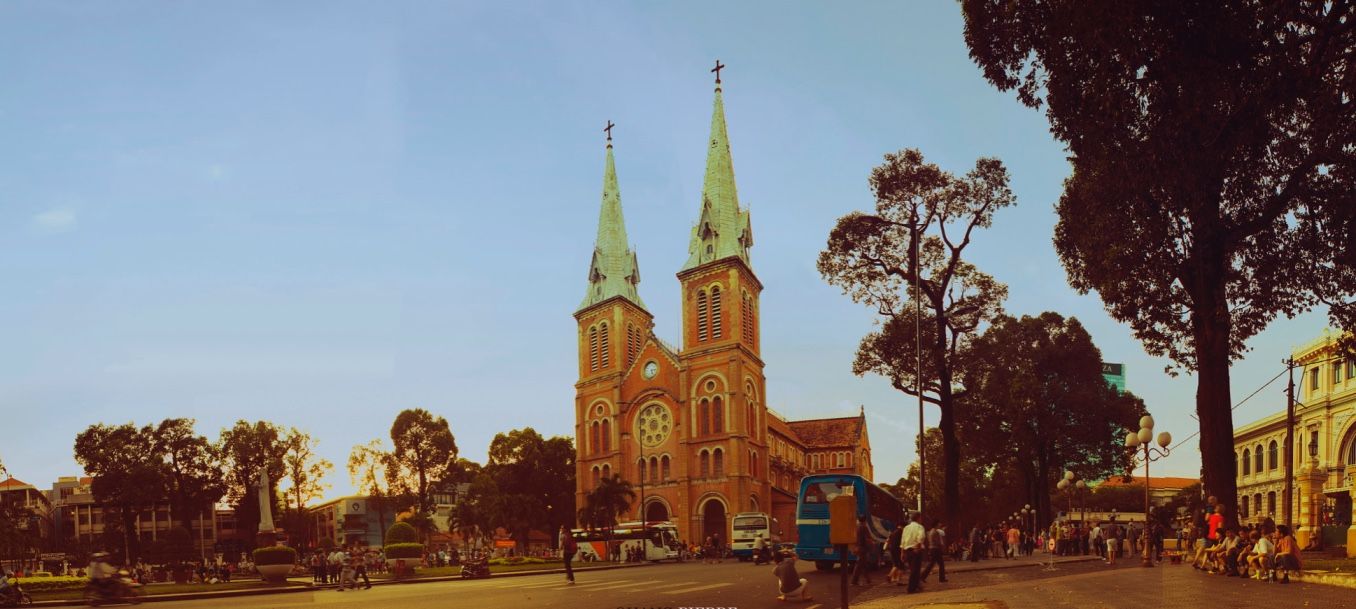
7. Notre-Dame Cathedral Basilica of Saigon
Built between 1877 and 1880 using entirely imported French materials – including its iconic red bricks from Marseille – this cathedral stands as one of Ho Chi Minh City’s most recognizable landmarks. Its twin bell towers and elegant facade make it a striking symbol of the city’s colonial heritage and spiritual heart.
8. City’s People’s Committee Building
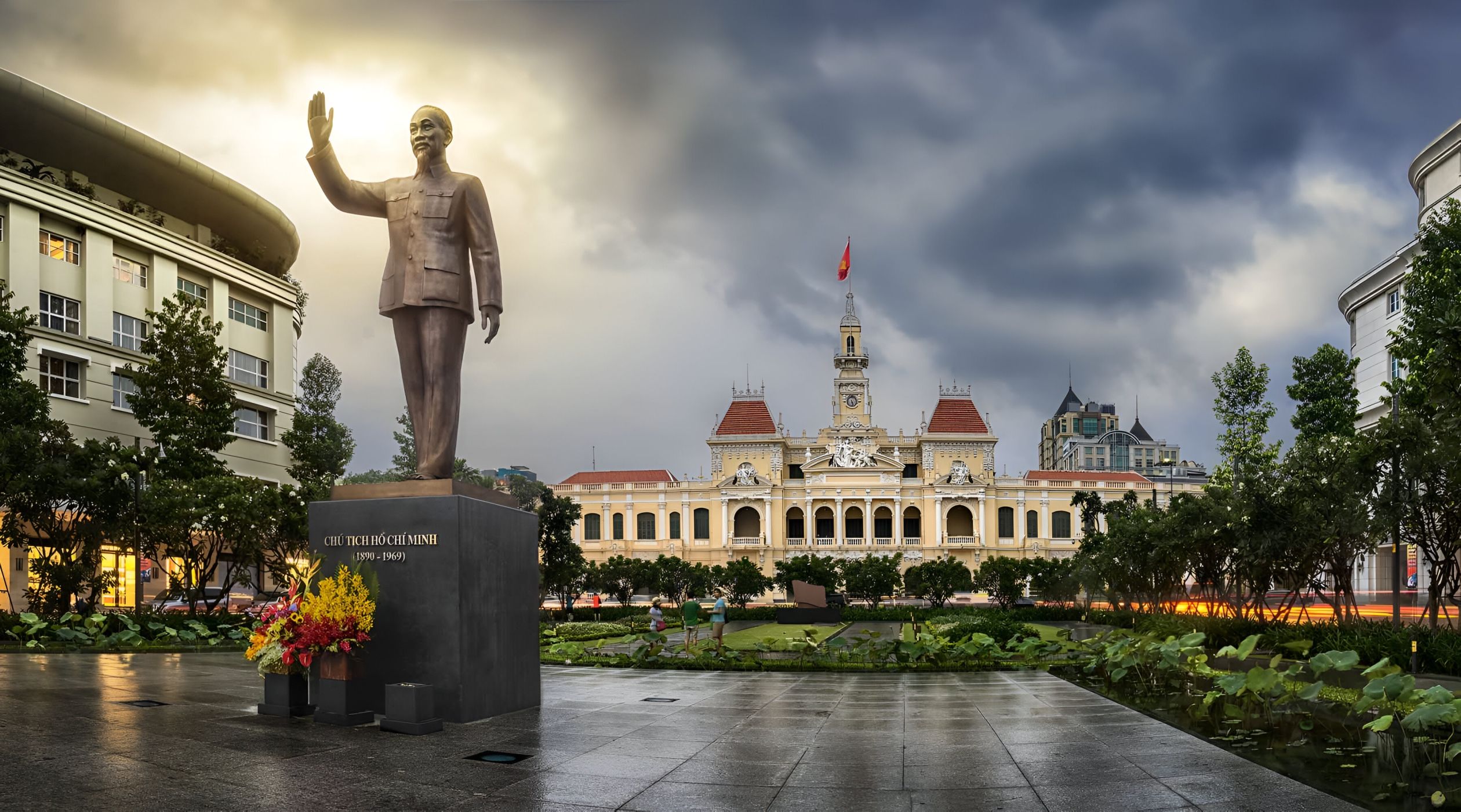
Standing at the end of Nguyen Hue Walking Street, this former colonial city hall, constructed between 1902 and 1908, is often considered the grandest colonial building in Vietnam. With its ornate facade, clock tower, and elaborate carvings, it’s a masterpiece of French design. Though not open to the public, the building is breathtaking to admire from the outside, especially when illuminated at night.
9. Hotel Majestic
Built in 1925, the Hotel Majestic overlooks the Saigon River with timeless elegance. This historic hotel, once host to Charlie Chaplin and foreign dignitaries, exudes old-world glamour with its arched windows, vintage charm, and riverside views, making it a classic symbol of colonial-era luxury in Ho Chi Minh City.
10. Museum of Fine Arts
Sat in the heart of Ho Chi Minh City, the Museum of Fine Arts is housed in a stunning colonial-era mansion built between 1929 and 1934. Its architecture is a graceful fusion of East and West – French-style columns and balconies meet curved tiled roofs, carved wooden doors, and patterned floor tiles inspired by Asian aesthetics. As you wander through its sunlit halls and shaded courtyards, you’ll find that the building itself feels like part of the collection. More than just a museum, it’s a work of art in its own right.
11. Ben Thanh Market
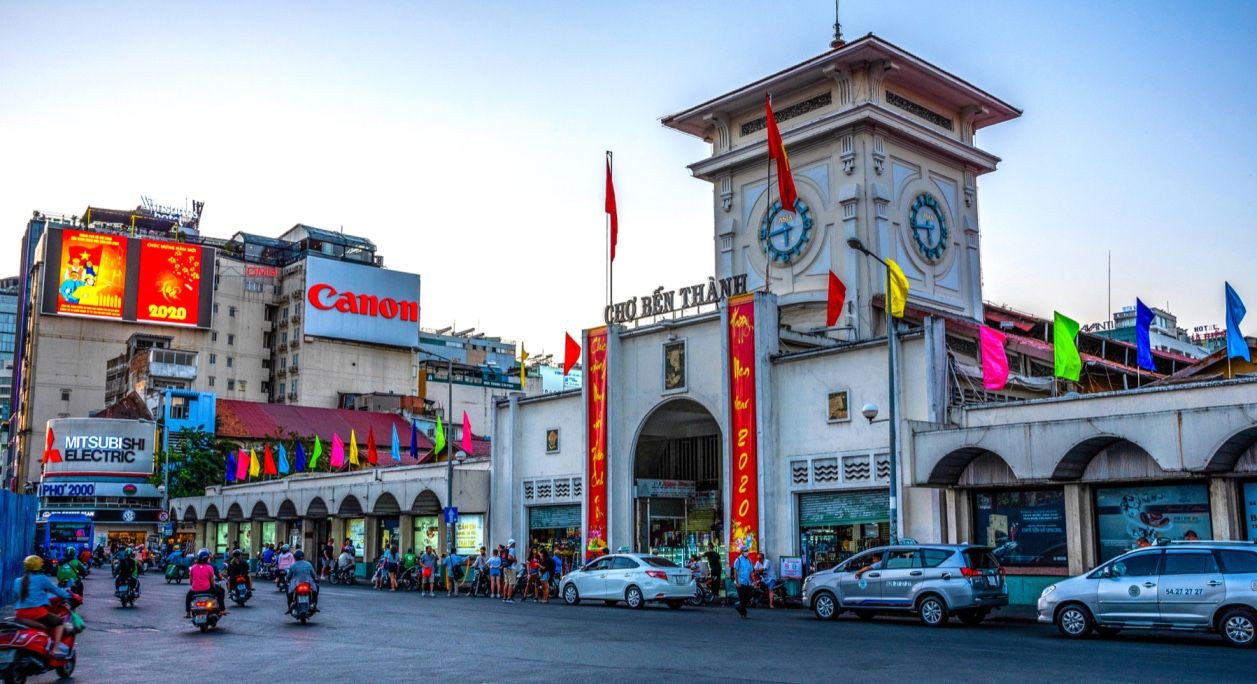
In the heart of modern Ho Chi Minh City, Ben Thanh Market stands as a vibrant reminder of old Saigon. Completed in 1912, its iconic clock tower and simple colonial structure make it instantly recognizable. Inside, the market buzzes with life – locals bargaining, food sizzling, colors and scents blending into a sensory snapshot of the city’s past and present.
- Check out Ben Thanh Market travel guide
12. Tan Dinh Church
Located in District 3, Tan Dinh Church is hard to miss with its bold, bubblegum-pink facade. Built in the late 19th century, it’s one of Ho Chi Minh City’s oldest churches. Its tall bell tower, white trim, and ornate interior make it feel like a fairytale in the middle of the city – sacred, striking, and wildly photogenic.
13. Saigon Opera House
Also known as the Municipal Theatre, the Saigon Opera House is a standout remnant of French colonial grandeur. Completed in 1900, its ornate carvings, grand arches, and Parisian flair make it a visual showstopper. Inside, velvet seats and chandeliers complete the scene. Whether you’re attending a performance or just strolling past, it’s a perfect meeting point of French elegance and Saigon’s modern energy.
- Check out Saigon opera house travel information
14. Ho Chi Minh City Hall
Built between 1902 and 1908, Ho Chi Minh City Hall is one of Vietnam’s most graceful colonial landmarks. With its creamy walls, ornate towers, and arched windows, it stands proudly at the end of Nguyen Hue Street, like a slice of Europe in the tropics. Though closed to the public, its beautifully lit facade draws visitors day and night, serving as both a historic symbol and a favorite photo spot in the heart of the city.
15. Hotel Continental Saigon
Opened in 1880, Hotel Continental Saigon is a living piece of history in the heart of Ho Chi Minh City. Once a gathering place for foreign correspondents, diplomats, and writers like Graham Greene, it witnessed the dramas of war and politics unfold from its quiet corners. Its colonial charm – arched corridors, iron balconies, and a leafy courtyard café – still lingers. Sit down with a coffee, and the city seems to slow around you, if only for a moment.
Check out Colonial architecture in Dalat
16. Da Lat Railway Station
With its three sharp gables and stained-glass windows, Da Lat Railway Station blends French Art Deco with local highland style. Built in the 1930s, it’s more than a stop – it’s a charming symbol of the town’s colonial past, quietly resting in the cool mountain air.
- Check out What to do in Dalat
17. Domaine de Marie Church
Built in the 1940s, Domaine de Marie Church sits peacefully among Da Lat’s pine-covered hills. Its soft salmon-pink façade, curved tile eaves, and pointed Gothic windows reflect a blend of French colonial and Vietnamese design. Modest yet elegant, the church captures the gentle, nostalgic charm that defines Da Lat’s highland atmosphere.
What Makes Vietnam’s Colonial Architecture Unique?
A Glimpse Into The Past
When strolling through the streets of Saigon or Hanoi, it’s natural to stop and ask yourself, “Why is French architecture in Vietnam?”. The explanation can be found in a lengthy period of the nation’s history. Vietnam was a part of French Indochina from the late 1800s to the middle of the 1900s. During those decades, the French reshaped major cities – especially Hanoi, Saigon, and Da Lat – with buildings inspired by the aesthetics of Europe: grand avenues, stately villas, stone churches, and ornate public offices.
Colonial architecture, a style found across many regions once under European control, is known for its symmetry, columns, arched doorways, balconies, and decorative detailing. But in Vietnam, it evolved into something uniquely local. Today, this blend of French form and Vietnamese function still shapes the atmosphere of many cities. Some buildings have faded gracefully; others have been restored. But all of them carry the quiet charm of a complex past that still lingers in the present.
A Blend of East and West
French colonial architecture in Vietnam isn’t a direct copy of what you’d find in Paris. Instead, it’s a hybrid style where European neoclassical forms were combined with Asian influences. You’ll see Roman arches and Greek columns softened by Vietnamese roof tiles, wooden shutters, and wide verandas.
Climate-Aware Design
All of the colonial structures were carefully modified to fit the country’s tropical environment. Better ventilation was made possible by high ceilings, and the strong heat was kept out by thick walls.
Covered arcades and shaded balconies provided shelter from the sun and unexpected monsoon showers. Flexible ventilation was offered throughout the day by large windows, which were frequently combined with wooden shutters. These climate-conscious adaptations made traditional French architectural principles workable in Vietnam’s humid, stormy climate, resulting in a colonial style that is exclusive to Southeast Asia and unmatched in Europe.
Use of Local Materials
The colonial landmarks used indigenous materials such as red bricks, clay tiles, and tropical hardwoods, in contrast to France’s stone and marble structures. In addition to helping to reflect heat, stuccoed facades painted in gentle pastel colors – yellow, blue, and pink – gave cities like Saigon and Hanoi their nostalgic, dreamlike beauty.When paired with climate-conscious design, these materials made colonial structures feel both sophisticated and natural in Vietnam’s tropical landscape.
From Power Symbols to Cultural Identities
These imposing buildings – post offices, train stations, municipal halls, and magnificent villas – were originally constructed to demonstrate European power in a foreign country. Many of them are now museums, universities, upscale hotels, or cultural landmarks. Instead of disappearing into the past, they have assimilated into the urban fabric, giving Vietnam’s contemporary cities more nuance and complexity.
A Living Heritage
What makes Vietnam’s colonial legacy truly unique is that it isn’t frozen in time – it’s still part of everyday life. While motorcyclists thread past fading yellow facades constructed in the early 1900s, cafés nestled inside century-old houses with balconies covered in bougainvillea may be found in Hanoi’s French Quarter or along Dong Khoi Street in Ho Chi Minh City. These structures are alive, breathing places where the past and present collide; they are not artifacts.
Bottom line: The colonial architecture in Vietnam
Whether you’re wandering through Hanoi’s boulevards or sipping coffee by a colonial villa in Saigon, you’ll feel it – that mix of history, charm, and quiet elegance. French colonial architecture gives Vietnam’s cities a unique character, one you won’t find anywhere else in Asia. And that’s what makes it so unforgettable.