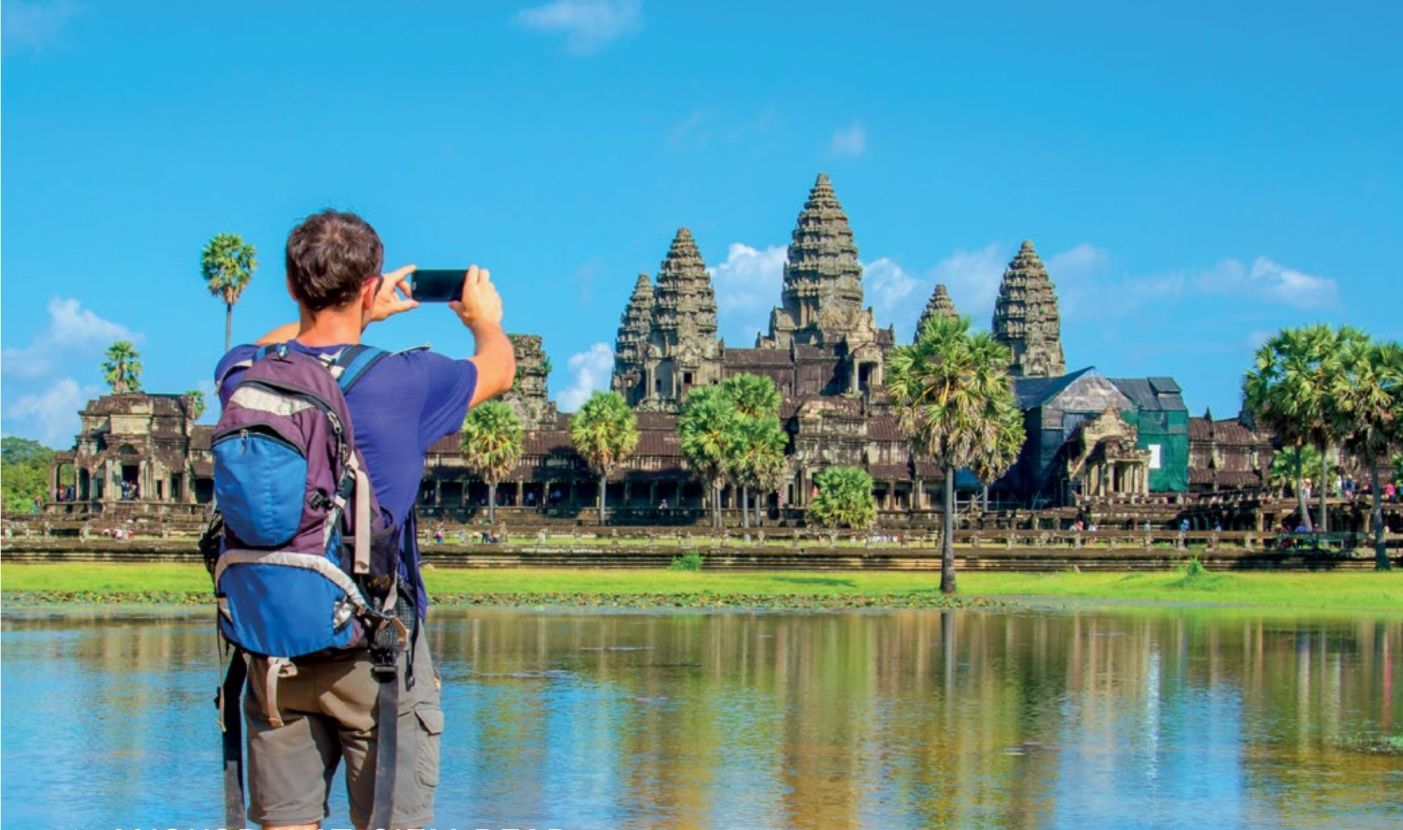


Must See Temples in Angkor: Here in Cambodia, the early 12th-century temples of Angkor rise dramatically from the jungle, offering an awe-inspiring glimpse into Khmer history and architecture. Moreover, take your time exploring this vast archaeological complex, where intricately carved stone walls, towering spires, and sacred corridors reveal the spiritual and cultural grandeur of the Angkor Empire. Visiting Angkor temples remains one of the most unforgettable experiences for travelers in Southeast Asia.
What is Angkor Wat?
Angkor Wat, a Buddhist temple complex & the largest religious monument in the world, covered an area of 162 hectares located outside city of Siem Reap. Was built by Suryavarman II on 11th century, represents the Hindu faith & the abode of ancient gods on earth. Today, the temples are on top of the best things to do where no traveller visiting Cambodia will want to miss their extravagant majesty.
The celebrated temples of Angkor are Cambodia’s greatest things to do and on top of all tourist attraction. The 100 or so temples were to glorify a succession of Khmer kings. Most of Angkor was abandoned in the 15th century and the temples became cloaked by lush forest. The site became the source of scholarly interest in the late19th century after the publication of Voyage à Siam et dans le Cambodge by French naturalist Henri Mouhot.
Angkor Guide: 15 Angkor Temples You Must See
Temples of Angkor stands on top of the all Khmer masterpieces – an awe-inspiring temple that is magnificent for both its grand scale and its incredible details of bas reliefs.
A visit to Cambodia’s World Heritage Angkor complex, and aside from the massive numbers sights and things to do, is understandably high on the list for anyone visiting Cambodia. Get to know a little about the history, meaning and features of its most renowned and iconic temple, Angkor Wat, then start planning that once-in-a-lifetime trip.
Prepare for divine inspiration! The temples of Angkor, capital of Cambodia’s ancient Khmer empire, are the perfect fusion of creative ambition and spiritual devotion. The Cambodian god-kings of old each strove to better their ancestors in size, scale and symmetry, culminating in the world’s largest religious building .
Ascend to the realm of the gods, Angkor Wat. Descend into the hell of the Khmer Rouge at Tuol Sleng. Thanks to a history both inspiring and depressing, Cambodia delivers an intoxicating present for adventurous visitors.
1. Angkor Wat
Angkor Wat is the largest and undoubtedly the most breathtaking of the monuments at Angkor complex, and is widely believed to be the largest religious structure in the world. It is simply unique, a stunning blend of spirituality and symmetry, an enduring example of man’s devotion to his gods.The temple is oriented towards the west (direction of death), and, scholars believed that Angkor Wat must have existed primarily as a tomb. This idea was supported by the fact that the magnificent bas-reliefs of the temple were designed to be viewed in an anticlockwise direction, a practice that has precedents in ancient Hindu funerary rites.Vishnu, however, is also frequently associated with the west, and it is now commonly accepted that Angkor Wat most likely served both as a temple and a mausoleum for Suryavarman II.

2. The Bayon – Temple Of Smiling Faces
Bayon temple epitomises the creative genius and inflated ego of Cambodia’s legendary king, Jayavarman VII. It’s a place of stooped corridors, precipitous flights of stairs and, best of all, a collection of 54 gothic towers decorated with 216 coldly smiling, enormous faces of Avalokiteshvara that bear more than a passing resemblance to the great king himself.
These huge heads glare down from every angle, exuding power and control with a hint of humanity – this was precisely the blend required to hold sway over such a vast empire, ensuring the disparate and far-flung population yielded to his magnanimous will. As you walk around Bayon temple, a dozen or more of the heads are visible at any one time – full-face or in profile, almost level with your eyes or staring down from on high.
Photographers suggest the best time of the day to visit Bayon – The eastward orientation leads tourists to visit early in the morning, preferably just after sunrise, when the sun goes upwards, lighting face after face. Bayon, however, looks equally good in the late afternoon, and if you stay for the sunset you get the same effect as at sunrise.

3. The Rose Pink Temple Of Banteay Srei
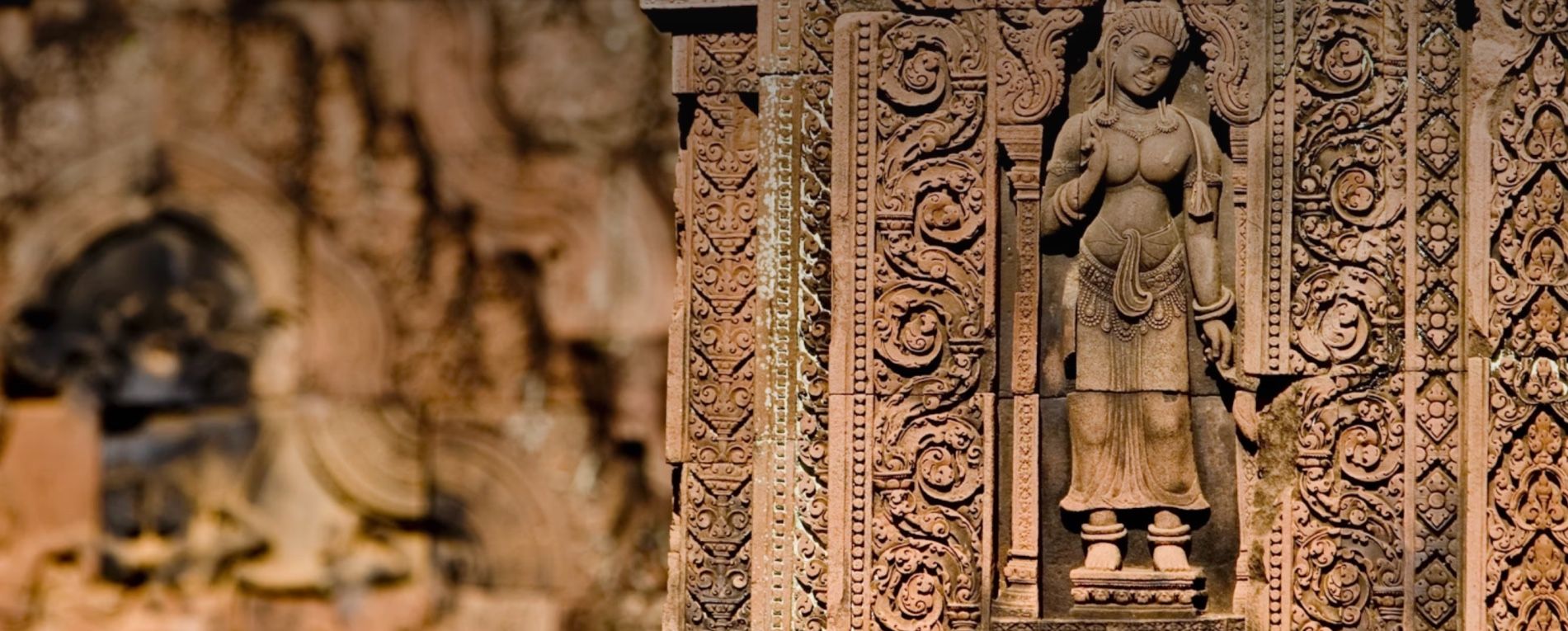
Beyond an ordinary tourist attraction – Banteay Srei is considered by many to be the jewel in the crown of Angkorian art. A Hindu temple dedicated to Shiva, the whole site cut from stone of a pinkish hue and includes some of the finest stone carving seen anywhere on earth. Of all the attractions and activities in Angkor couples, Banteai Srei is one of the smallest sites but what it lacks in size it makes up for in stature. It is wonderfully well preserved and many of its carvings are three-dimensional.
The Banteay Srei is 21km northeast of Bayon & 32km from Siem Reap that should take about one hour. On a day tour, combine a visit to Banteay Srei with a trip to the River of a Thousand Lingas at Kbal Spean and Beng Mealea, or to Banteay Samré and Phnom Bok.
4. The Mysterious Prasat Beng Mealea Temple
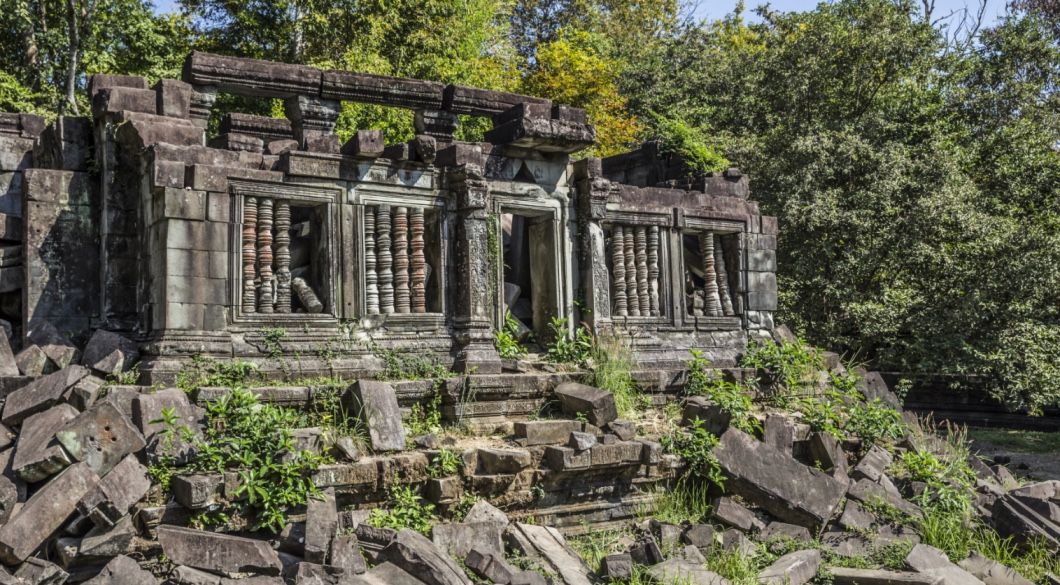
The 12th century Beng Mealea is one of the most dazzling of all the Khmer Empire temples. The ancient site is about 65km from the center of Siem Reap. Although it was built as a Hindu temple, Buddhist symbols can also be found. The temple is mainly built of sandstone and has been left largely in its original state, with some of the buildings overgrown.
The temple covers an area of 181 meters & faces east, but also has entrances in the other directions. There is a baray in the east. Many of the reliefs show scenes from Hindu epics with Vishnu and Shiva.
5. The Angkor Thom Temple
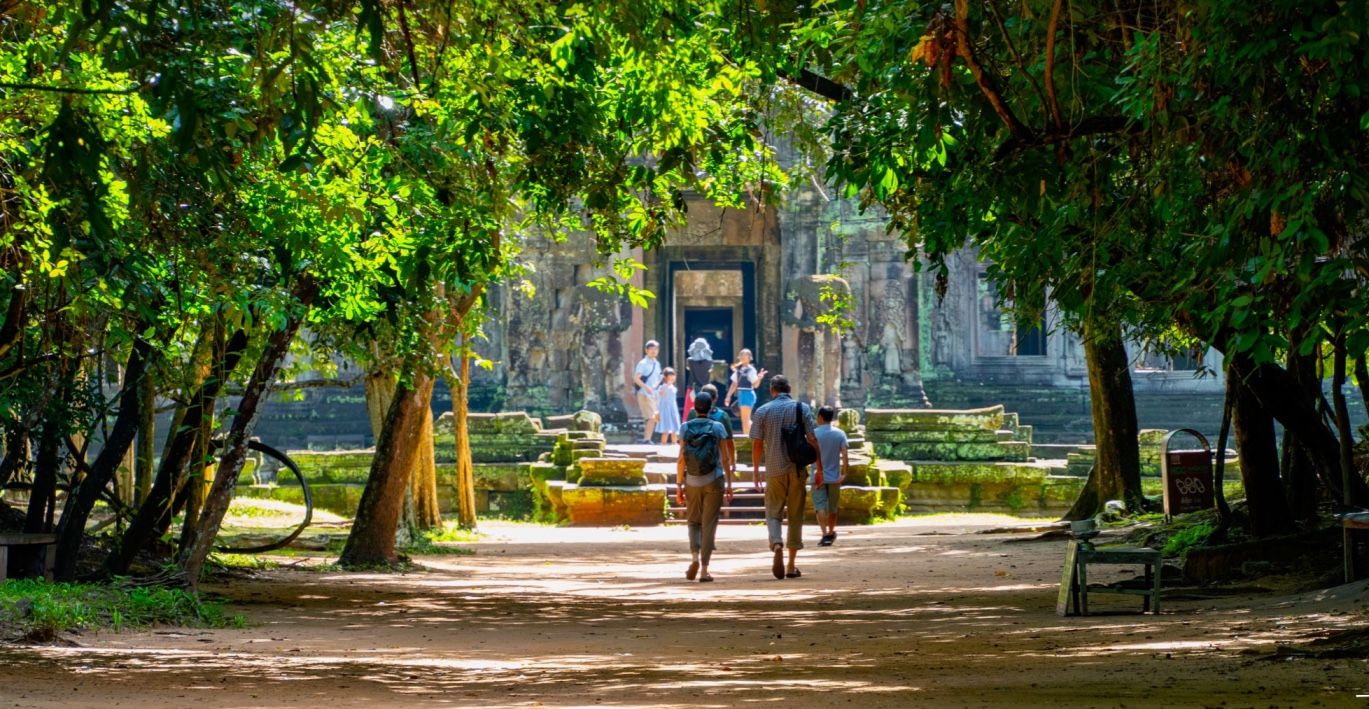
The fortified city of Angkor Thom is on an epic scale, some 10 sq km in size. It was built by Angkor’s greatest king, Jayavarman VII (r 1181-1219), who came to power following the disastrous sacking of the previous Khmer capital by the Chams. At its height, it may have supported a population of one million people in the surrounding region.
Centred on the Bayon, Angkor Thom is enclosed by a square wall, 8m high and 12km in length and encircled by a jayasindhu (moat) 100m wide, said to have been inhabited by fierce crocodiles. This is yet another monumental expression of Mt Meru surrounded by the oceans. Looking for things to do, look closely as the city has five immense gates, one each in the northern, western and southern walls and two in the eastern wall.

6. Preah Khan temple
Preah Khan was built on the site of an important military victory and its outer perimeter is guarded by 72 stone garudas (winged mythological creatures depicted throughout Southeast Asia).
A stupa (a domed structure holding Buddhist relics) and numerous smaller Hindu temples indicate the spiritual mix that Preah Khan embodied. In later years it was renowned as a center of scholarly Buddhism.Among the top things to do at the Angkor complex, the restoration program has left mighty silk-cotton tree roots undisturbed; they make an awe-inspiring sight, appearing to wrestle with the stonework. Elsewhere a two-story, round-columned pavilion of uncertain purpose is a charming, free-standing oddity.
7. Terraces Of The Elephants
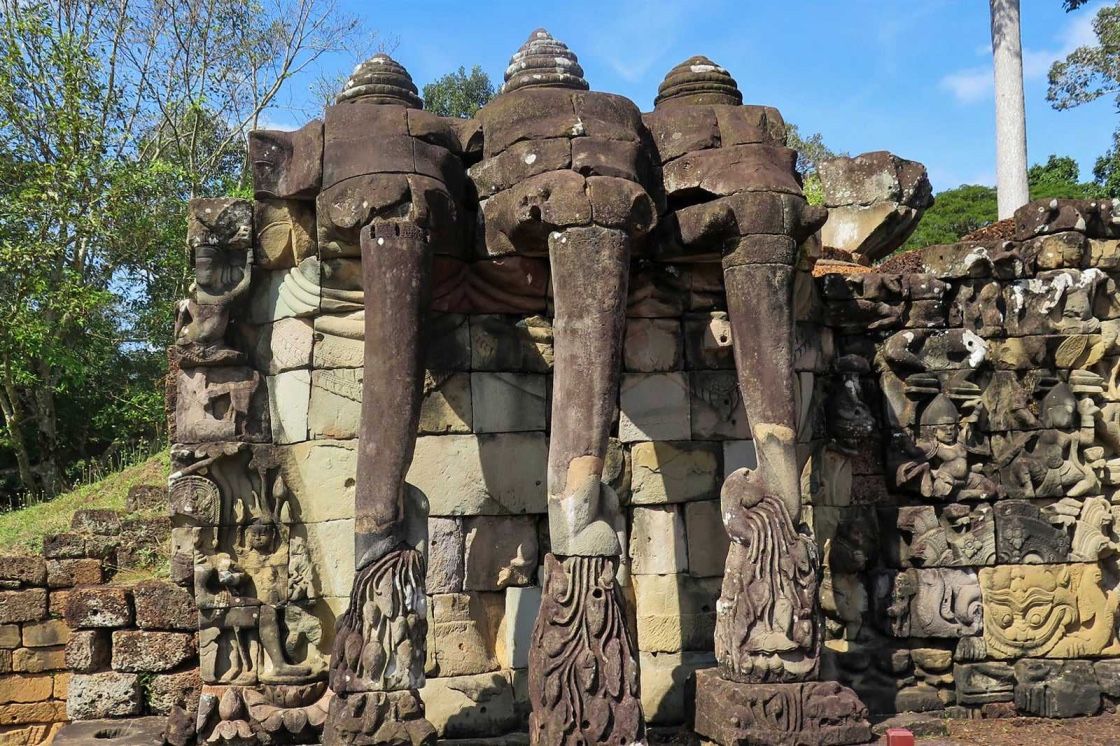
The 350m-long Terrace of Elephants was used as a giant viewing stand for public ceremonies and served as a base for the king’s grand audience hall. As you stand here, try to imagine the pomp and grandeur of the Khmer empire at its height, with infantry, cavalry, horse-drawn chariots and elephants parading across the Central Sq in a colourful procession, pennants and standards aloft.
Terrace of the Elephants – one of the highlights in the complex.
8. Phnom Bakheng – Tomb Raider Filming Location
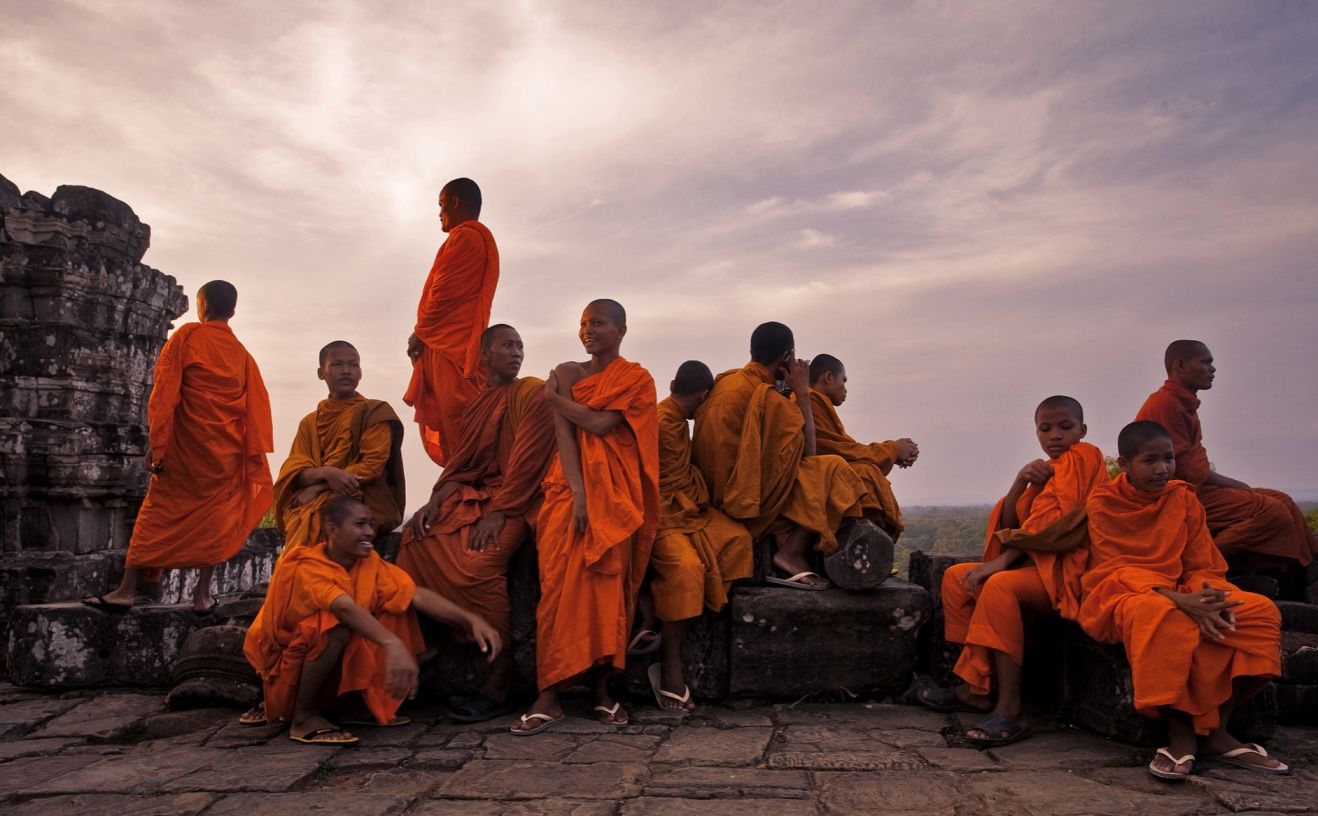
Around 400m south of Angkor Thom, the main attraction of Phnom Bakheng is the sunset view of Angkor Wat. Unfortunately, the whole affair has turned into something of a circus, with crowds of tourists ascending the slopes of the hill and jockeying for space once on top. Coming down can be even worse as there is nothing at all in the way of lighting. Still, the sunset over the Western Baray is very impressive from the hill.
- Phnom Bakheng (Bakheng Hill) – Best for the sunset view – Highest Temple in Angkor and Tomb Raider Filming Location.
9. Ta Prohm Temple
Ta Prohm temple is undoubtedly the most atmospheric ruin at Angkor complex and should be high on the hit list of every visitor’s things to do. Its appeal lies in the fact that, unlike the other monuments of Angkor, the jungle has swallowed it, allowing it to resemble how most Angkor monuments looked when European explorers first discovered them. Well, that’s the theory, but in reality, the jungle has been managed, leaving only the largest trees in place, which makes it appear manicured rather than raw like Beng Mealea.
- The temple of Ta Prohm is also known as the Tomb Rider where Angelina Jolie was acting there back in 2001.
10. Ta Som Temple
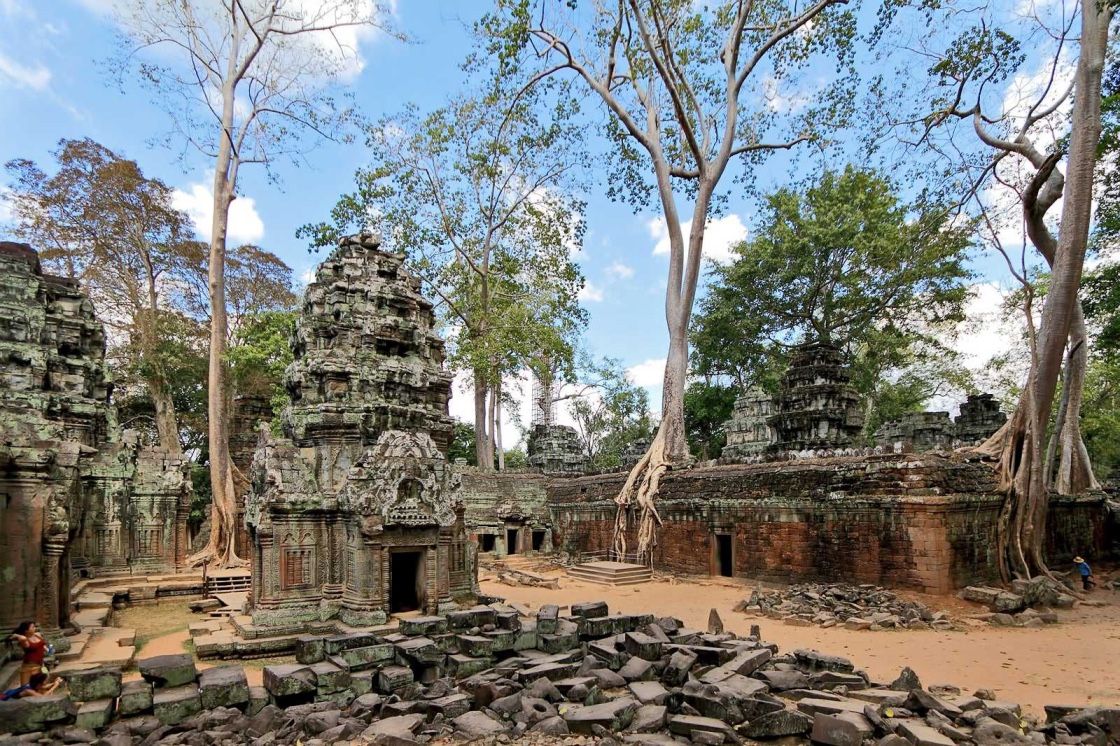
Another beautiful yet most photogenic attraction in Angkor complex, is the temple of the Prasat Ta Som, the location is toward the east of Preah Neak Pean, this 12th century attractive Buddhist temples was built by the order of Jayavarman VII. There has been a massive restoration over the last decades to tae the temple back to its good state yet the most impressive feature at Ta Som is the huge tree completely overwhelming the eastern side, providing one of the most popular Instagram photo opportunities in the Angkor area.
11. Terrace of the Leper King
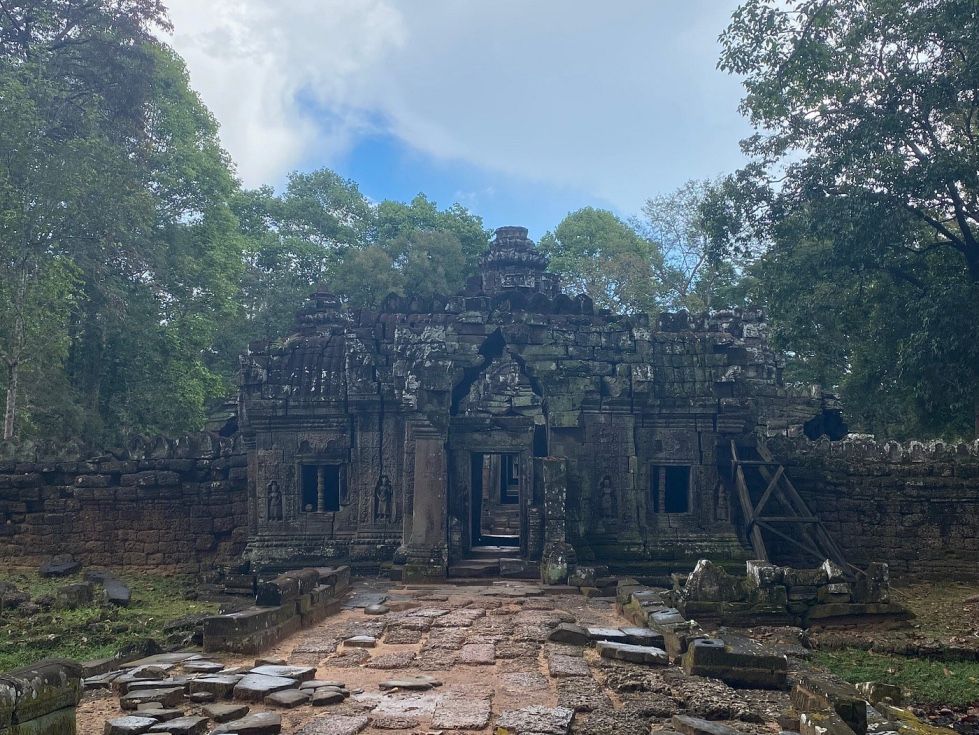
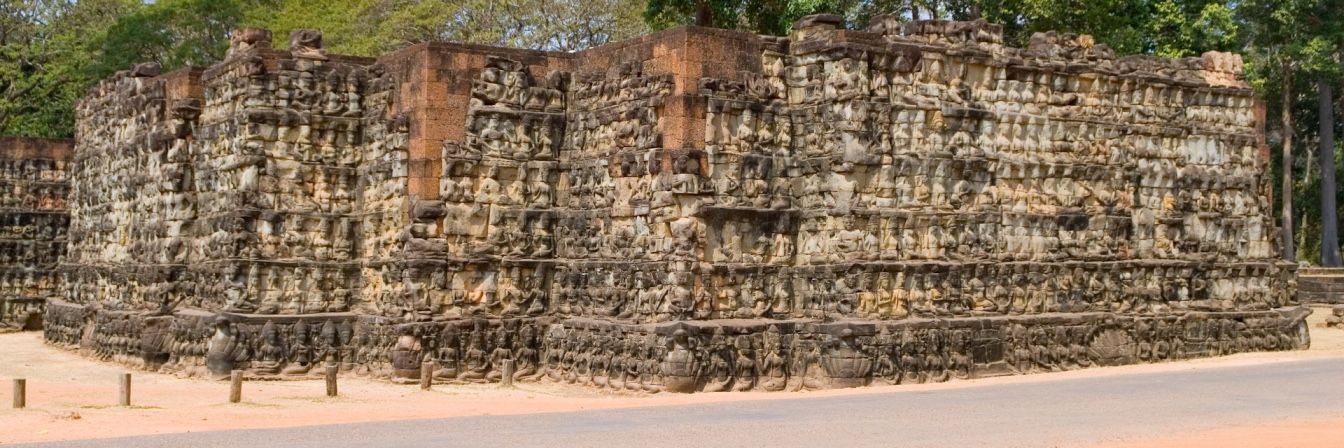
The Terrace of the Leper King, is another worthy of all temples to visit. Located on the nortehrn side of the nearby Terrace of Elephants, the site is a 7m-high iwan shaped with a bare looked statue on its top. It is another of Angkor’s best attraction, the mysteries. The original of the statue is in Phnom Penh’s National Museum, there have been countless stories about the meaning of the temple and the stories behind it, however, scholars believed the two of the Angkor kings had leprosy, and the statue may represent one of them.
There are some sites nearby worth to check out such as Terrace of the Leper Kin including Terrace of the Elephants, Phimeanakas and the Baphuon.
12. Pre Rup Angkor – Pyramid temple dedicated to Shiva
Pre Rup is a pyramid shaped temple dedicated to Shiva. The historic site is about one KM south of the Eastern Mebon. The pyramid-shaped temple carrying five lotus towers on its upper part. The brick sanctuaries embellished with a plaster coating, and fragments of that coating still remain on the southwestern tower. Here, you can find some amazingly detailed lintel carvings.

13. Roluos Group of Temples
The Roluos Group Temples belong to attractions and things to do located just outside of Siem Reap city – The site is home to group of four temples including Bakong, Preah Ko, Lolei, and Prasat Prei Monti. They date back to the 9th century when this area was known as Hariharalaya, making them significantly older.
Preah Ko, the oldest temple, features two rows of three “prasats” (towers) each and showcases stunning stone carvings and plasterwork. Next, the intricate 5-tiered Bakong follows, and finally, Lolei, which dates from 893, comes last. This temple resembles Preah Ko but has 4 towers instead of 6, once stood on its own island, and displays fine examples of Khmer calligraphy.

14. Phnom Kulen National Park
Thousand-year-old carvings, thundering waterfalls and an iconic reclining Buddha make Phnom Kulen National Park one of the most-visited escapes in all of Cambodia. Travelers pile into four-door sedans that navigate the narrow, scenic road from Siem Reap to the popular park for an up close look at impressive statues and a massive Buddha.
But it’s views from the park’s two waterfalls that really draw visitors.Decrepit “stairs” at the bottom of the climb point to the direction of the trail. Visitors in the know recommend wearing good walking shoes to negotiate the rocks, planks and slippery slopes that lead to spectacular views.
Swimming in the pools proves the perfect reward for a difficult climb and gives travelers a place to relax and unwind before heading back to the city center.

15. Tonle Sap Lake & Floating Villages
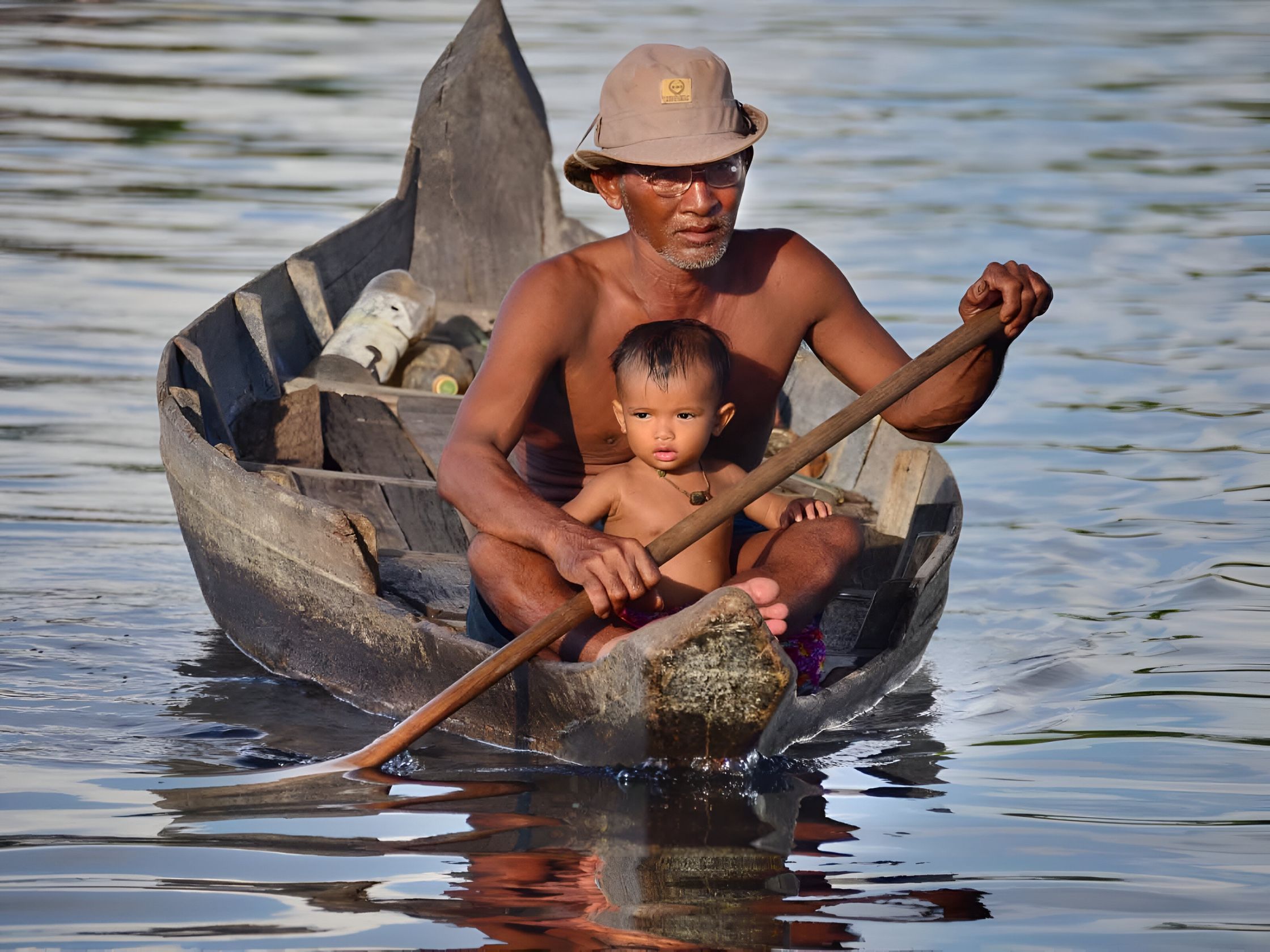
The largest body of fresh water in Southeast Asia & a UNESCO-designated biosphere, Tonle Sapa Lake and floating villages are best things to see aside from the visiting the majestic temples. From November to May—the country’s dry season, the lake empties into the Mekong River. Once the rains begin, however, the waters reverse to form an enormous lake popular among both locals and travelers.
Visitors can embark on boat trips across some of the lake’s 4,000 square miles in both rainy and dry seasons, but travelers agree that the floating houses that make a trip to Tonlé Sap so unique are less spectacular when water levels are at their lowest.

Angkor Wat Itineraries & Trip Ideas
There are just about anywhere in Siem Reap with offers on all sort of tours visiting the temples of Angkor. From de-facto guides with Tuk Tuk to the national escorted tourist leaders. There are wide range of itineraries from 1 day to 1 week. Following are the 3 different suggestion & Itineraries for your Angkor Wat trip.
Angkor Wat in One Day – For First Timers
Angkor Wat and The Royal Temples Full-Day Tour from Siem Reap For First Timers. Be mesmerized by Angkor Wat and other magnificent remains of the Khmer Empire . Beginning at the south gate of Angkor Thom City, you’ll explore the Bayon before continuing to Baphuon.
With a knowledgeable private guide, see the Royal Enclosure and Phimeanakas, the Terrace of Elephants and Terrace of Leper Kings. After lunch, spend most of the afternoon at Angkor Wat, the best-preserved part of the UNESCO World Heritage-listed archeological park, before returning to your hotel by air-conditioned private vehicle.
Morning visit
After hotel pickup by air-conditioned vehicle, your private tour of the Angkor temple complex starts at the South Gate of Angkor Thom City, where 54 demons line the road. Not far from Siem Reap, the UNESCO-listed archeological park includes countless remains from the 9th to the 15th centuries built by the former Khmer Empire. Just let your private guide know your specific interests so he or she can include them in your flexible itinerary.
Afternoon visit
Explore the Bayon, the centerpiece of the ancient walled city, known for its decorative Khmer temple. Your guide points out distinctive features such as the more than 200 serene and massive stone faces that tower around the central peak.Your informative tour continues at the Baphuon, a three-tiered temple built in the mid-11th century and fully restored in 2011. Originally dedicated to the Hindu god Shiva, it was converted to a Buddhist temple in the late 15th century.
Angkor Sunsets
Spend 2 hours tour Angkor Thom, including the Royal Enclosure and Phimeanakas as well as the Terrace of Elephants and Terrace of Leper Kings. Then enjoy lunch in front of the majestic Angkor Wat before entering this magnificent temple, easily the most famous and best-preserved of all structures within the complex.
Late afternoon is for meandering with your guide through this architectural masterpiece, unrivaled in its beauty. Built in the 12th century, the Khmer ceremonial structure is believed to have functioned as a funerary temple for King Suryavarman II.
Take a look at the enormous moat and reflection pools, and wander through the galleries to find an astounding array of ornate bas-reliefs (carvings) that depict scenes from the Hindu epic, the Ramayana.
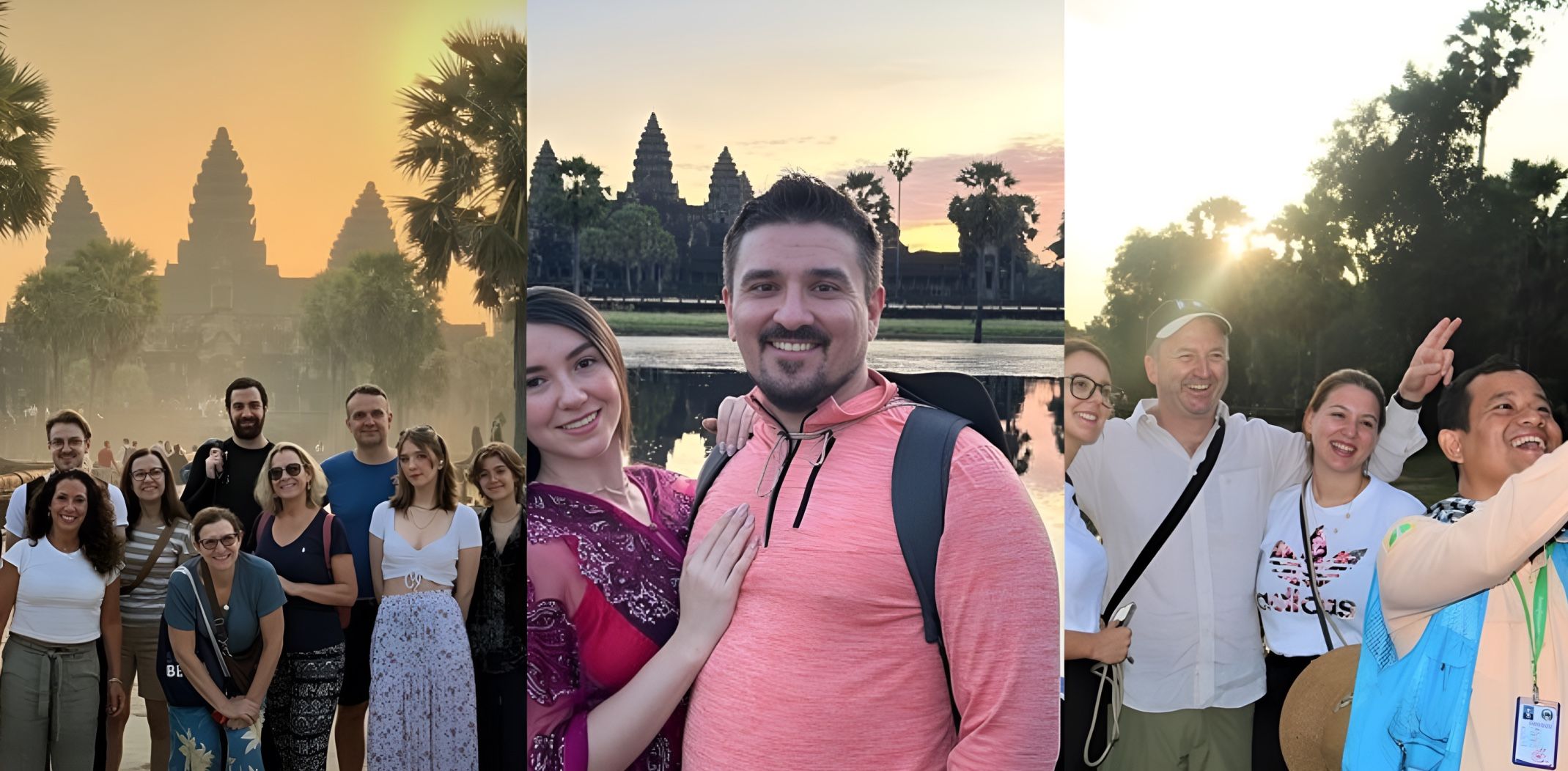
2 Days in Angkor Wat for First Timers
Must see temples: Angkor Wat, Ta Prohm, Bayon and Tonle Sap.
Discover Cambodia’s mystical temples at the UNESCO World Heritage-listed Angkor Archaeological Park. This two-day Siem Reap adventure brings you face to face with awe-inspiring temples of the Khmer Kingdom, from the famous Angkor Wat to the city of Angkor Thom – including the Bayon, Ta Prohm and Pre Rup – plus Banteay Srei.Enjoy a jungle hike to the River of a Thousand Lingas and a boat trip around Tonle Sap, a UNESCO Biosphere Reserve.
See Angkor Wat Sunrise
Begin your temple tour with a visit to Angkor Wat, the most famous and well-preserved of all the temples of Angkor. As you tour the spectacular site with your guide, learn about the 100 stone temples.
Continue to the old capital city of Angkor Thom to see the Bayon Temple with its 54 towers decorated with more than 200 smiling stone faces. Take a look at Phimeanakas, Baphoun, the Terrace of the Elephants and the Terrace of the Leper King before stopping for pictures at the magnificent South Gate.
Here, gods and demons line the causeway that leads up to the gate, which is crowned with four large faces pointing in the cardinal directions.
Afternoon visit
Return to Angkor Thom and visit the beautiful Ta Prohm Temple – became famous by the film Tomb Raider – and imagine yourself an early explorer as you come upon the temple ruins being reclaimed by the jungle. Complete your tour with a climb up the brick steps of the terminal pyramid of Pre Rup (if time allows), one of the oldest buildings in the Angkor complex.
Jungle trek & countrysides
Explore Kbal Spean village, visit rural Cambodian life & follow a 40 minute jungle trek to the River of a Thousand Lingas to see Hindu sculptures following by an uphill path for a great view over the area.Back to the village and visit the Angkor Centre for Conservation of Biodiversity (closed Sundays and public holidays) – home to a variety of animals that have been saved from illegal trafficking, including gibbons, monkeys, anteaters, snakes, turtles and the bright-eyed loris.
Afternoon visit
After lunch, head to visit women temple, the Banteay Srei, considered the jewel in the crown of Angkorian art, built in the 10th century, Banteay Srei consists of three rectangular enclosures whose designs are magnificently ornate. Next, head to see Banteay Kdei temple, a sprawling former monastic complex that remains largely unrestored.
Enjoy sunset at the picturesque reservoir Sras Srang, where during the dry season the remains of a temple in its center can be seen!
Angkor in 3 days for First Timers
For the 3 days Angkor and the activities, we do recommend a mix of one and two days itineraries, plus following for the third day. All this can be pre-arranged as a tour, or do it on your own.
Tour morning markets in Siem Reap, then, hop on a remork (The Remork-Motor is a popular transportation in Angkor Siem Reap, Cambodia) for a journey to Tonle Sap, one of the world’s most productive bodies of fresh water, which flows through the Mekong during Cambodia’s dry season and forms a large lake during its monsoons.
Board a local boat at the riverbank for an approximate 30-minute ride to Kompong Phluk, the largest floating village on the lake, where you’ll spend the rest of the afternoon. Here, observe the fascinating daily activities of the Cambodian villagers who reside along the shore, gaining a better sense of how their lives are shaped by the water’s rhythms.
Afternoon activity
After lunch, hop back on a Remork and drive back to Siem Reap on a back roads, a good way to see more countryside, rice addies and villagers working on the farm.
- Spend the evening enjoy pub street or take a relaxing Khmer Massage in Siem Reap