

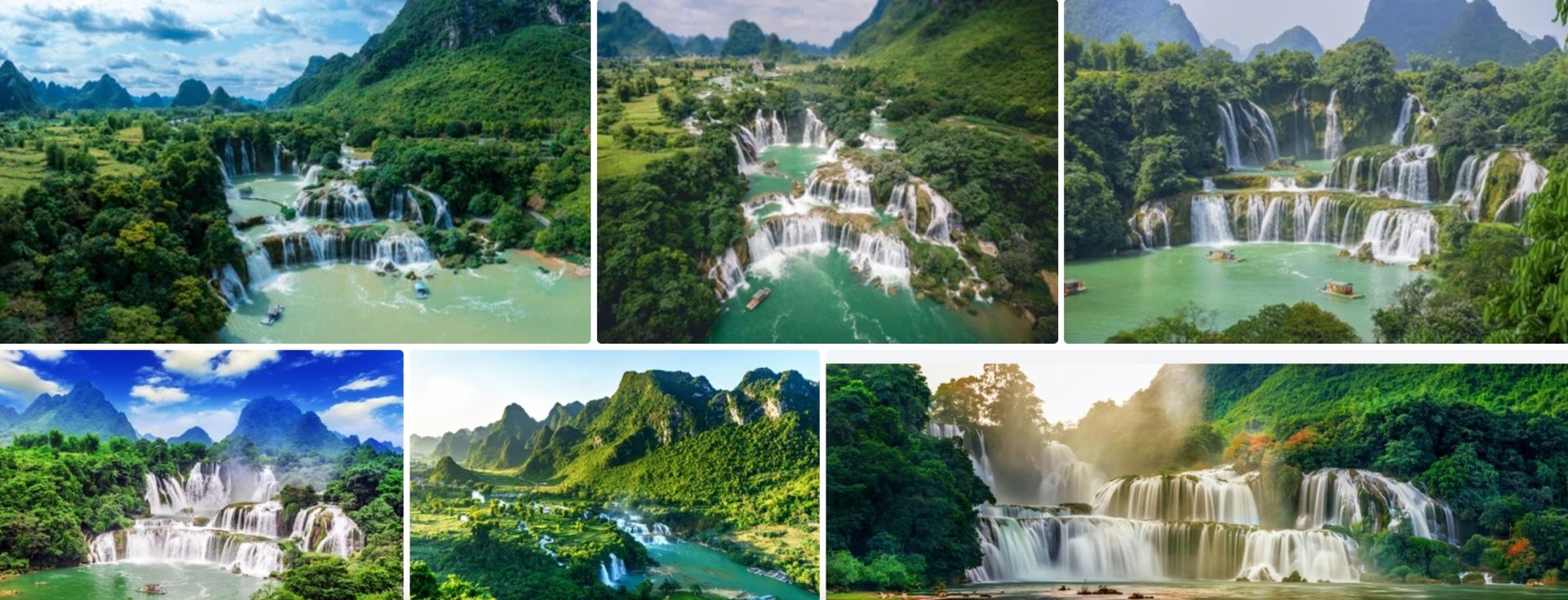
Ban Gioc Waterfall sits on the border between Vietnam and China in Cao Bang Province, 350 kilometers and roughly 7 hours from Hanoi. At 30 meters tall and 300 meters wide, it is the broadest waterfall in Vietnam and the fourth-largest transnational waterfall in the world. The surrounding province has five major river systems, 47 lakes, and a landscape shaped by limestone karst formations that UNESCO recognizes as a Global Geopark. Outside of weekends and public holidays, the site gets few international visitors, which is part of what makes it worth the journey.
- Check out Private Vietnam tours
What to know before visiting Ban Gioc Waterfall
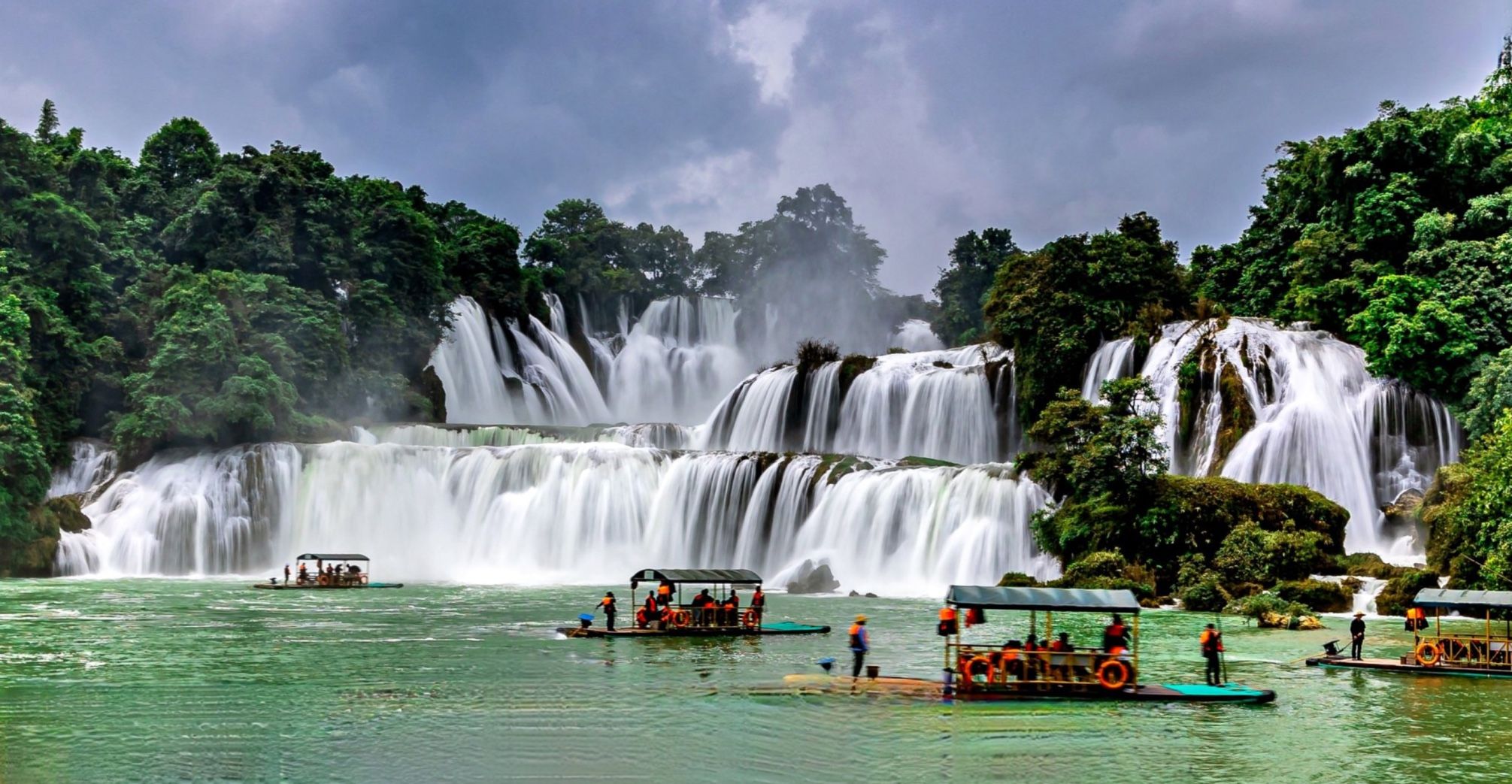
The waterfall straddles the Quay Son River, which forms the border between Vietnam and China at this point. Visitors on both sides can take motorized boat rides to the base of the falls. From the Vietnamese side, you can wave across to tourists on Chinese rafts a few meters away.
The best time to visit is September to November. Summer rains keep the falls full, but heavy flow carries sediment that turns the water brown. From October onward, the water clears to a jade blue, the rice fields in the valley turn gold before harvest, and the weather is cooler and more comfortable for riding or driving.
The nearby Nguom Ngao Caves, a 1-kilometer lit walkway through limestone formations, sit just a few kilometers before the waterfall on the approach road. Visit the caves first, then continue to the falls.
Ban Gioc is one anchor point of the Northeast Loop Vietnam, a multi-day route that pairs it with Ba Be Lake, Bac Kan, and Lang Son for a full northern circuit.
Map: Ban Gioc Waterfall and Cao Bang from Hanoi
8 things to do near Ban Gioc Waterfall
The waterfall and surrounding countryside offer a full day of activity on their own, and the wider Cao Bang area adds two to three more days of worthwhile stops. Here are eight things worth including on any visit.
1. Ban Gioc Waterfall
The falls divide across three main tiers and spread across 300 meters at their widest point. The Quay Son River below runs a clear jade color in the dry season (October to May), bordered by rice paddies and limestone peaks on both sides. A motorized boat ride takes visitors from the Vietnamese bank to the base of the falls for a close view. The ticket office is at the main entrance gate.
- Entrance ticket: 50,000 VND (approx. USD 1.50)
- Opening hours: 7:30 AM to 5:00 PM
- Motorbike parking: 10,000 VND
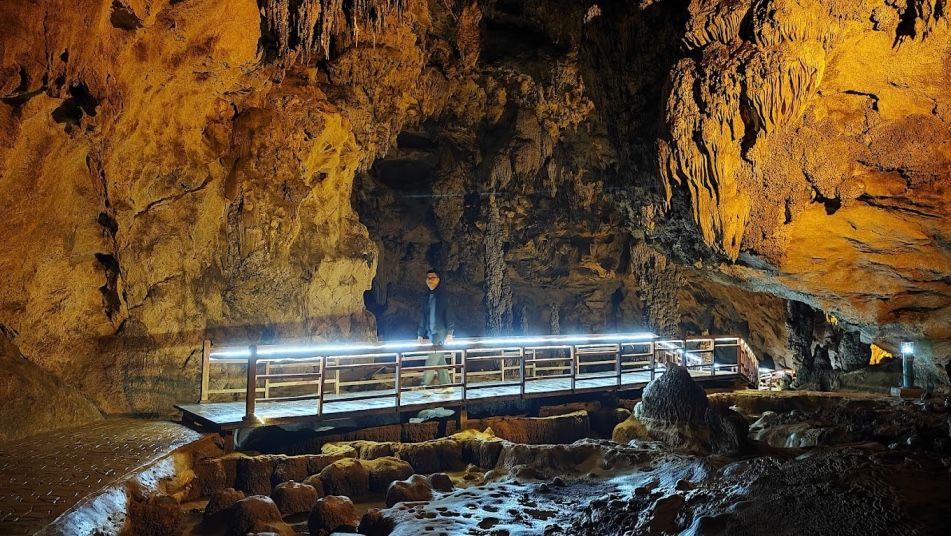
2. Nguom Ngao Cave
A limestone cave system a few kilometers before the waterfall on the approach road. A 1-kilometer lit walkway leads through stalactites and stalagmites formed by calcium carbonate deposits. The path can be slippery in wet conditions, so walk carefully. The cave takes about 45 minutes to walk through at a comfortable pace.
- Entrance ticket: 45,000 VND (approx. USD 1.50)
- Opening hours: 7:30 AM to 5:00 PM
3. Scenic countryside walk around the falls
A path from the ticket gate winds through rice fields, crosses wooden bridges over small streams, and reaches a grassy bank at the base of the falls. A hilltop temple and pagoda on the south side of the road, directly across from the falls, provides one of the best viewpoints of the full width of the cascade.
A further climb above the falls offers views from above the top tier. Only attempt this in dry conditions. The path has no handrails and the surface is exposed rock and tree roots. The climb starts at the base of the falls, behind a border marker stone, reached by crossing a wooden bridge.
4. Truc Lam Ban Gioc Pagoda
The best panoramic view of Ban Gioc Waterfall is from the Truc Lam Phat Tich Pagoda, also called Ban Gioc Temple. From the waterfall, return to the main road and walk approximately 600 meters back toward Cao Bang. Look for a left turn marked by a few souvenir stalls. The road leads up to the pagoda. From the top, the view covers the full valley and the falls directly below.

5. Phong Nam Valley
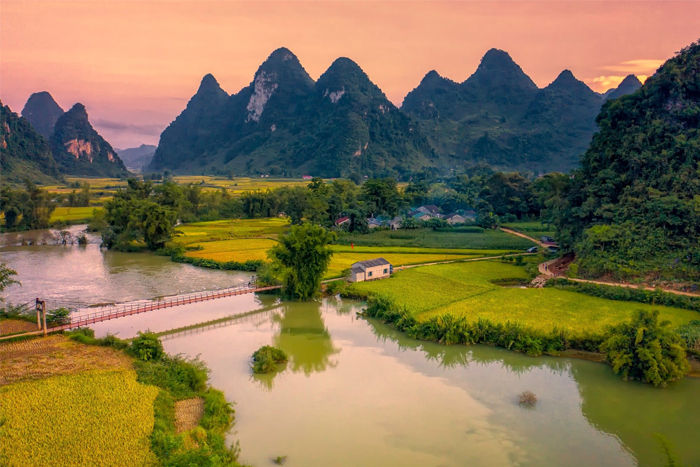
Phong Nam Valley (Phong Nậm) sits in Trung Khanh District, 15 kilometers from Ban Gioc. The valley floor is wide rice fields bordered by forested limestone ridges. Minority villages are scattered across the valley, and a small stream runs through the center. The road through the valley connects back to the main Cao Bang route and works well as a loop on a motorbike rather than a straight return.
- The area is best explored on motorbike tours in Vietnam
6. Nui Thung Mountain (Angel Eye Mountain)
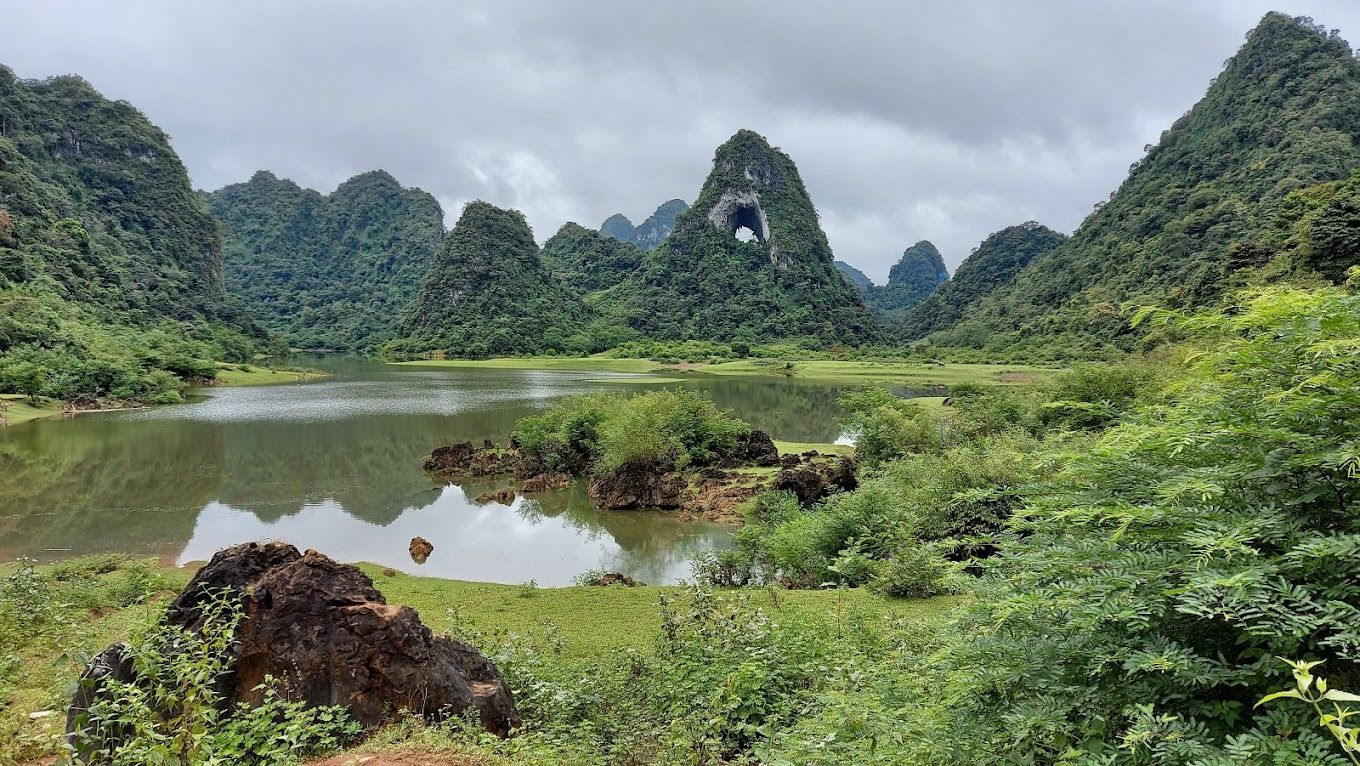
Nui Thung Mountain sits 60 kilometers from Ban Gioc and remains largely unknown to international visitors. The mountain has an unusual circular hole through its peak, visible from the valley below, which gives it the local name Angel Eye Mountain. The surrounding valley has forested ridges, small lakes, wide plains, and minority villages. It is one of the least visited stops on the entire northeast circuit and worth including on a longer trip.
7. Thang Hen Lake
Thang Hen is the largest of 36 interconnected lakes in the Tinh Coc Valley in Cao Bang and sits close to Nui Thung Mountain. The lake reflects the surrounding karst ridgelines from the surface on calm days. Boat trips are available at the bank. It makes a natural pairing with Nui Thung on the same day, sitting on the route between Cao Bang city and Ban Gioc.
8. Ban Gioc Waterfall Festival (October)
An annual festival held at the waterfall each October, coinciding with the harvest season. The event includes traditional music, regional food, and cultural performances from local minority communities. The festival draws domestic visitors in higher numbers than the rest of the year, so accommodation near the falls books out quickly. Plan ahead if visiting during this period.
Best time to visit Ban Gioc Waterfall
September to November is the best window. The wet season (June to September) keeps the falls at full flow but heavy rain carries sediment that turns the water brown. From October, the water clears, temperatures drop to a comfortable range, and the rice fields in the surrounding valleys are gold before harvest.
The dry season runs October to May. Water flow is lower but the color is clear blue. December to February is cold, particularly at higher elevations on the road from Hanoi, with temperatures occasionally dropping below 10°C overnight.
The waterfall is open year-round. There is no month where a visit is not worthwhile, only months where conditions are better or worse.
- Check out best time to visit Vietnam
How to get to Ban Gioc Waterfall from Hanoi
Ban Gioc is 350 kilometers from Hanoi and 90 kilometers east of Cao Bang city. The journey takes 6 to 7 hours depending on traffic and road conditions. The main road from Hanoi follows National Highway QL3 through Bac Kan to Cao Bang, then provincial roads through the countryside to the falls. An alternative route runs via QL1A through Lang Son.
From Hanoi
By bus: sleeper buses depart from My Dinh Bus Station in Hanoi to Cao Bang city. The journey takes around 8 hours. Tickets cost between 200,000 and 250,000 VND (approximately USD 10 to 12). From Cao Bang, take a local bus or hire a motorbike to reach the falls.
By motorbike: National Highway QL3 through Bac Kan is the most direct and well-maintained route. The road offers good scenery for the final stretch into Cao Bang Province. A motorbike is the most flexible option for exploring the area once you arrive.
From Cao Bang city
Local buses run several times daily between Cao Bang and the area near Ban Gioc. Schedules are posted at the Cao Bang bus station and your accommodation can help with current timings. Taxis and motorbike taxis are available from the city center. Most hotels and homestays in Cao Bang rent motorbikes and scooters for around USD 8 per day. The QL3 highway is the fastest route from Cao Bang to the falls.
Tours to Ban Gioc Waterfall from Hanoi
The most practical way to visit Ban Gioc from Hanoi is a multi-day motorbike tour. Most tours run 3 days and pair the waterfall with Nguom Ngao Cave and Ba Be Lake. Ba Be National Park is a significant detour but adds a lake, limestone caves, and a waterfall of its own to the itinerary. The combined Ban Gioc and Ba Be route makes for one of the best 4 to 5 day circuits in northern Vietnam.
Many travelers also combine Ban Gioc with Ha Giang on a longer northern loop of 7 to 10 days. The two destinations cover different landscapes: Ha Giang is high karst mountain riding, Ban Gioc is lower valley and border country. Together they cover the full range of what the northern region offers. Learn more about the Ha Giang Loop tour.
Where to stay near Ban Gioc Waterfall
Several guesthouses and family-run homestays line Road DT206, the road running west of the falls between Nguom Ngao Cave and the waterfall entrance. Rooms are simple and clean, starting from around 200,000 VND (USD 8) per night. Some properties are not listed online, so if you can’t find availability, drive the road on arrival and look for signs.
The Saigon-Ban Gioc Resort sits directly opposite the falls entrance and starts at around 900,000 VND (USD 40) per night. Only the top-floor rooms have a waterfall view from the balcony. Worth requesting when booking.
For better accommodation options and more choice at lower prices, stay in Cao Bang city or Trung Khanh. In Trung Khanh, the best guesthouses are near the market. Cao Bang city has a wider range of hotels, restaurants, and services.
Food and drink near Ban Gioc Waterfall
Food options directly at the falls are limited to a few basic rice and noodle stalls (quán cơm phở) outside the main gate and along the road toward the villages. The Saigon-Ban Gioc Resort has a restaurant serving Vietnamese dishes at fair prices. Small towns along the approach road, particularly Trung Khanh near the market and Quang Uyen, have more options.
Cao Bang city is the best base for eating well. Vuon Cam Street has a concentration of local restaurants. Breakfast in the city typically means bánh cuốn, a steamed rice roll common across northern Vietnam. For coffee and picnic supplies including bánh mì, the area around Cho Xanh market is the most convenient. Western food is limited, but Pizza Chi offers a reasonable option if needed.
The bottom line: Ban Gioc is Vietnam’s widest waterfall and one of its least crowded major natural sites. Pair it with Nguom Ngao Cave, Phong Nam Valley, and Thang Hen Lake for a full two-day circuit from Cao Bang, or combine it with Ha Giang for the best week in the north.
About the author: Chi is a Vietnamese travel writer focused on off-the-beaten-track destinations across the country. She travels independently, writes from experience, and favors places that most itineraries skip.